Table of Contents
As an Amazon Associate, we earn from qualifying purchases. This means we may receive a small commission at no extra cost to you when you buy through links on this page.
Introduction: Why Cleaning Your Car Seat Matters
Keeping your baby safe in the car is paramount, but equally important is maintaining a hygienic environment. A baby car seat can quickly become a breeding ground for bacteria, crumbs, and spills. Regular cleaning isn’t just about aesthetics; it’s crucial for your child’s health, preventing allergies, and ensuring the car seat continues to function safely. Food particles and sticky substances can attract insects, and built-up grime can compromise the integrity of the seat’s materials over time. Using harsh chemicals can damage the car seat and potentially release harmful fumes. This guide focuses on safe and effective cleaning methods, adhering to UK safety guidelines. We’ll cover cleaning all types of car seats – infant carriers, toddler seats, and booster seats.
Understanding Your Car Seat Material
Different car seat materials require different cleaning approaches. Most seats incorporate a combination of materials:
- Fabric: Typically polyester or a blend. Can often be removed and washed, but always check the label.
- Plastic: The shell of the car seat is usually made of durable plastic. Resists stains but can scratch with abrasive cleaners.
- Metal: Harness buckles and some frame components are metal. Require specific cleaning to avoid corrosion.
Crucially, always refer to your car seat’s manufacturer’s instructions before attempting any cleaning. These instructions will specify which cleaning products are suitable and which methods to avoid. Incorrect cleaning can void your car seat’s warranty and, more importantly, compromise its safety features. We cannot stress this enough! Refer to the manufacturer’s handbook – it’s the ultimate authority.
Disclaimer: Improper cleaning can void your car seat’s warranty and potentially compromise its safety. This guide provides general advice; always prioritise the manufacturer’s instructions.
What You’ll Need: Essential Cleaning Supplies (UK Stocked)
Here’s a checklist of supplies you’ll need, all readily available in the UK:
- Mild Detergent: Baby-safe laundry detergent (e.g., Bio-D Concentrated Laundry Liquid – £8.99) is ideal.
- Soft Cloths: Microfibre cloths are excellent for gentle cleaning.
- Warm Water: Avoid hot water, as it can damage some materials.
- Upholstery Brush: For gently loosening dirt and stains.
- Vacuum Cleaner with Attachments: Especially a crevice tool for getting into tight spaces.
- Baby-Safe Stain Remover: Dr. Beckmann Stain Remover – For Baby Clothes & Fabrics (£5.0) is a popular choice.
- Baby-Safe Disinfectant Wipes: Dettol Baby Antibacterial Wipes (Pack of 6 – £7.5) are useful for quick wipe-downs.
- Bucket: For mixing cleaning solutions.
Eco-Friendly Alternatives: Consider using white vinegar diluted with water for cleaning plastic parts. Baking soda can also be used to deodorise fabrics.
Step-by-Step Cleaning Guide: A Comprehensive Approach
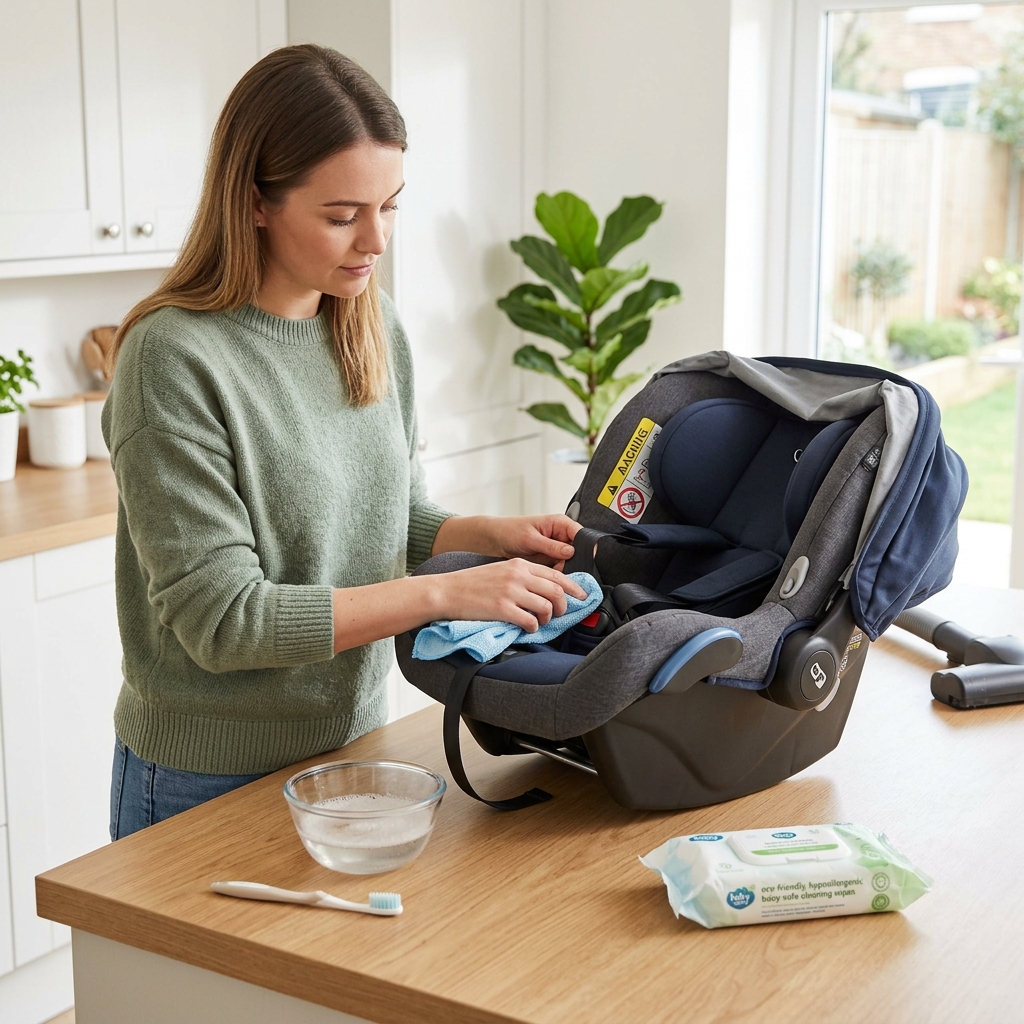
- Initial Vacuuming: Use the vacuum cleaner with appropriate attachments to remove loose crumbs, dirt, and debris from all areas of the car seat. Pay particular attention to crevices and around the harness.
- Removing and Washing Fabric Covers: If the fabric covers are removable (check your manual!), carefully detach them. Wash them according to the manufacturer’s instructions – usually a cool or lukewarm machine wash. Air dry only; do not tumble dry.
- Cleaning the Shell: Mix a small amount of mild detergent with warm water. Dampen a soft cloth with the solution and gently wipe down the plastic shell. Rinse with a clean, damp cloth and dry thoroughly.
- Cleaning the Harness: The harness is a critical safety component. Unbuckle the harness and use a damp cloth with mild detergent to wipe it clean. Rinse thoroughly and allow to air dry completely before use. Avoid getting water inside the buckle mechanisms.
- Drying Thoroughly: Ensure all parts of the car seat are completely dry before reassembling and using it. This prevents mould growth and ensures the seat functions correctly.
Dealing with Specific Stains
- Milk: Blot immediately with a clean cloth. Pre-treat with a stain remover before washing.
- Food: Vacuum up any solids, then wipe with a damp cloth and mild detergent.
- Vomit: Remove any solids, then clean with a disinfectant solution (baby-safe!). Deodorise with baking soda.
Dealing with Stubborn Stains: UK Recommended Products
Sometimes, a simple wipe-down isn’t enough. Here’s how to tackle tricky stains:
- For general stubborn stains: Dr. Beckmann Stain Remover – For Baby Clothes & Fabrics (£5.0) is a good all-rounder. Apply as directed on the packaging.
- For deep-set stains: The Vax SpotlessGo Cordless Spot Cleaner (£99.99) can be very effective for lifting stubborn stains from fabric, but always test in an inconspicuous area first.
- Mould/Mildew (rare but important): If you suspect mould, clean the area with a solution of diluted white vinegar (1 part vinegar to 10 parts water). Ensure thorough drying and ventilation. If the mould is extensive, consider replacing the car seat.
Disinfecting Your Car Seat: Staying Germ-Free
Disinfecting eliminates germs and bacteria, especially important after illness. Use baby-safe disinfectant wipes (Dettol Baby Antibacterial Wipes – £7.5) to wipe down all surfaces. Ensure adequate ventilation while disinfecting. Always follow the product’s instructions. Disinfecting after a child has been sick is particularly crucial, and can help prevent the spread of germs.
Safety Precautions: What *Not* to Do
Protect your car seat and your child by avoiding these:
- Harsh Chemicals: Never use bleach, ammonia, or strong solvents.
- Abrasive Cleaners: Avoid scouring pads or abrasive cleaners that can scratch surfaces.
- Submerging in Water: Do not submerge the car seat or its components in water.
- Washing Machine (Unless Approved): Only machine wash fabric covers if the manufacturer explicitly allows it.
- Direct Sunlight Drying: Avoid drying the car seat in direct sunlight, as it can damage the materials.
Remember: Incorrect cleaning can void your warranty and compromise the car seat’s safety.
Car Seat Cleaning Schedule: How Often Should You Clean?
Here’s a recommended schedule:
- Quick Wipe-Down: After each use, wipe down surfaces with a damp cloth to remove crumbs and spills.
- Weekly: Vacuum the car seat to remove debris.
- Deep Clean: Every 3-6 months, or more frequently if needed (e.g., after illness or major spills). This includes removing and washing fabric covers, cleaning the shell and harness.
Maintaining Your Car Seat: Extending its Lifespan
Preventing messes is easier than cleaning them! Use a car seat protector to shield the seat from spills and wear and tear. Regularly inspect the car seat for any signs of damage, such as cracks, fraying, or loose parts. UK regulations state car seats should be replaced after an accident, even if there’s no visible damage. Car seats also have an expiry date – typically 6-10 years from the date of manufacture – so check the label. Always adhere to the manufacturer’s recommendations for lifespan and replacement.
Our Top Pick
For an all-in-one cleaning solution, the Babyhood Car Seat Cleaning Kit (£24.99) provides everything you need for a thorough clean, including a dedicated brush, cleaning solution, and cloths. However, always supplementing with baby-safe disinfectant wipes like Dettol Baby Antibacterial Wipes (£7.5) is recommended for regular hygiene.
FAQ
How often should I completely disassemble and deep clean my car seat?
Ideally, a full deep clean (removing and washing covers, cleaning the shell and harness) should be done every 3-6 months, or more often if there are significant spills or messes.
Can I use any detergent to wash the fabric covers?
No. Always use a mild, baby-safe detergent. Harsh detergents can damage the fabric and potentially irritate your child’s skin. Bio-D Concentrated Laundry Liquid (£8.99) is a good choice.
What should I do if I accidentally use a harsh chemical on my car seat?
Immediately wipe away the chemical with a damp cloth and rinse thoroughly with clean water. Contact the car seat manufacturer for advice – the seat may need to be replaced to ensure continued safety.
How do I know if my car seat is still safe after a minor accident?
Even in a minor accident, your car seat should be inspected by a qualified technician and may need to be replaced. UK regulations require car seat replacement after any accident.
Where can I find the manufacturer’s instructions for my car seat?
The manufacturer’s instructions are usually included in the car seat packaging. If you’ve lost them, check the manufacturer’s website – most have downloadable manuals available.