
Table of Contents
As an Amazon Associate, we earn from qualifying purchases. This means we may receive a small commission at no extra cost to you when you buy through links on this page.
What is Isofix and Why is it Important?
Isofix is an international standard for child car seats that aims to make them easier and safer to install. Introduced in 1999, and becoming increasingly prevalent since, it replaces the reliance on seat belts for installation, which could be fitted incorrectly. The Isofix system uses dedicated anchor points built into the vehicle chassis, providing a direct connection between the car and the car seat. This drastically reduces the risk of incorrect fitting, a major cause of injury in car accidents. By 2026, virtually all new cars sold in the UK are equipped with Isofix anchor points, making it the preferred method of child seat installation.
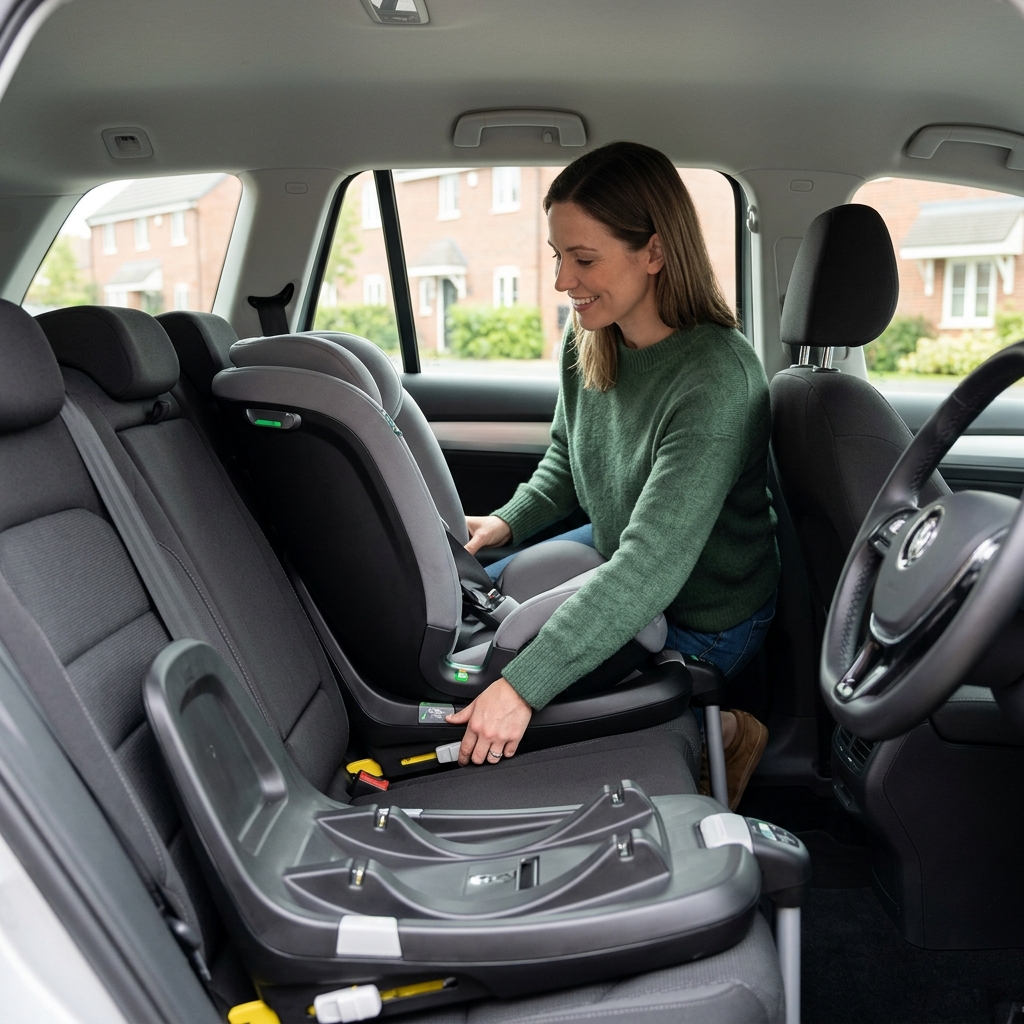
Understanding Isofix Compatibility: The Key Factors
While Isofix is designed for simplicity and safety, not all Isofix seats fit all cars. Several factors determine compatibility:
Vehicle Isofix Anchor Points
Vehicles typically have two main types of Isofix anchor points:
- Lower Anchor Points: These are the standard Isofix connectors, usually located between the seat base and the vehicle seat.
- Upper Tether Anchor: This is a third anchor point, often found on the back of the vehicle seat or the vehicle floor, used to prevent the car seat from rotating forward in a collision. Not all cars require an upper tether, but many seats benefit from this additional security.
Car Seat Isofix Connectors
Car seats have connectors that correspond to the vehicle’s anchor points. These are usually standardised, but variations exist.
Weight and Height Limits
Each Isofix car seat has specific weight and height limits for the child it’s designed to protect. It’s crucial these limits are adhered to. Using a seat outside its specified range is unsafe.
‘Universal’ vs ‘Vehicle Specific’ Isofix Car Seats
Universal Isofix seats are designed to fit a wide range of vehicles with Isofix anchor points. Vehicle Specific (VS) Isofix seats are designed to fit *only* certain car models. VS seats typically offer a more secure fit, but require careful checking for compatibility before purchase.
Not All Isofix Seats Fit All Cars: Common Compatibility Issues
Even with the Isofix standard, parents can encounter problems:
- Seat Base Incompatibility: Some car seats use a separate ‘base’ that remains in the vehicle, while the seat itself can be clicked in and out. Bases might not fit the contours of all car seats.
- Upper Tether Anchor Location: The location of the upper tether anchor can vary significantly between vehicles. Some cars have hidden anchors requiring access through the boot or behind seat covers.
- Seat Size Conflicting with Car Interior: Larger seats, especially those designed for older children, may not fit comfortably in smaller cars or those with sculpted seats.
- Conflicts with Existing Car Features: Isofix anchor points can sometimes interfere with access to storage compartments or the positioning of other car features.
For example, some older Ford Focus models (2018-2022) have reported issues with certain Maxi-Cosi bases due to the seat shape. Similarly, some BMW 3 Series (2019-2023) can present challenges with larger rotating seats like the Joie i-Spin 360 due to limited rear seat space.
How to Check Isofix Compatibility with Your Car (UK Specific)
Here’s how to verify Isofix compatibility:
- Check the Vehicle Handbook: Your car’s handbook will detail if Isofix is present, the location of the anchor points, and any weight limits.
- Use Online Compatibility Checkers: Several UK websites offer compatibility checkers. Halfords Isofix Compatibility Checker is a good starting point. Always double-check the information.
- Consult with Car Dealerships: Dealerships can confirm Isofix compatibility and provide advice on suitable car seats.
- Visit a Dedicated Car Seat Retailer: Retailers specializing in car seats can offer expert guidance and even demonstrate fitting the seat in your car.
Isofix Car Seat Groups & Stage Suitability (UK 2026)
Isofix car seats are categorized into groups based on the child’s weight and size:
| Group | Weight/Height Range (Approximate) | Age Range (Approximate) | Seat Type |
|---|---|---|---|
| Group 0/0+ | Up to 13kg (approx. 83cm) | Birth to 15 months | Rearward-Facing Baby Carrier |
| Group 1 | 9-18kg (approx. 76-105cm) | 9 months to 4 years | Rearward or Forward-Facing |
| Group 2/3 | 15-36kg (approx. 100-135cm) | 4 to 12 years | High-Backed Booster Seat |
| i-Size (R129) | Based on child’s height (up to 150cm) | Birth to approx. 12 years | Rearward-Facing for longer, height-based selection |
i-Size (R129) regulations are becoming increasingly dominant. These focus on height rather than weight, mandating longer rearward-facing travel and enhanced side-impact protection. By 2026, the transition to R129-compliant seats is almost complete, and older R44/04 seats will be increasingly phased out. New regulations expected in late 2025 will further refine i-Size standards, focusing on advanced crash test procedures and improved seat labelling for ease of compatibility checking.
Top UK Car Seat Brands & Isofix Compatibility (2026)
Here’s a brief overview of popular brands and their approaches to Isofix compatibility:
- Britax Romer: Known for robust build quality and generally good universal fit. Britax Romer Kidfix III Sict (£220) is a popular choice.
- Maxi-Cosi: Offers a mix of universal and vehicle-specific models. Their Pearl 360 Complete (£350) is a rotating seat requiring careful compatibility checks.
- Joie: Provides affordable and versatile options, with a focus on user-friendliness. The Joie i-Spin 360 (£280) is well-regarded but can be bulky.
- Cybex: Renowned for innovative designs and i-Size compliance. Cybex Sirona S i-Size (£300) offers excellent safety features.
What to Do If Your Car Seat Isn’t Compatible
If your chosen car seat isn’t compatible, consider these solutions:
- Explore Alternative Car Seat Models: Try different brands and models specifically designed for your vehicle.
- Check for Base Compatibility: If using a base, ensure it’s compatible with your car. Halfords Universal Isofix Base (£80) can offer a wider range of compatibility.
- Consider Non-Isofix Options: If Isofix isn’t feasible, a properly fitted seat belt-installed car seat is still a safe option. Ensure the seat belt is tightened correctly and follows all safety guidelines.
- Seek Professional Advice: Consult with a car seat specialist or a qualified mechanic for assistance.
Isofix Installation Best Practices & Safety Checks
Correct installation is paramount:
- Ensure a Secure Attachment: Listen for a clear ‘click’ when connecting the car seat to the anchor points.
- Check Indicator Lights: Most Isofix seats have indicator lights (green = secure, red = incorrect). Pay attention to these.
- Avoid Common Errors: Don’t overtighten the connectors, and ensure the upper tether is properly connected if applicable.
- Regularly Check Installation: Periodically check the seat’s security, especially after adjustments or if the car has been moved significantly.
For more information and official guidance, visit the UK government’s website on car seat safety: https://www.gov.uk/child-car-seats