
Table of Contents
As an Amazon Associate, we earn from qualifying purchases. This means we may receive a small commission at no extra cost to you when you buy through links on this page.
Introduction: Why Pram Size Matters
Choosing the right pram is a huge decision for any new parent. It’s not just about aesthetics; the size of the pram significantly impacts your baby’s comfort and safety, as well as your own convenience. A pram that’s too small can be restrictive for a growing baby, while one that’s too large can be cumbersome to manoeuvre, especially in busy urban environments. Common mistakes include prioritising style over practicality, underestimating storage needs, and failing to consider the pram’s folded dimensions. This guide aims to equip you with the knowledge to confidently navigate the world of prams and find the perfect fit for your family.
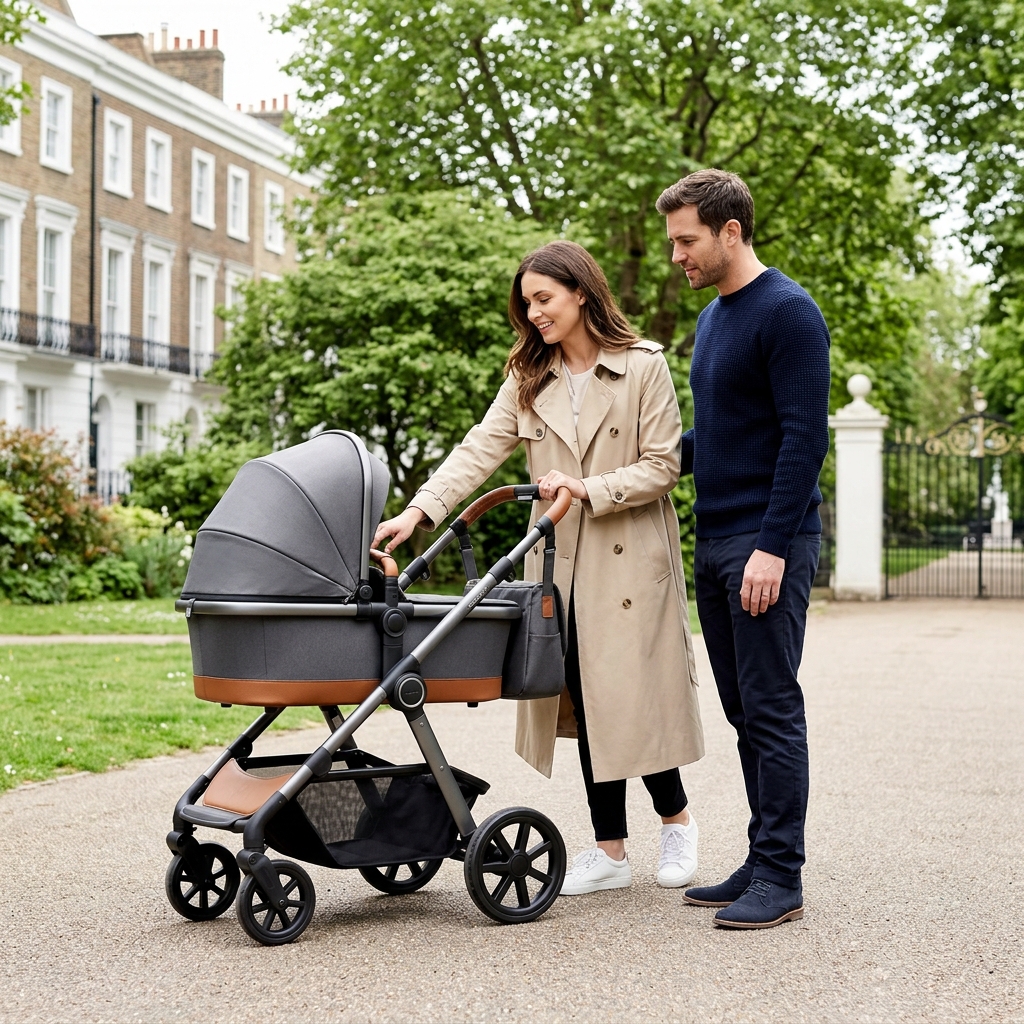
Understanding Pram Components & Terminology
Before diving into specific sizes, let’s clarify some key terms. A pram traditionally refers to a carrycot-style stroller suitable from birth. However, the term is often used more broadly. A pushchair is typically a seat unit designed for older babies and toddlers who can sit upright. A travel system combines a pushchair with a car seat and often a carrycot, offering flexibility from birth onwards. A carrycot is a lie-flat attachment for newborns, prioritising a safe and comfortable sleeping position. A seat unit is designed for babies who have developed head and neck control. The overall size of a pram system is determined by the combination of these components – and how they integrate.
Newborn Pram Size: What to Look For
For newborns, a lie-flat position is crucial for healthy development, preventing breathing difficulties and promoting good spinal alignment. This is where the carrycot comes in. Look for carrycots with internal dimensions of at least 73cm long and 32cm wide to accommodate a newborn comfortably. Don’t solely focus on external dimensions; the internal space is what truly matters. The external dimensions will dictate how it fits through doorways.
All prams sold in the UK must meet BS EN 1888 safety standards, ensuring structural integrity and stability. Pay attention to the carrycot’s depth as well; a deeper carrycot provides more protection from the elements.
Pram Size & Baby’s Growth – From Newborn to Toddler
Your baby will grow rapidly in the first year. Carrycots typically have a weight limit of around 9kg, after which you’ll transition to the seat unit. Seat units generally have a higher weight capacity, usually up to 15-20kg. Consider how easy it is to switch between the carrycot and seat unit – some systems offer seamless transitions, while others require more effort. It’s important to understand that as your baby grows, you might need a pram that adapts to their increasing size, and that the seat unit offers sufficient legroom and back support.
Pram Width & Maneuverability: Getting Through Doorways & Streets
Pram width is particularly important if you live in a city. Standard single prams typically range from 60-75cm wide. Before purchasing, measure your doorways (front door, internal doors, shop doorways) and hallways to ensure the pram can pass through comfortably. Also, consider the width of pavements and pedestrian areas in your neighbourhood.
Wheel size and suspension also influence maneuverability. Larger wheels (around 20-25cm diameter) are better for uneven terrain, while smaller wheels are more suitable for smooth surfaces. Good suspension is essential for absorbing bumps and providing a comfortable ride for your baby.
Pram Height & Parent Comfort
Adjustable handle height is essential for parents of different heights. A handle height that’s too low or too high can lead to back pain and discomfort. Aim for a handle height that allows you to walk comfortably with your arms relaxed. Ergonomic designs that promote good posture are also beneficial.
Consider the height of the shopping basket too. A lower basket can be difficult to reach, while a higher basket might interfere with your walking stride.
Pram Folded Size: Storage & Transport
The folded dimensions of the pram are crucial for storage and transport. Measure your car boot space and any storage areas in your home to ensure the folded pram will fit. Different folding mechanisms offer varying levels of compactness. A flat-pack fold generally results in the smallest folded size, but can be more cumbersome to fold and unfold. A compact fold is easier to operate but might not be as space-saving.
Pram Size vs. Lifestyle: City vs. Country
Your lifestyle significantly influences your pram size choice. For city living, a compact and lightweight pram is ideal for navigating crowded streets and public transport. Look for models with narrow widths, easy folding mechanisms, and good maneuverability.
For rural areas, a more robust and all-terrain pram is better suited for uneven paths and muddy tracks. Larger wheels, durable suspension, and a sturdy frame are essential.
Popular Pram Size Ranges in the UK (2026)
Here’s a comparison of popular pram models and their approximate dimensions (please note these are averages and can vary slightly):
| Model | Type | Approx. Width (cm) | Approx. Weight (kg) | Approx. Price (GBP) |
|---|---|---|---|---|
| Silver Cross Wave (Complete Bundle) | Multi-Terrain / Travel System | 75 | 14.5 | £1299 |
| iCandy Peach 7 | City / Fashion Pram | 60 | 10.5 | £999 |
| Bugaboo Fox 5 | City / All-Terrain | 60 | 9.9 | £1199 |
| Cybex Sisi Lux | City / Compact | 59 | 8.5 | £849 |
| Joie Pact 3 | Compact / Travel System | 54.5 | 7.2 | £399 |
| Maxi-Cosi Lyra | City / All-Terrain | 61 | 10.5 | £749 |
| UppaBaby Vista V2 | Multi-Terrain / Travel System | 65 | 12.5 | £949 |
Measuring Your Space: A Practical Guide
Follow these steps to accurately assess your space:
- Doorways: Measure the width of all doorways you’ll need to navigate.
- Hallways: Measure the narrowest point of your hallways.
- Car Boot: Measure the length, width, and height of your car boot.
- Storage Areas: Measure the available space in your chosen storage area.
Printable Checklist: Download our Pram Size Checklist here
Final Considerations & Checklist
Choosing the right pram size is a personal decision based on your individual needs and lifestyle. Here’s a quick checklist to help you:
- Consider your baby’s potential growth and weight.
- Measure doorways, hallways, and your car boot.
- Think about your terrain – city streets or country paths?
- Prioritize adjustable handle height and ergonomic design.
- Don’t underestimate the importance of folded dimensions.
- Most importantly: Try out different prams in store before making a decision!
FAQ
Q: What’s the difference between a pram and a pushchair?
Traditionally, a pram had a lie-flat carrycot suitable for newborns. A pushchair had a seat unit for older babies. Now the terms are often used interchangeably, but a ‘pram’ often still implies a more traditional, lie-flat option for very young babies.
Q: How important is the weight of the pram?
Weight is a significant factor, especially if you live in a flat or frequently lift the pram in and out of a car. Lighter prams are easier to maneuver, but may not be as robust as heavier models.
Q: What should I do if I have limited storage space?
Look for a pram with a compact fold and consider a model that disassembles easily for storage. Flat-pack folds are the most space-saving, but may be more complicated to manage.
Q: What are the latest safety standards for prams in the UK?
All prams sold in the UK must meet BS EN 1888 safety standards, covering structural integrity, stability, and materials used. Look for this certification when purchasing.
Q: When should I switch from a carrycot to a seat unit?
You can switch to a seat unit when your baby can sit upright with good head and neck control, typically around 6 months of age. However, always consult with your healthcare professional to ensure your baby is developmentally ready.