
Table of Contents
As an Amazon Associate, we earn from qualifying purchases. This means we may receive a small commission at no extra cost to you when you buy through links on this page.
What is Isofix and Why is it Important?
Isofix is an international standard for car seat fittings designed to make installing car seats easier and, crucially, much safer. Unlike traditional seatbelt installation, Isofix utilises dedicated anchor points built into your vehicle. This system significantly reduces the risk of incorrect installation – a major factor in child car seat accidents. Developed in the late 1990s, Isofix was officially mandated in all new cars sold in Europe (including the UK) from 2006 for children’s car seats, and it has continued to evolve with increasingly stringent safety standards.
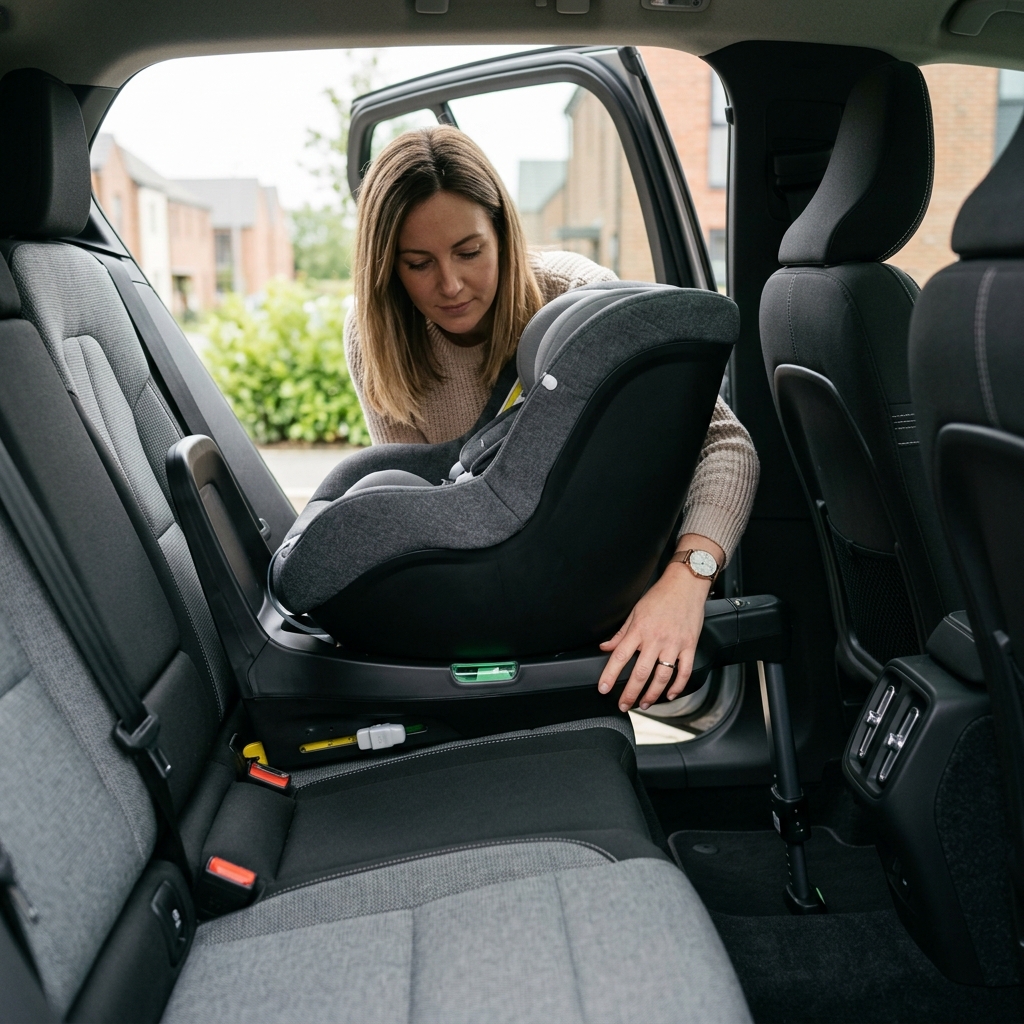
The benefits are substantial: reduced installation errors, a more secure fit, and greater peace of mind. While seatbelt installation remains a viable option (and sometimes necessary), Isofix offers a consistently higher level of safety due to its direct attachment to the car’s structure.
Understanding Isofix Car Seat Types
Isofix car seats come in various forms, catering to different age and weight ranges. Here’s a breakdown:
- Base & Seat Combinations: These involve a separate Isofix base which is fitted once, and then the car seat (suitable for different stages) clicks onto the base. This is convenient for switching between stages.
- All-in-One Seats: Designed to grow with your child, these seats adjust to accommodate babies, toddlers, and older children, often using Isofix throughout the entire lifespan of the seat.
- Booster Seats with Isofix Connectors: For older children, booster seats can utilise Isofix to secure the seat to the vehicle, providing added stability and preventing side-to-side movement.
Here’s a general guide to weight/height ranges (always check the manufacturer’s specifications):
- Group 0/0+ (Birth to 13kg/approx. 15 months): Rear-facing only, typically used with a base.
- Group 1 (9-18kg/approx. 9 months – 4 years): Can be rear or forward-facing, often with rotating capabilities.
- Group 2/3 (15-36kg/approx. 4 – 12 years): High-back booster seats with Isofix or used as standard boosters.
Checking Your Car’s Isofix Compatibility (2026 Standards)
Most cars manufactured after 2006 are Isofix compatible. Look for Isofix anchor points – these are typically located between the seat back and seat cushion. They are often clearly marked with Isofix symbols.
2026 UK Safety Regulations: Regulations continue to evolve, with a greater focus on i-Size (R129) standards. i-Size seats are designed to be compatible with vehicles featuring ISOFIX and prioritize rearward-facing travel for longer. Newer vehicles will increasingly utilize i-Size compatibility. It’s crucial to ensure your chosen car seat complies with current UK regulations.
Vehicle Compatibility Checker: You can check your vehicle’s Isofix compatibility and recommended car seats on the Gov.UK website (link is illustrative; verify current URL in 2026).
Step-by-Step Isofix Car Seat Installation Guide
This guide provides general instructions; always refer to your car seat’s specific instruction manual.
- Locate Isofix Anchor Points: Identify the anchor points in your vehicle.
- Attach the Base: Connect the Isofix base to the anchor points. You’ll usually hear a distinct ‘click’ to confirm a secure connection.
- Check Indicators: Most Isofix bases have indicator lights (green usually means securely fitted, red indicates an issue).
- Adjust the Load Leg: Extend the load leg until it firmly touches the vehicle floor.
- Secure the Car Seat: Click the car seat onto the base, ensuring it locks into place.
- Check for Movement: Grip the car seat firmly and try to move it from side to side and front to back. It should not move more than 1 inch in any direction.
Potential Issues & Troubleshooting: If the indicator lights show red, re-check the connections. Ensure the load leg is correctly adjusted. If you’re still having difficulty, consult a qualified car seat technician.
Top Load Leg Considerations & Usage
The load leg is a crucial component of many Isofix car seats. It extends from the base of the seat to the vehicle floor, acting as a brace to counteract rotational forces in a crash. This significantly improves stability and reduces the risk of injury.
Best Practices:
- Ensure the load leg is firmly planted on the vehicle floor.
- Adjust the load leg to the correct length – it shouldn’t be overly compressed or extended.
- Use a floor protection mat if necessary to prevent damage to your vehicle’s floor covering.
Common Isofix Installation Mistakes to Avoid
Here are some frequent errors:
- Incorrect Base Attachment: Failing to securely connect the base to the Isofix anchor points.
- Improper Load Leg Positioning: Not adjusting the load leg correctly, or placing it on an unsuitable surface.
- Exceeding Weight Limits: Using a car seat that is not appropriate for your child’s weight or height.
- Incorrect Recline Angle: Not adjusting the recline angle correctly, particularly for newborns.
- Ignoring the Instruction Manual: Each car seat is different; always follow the manufacturer’s instructions.
Isofix Car Seat Safety Checks & Maintenance
Regularly check that the car seat is securely fitted. Check the harness straps for wear and tear. Clean the car seat regularly with a mild detergent and water. Car seats have an expiry date (typically 6-10 years from the date of manufacture) – check the label on the seat. A seat that has been involved in a significant collision should also be replaced, even if it appears undamaged.
Isofix vs. Seatbelt Installation: Which is Safer?
Isofix generally offers a higher level of safety due to its reduced risk of installation errors. Crash test data consistently demonstrates that correctly installed Isofix seats perform well in impact scenarios.
However, seatbelt installation can be perfectly safe when done correctly. It may be necessary if your vehicle doesn’t have Isofix anchor points, or if you are using a car seat in a vehicle where Isofix compatibility is limited.
Comparative Table:
| Feature | Isofix | Seatbelt Installation |
|---|---|---|
| Installation Error Rate | Lower | Higher |
| Ease of Installation | Easier | More Complex |
| Security of Fit | More Secure | Variable |
| Vehicle Compatibility | Requires Isofix Anchor Points | Universal |
| Cost | Often More Expensive | Generally Less Expensive |
Frequently Asked Questions (Isofix Car Seats)
- Q: Can I use any Isofix car seat in any Isofix-equipped car?
A: Not necessarily. Always check the vehicle compatibility list provided by the car seat manufacturer or use a vehicle compatibility checker like the one on the Gov.UK website. - Q: What does ‘i-Size’ mean?
A: i-Size (R129) is a newer, more comprehensive car seat safety standard that focuses on rearward-facing travel for longer and prioritises compatibility with Isofix. - Q: How often should I replace my car seat?
A: Car seats have an expiry date, usually 6-10 years from the date of manufacture. Always check the label on the seat. - Q: What if my car doesn’t have Isofix?
A: You can still use a car seat installed with the vehicle’s seatbelt. Ensure it’s fitted correctly and meets UK safety standards. - Q: Can I use a second-hand Isofix car seat?
A: It’s not recommended. You won’t know the seat’s history (whether it’s been involved in a crash or has hidden damage), and it may be nearing its expiry date.
Product Showcase (2026 Pricing):
| Product Name | Price (GBP) |
|---|---|
| Maxi-Cosi Pearl 360 Isofix Car Seat | £289.0 |
| Cybex Sirona S i-Size Car Seat | £320.0 |
| Joie i-Spin 360 Car Seat | £260.0 |
| Britax Römer Dualfix i-Size Car Seat | £350.0 |
| Nuna Rebl Plus i-Size Car Seat | £429.0 |