Congratulations on your new arrival! Creating a safe, comfortable, and stylish nursery for your little one is an exciting process. One often overlooked but crucial element is the nursery rug. A well-chosen rug isn’t just a decorative touch; it provides a soft, safe space for play, adds warmth and comfort, and can beautifully define different areas within the nursery. But with so many options available, how do you choose the right rug for your baby’s environment? This guide will take you through everything you need to consider in 2026, from safety features and materials to size, style, and budget.
As an Amazon Associate, we earn from qualifying purchases. This means we may receive a small commission at no extra cost to you when you buy through links on this page.
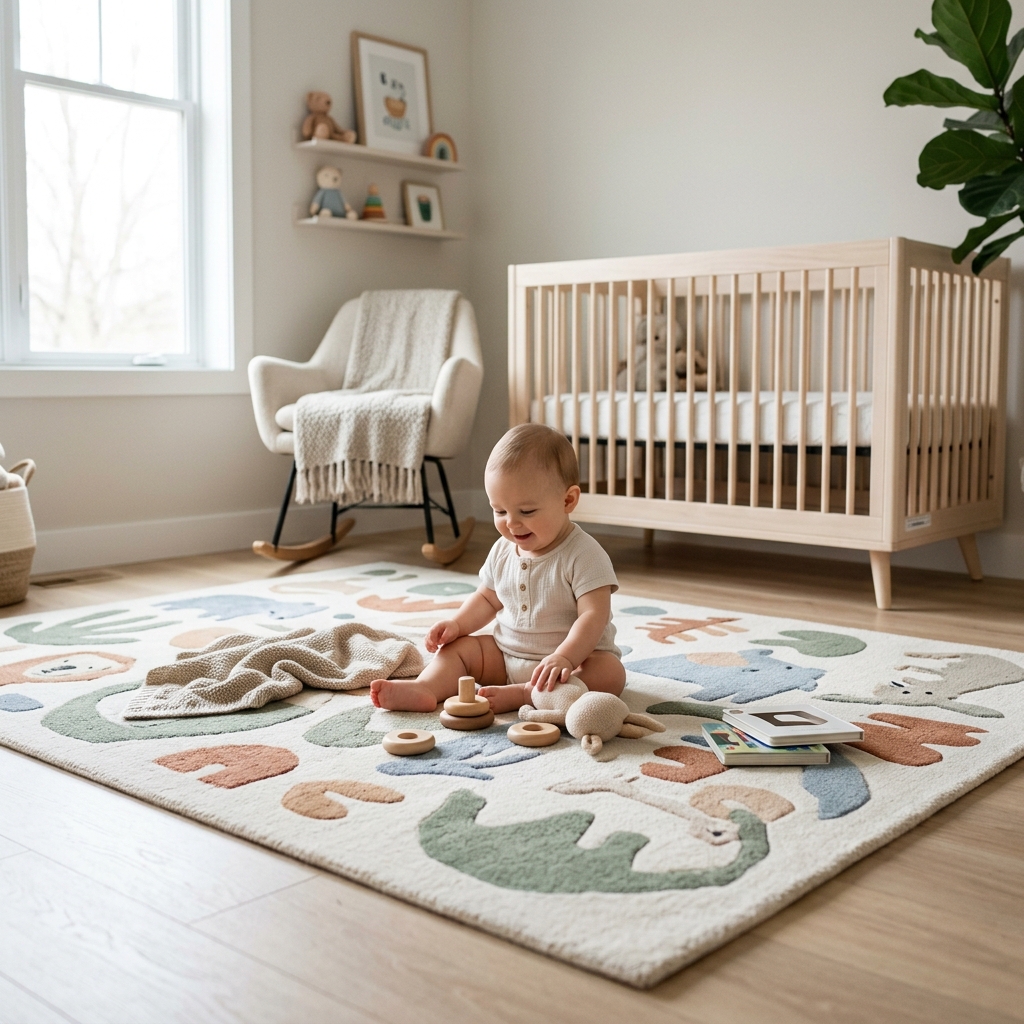
Table of Contents
Safety First: Key Considerations for Nursery Rugs
Your baby’s safety is paramount. When selecting a nursery rug, safety should be your top priority. Here’s what to look for:
- Non-Slip Backing: This is non-negotiable. Babies will be learning to roll, crawl, and eventually walk, and a slipping rug poses a serious fall risk. Look for rugs with a built-in non-slip backing or, crucially, invest in a separate Amazon Basics Non-Slip Rug Pad (£25.00) to place underneath.
- Hypoallergenic Materials: Babies have sensitive skin and are more prone to allergies. Opt for hypoallergenic materials like natural wool or cotton, or synthetic fibres specifically designed to be hypoallergenic.
- Rug Thickness: While a plush, thick rug might seem comforting, it can also be a trip hazard. A moderate thickness (around 1cm – 1.5cm) is ideal, providing cushioning without being overly bulky.
- Avoid Loose Fibres & Small Parts: Ensure the rug doesn’t shed excessively or have any loose parts that could be a choking hazard.
- Certifications: Look for rugs certified by reputable organisations. The Oeko-Tex Standard 100 certification guarantees the rug has been tested for harmful substances.
Rug Materials: Pros & Cons for Nurseries (2026 Trends)
The material of your nursery rug significantly impacts its safety, comfort, and longevity. Here’s a breakdown of popular choices in 2026:
Wool
Pros: Naturally hypoallergenic, incredibly durable, soft underfoot, sustainable, naturally stain-resistant. Wool rugs offer excellent insulation.
Cons: Can be expensive, requires professional cleaning, may not be suitable for babies with wool allergies (though rare).
Price Range: £100 – £300+ (depending on size and quality). Example: John Lewis & Partners Wool Nursery Rug (£120.00).
Cotton
Pros: Soft, affordable, machine washable (often), breathable, readily available. Good for lighter use areas.
Cons: Less durable than wool, prone to staining, can shrink when washed.
Price Range: £30 – £100. Example: Dunelm Teddy Bear Rug (£30.00).
Synthetic Fibres (Polyester, Polypropylene)
Pros: Affordable, stain-resistant, easy to clean, durable, wide range of colours and designs. The technology for minimising ‘off-gassing’ in synthetic rugs has improved significantly in 2026, making them a more acceptable option.
Cons: Can feel less luxurious than natural fibres, some may off-gas (release volatile organic compounds – look for low-VOC options), less environmentally friendly.
Price Range: £40 – £150. Example: Wayfair Kids Geometric Rug (£70.00).
Sustainable Rug Materials (2026 Trends)
In 2026, there’s a growing demand for sustainable nursery rugs. Look for options made from:
- Recycled Polyester: Made from recycled plastic bottles, offering a more eco-friendly alternative to virgin polyester.
- Organic Cotton: Grown without harmful pesticides or fertilisers.
- Jute & Seagrass: Natural, biodegradable fibres offering a textured look. Best suited for lower-traffic areas.
Example: Ruggable Washable Rug (various designs) (£150.00) – many designs now offer recycled polyester options.
Sizing Guide: Finding the Right Rug Size for Your Nursery
The right rug size depends on your nursery’s layout and furniture placement.
- Under the Cot: A small rug (60cm x 90cm or 80cm x 120cm) placed partially under the cot provides a soft landing spot for little feet. Ensure it doesn’t extend too far out, creating a trip hazard.
- Play Area: A larger rug (120cm x 160cm or 160cm x 200cm) defines a dedicated play area, providing a comfortable surface for tummy time and play.
- Whole Room: For a more luxurious feel, consider a rug that covers most of the floor space, leaving a border around the edges. This is best suited for larger nurseries.
Tip: Use painter’s tape to mark out the proposed rug size on the floor before you buy, to visualise how it will look.
Style & Design: Matching Your Nursery Theme
Nursery rug design has seen a shift towards softer palettes and more gender-neutral themes in 2026. Popular choices include:
- Animal Themes: Classic and always popular, featuring cute animals like bears, bunnies, or woodland creatures.
- Stars & Celestial Patterns: Create a dreamy and calming atmosphere.
- Geometric Patterns: Modern and stylish, but choose softer shapes and colours.
- Neutral Tones: Greys, creams, and whites provide a versatile backdrop that complements any nursery decor.
Coordinate the rug with your existing nursery decor. Consider the wall colours, furniture style, and bedding. Don’t be afraid to add a pop of colour or pattern, but ensure it doesn’t overwhelm the space. Example: Scandi Living Cloud Rug (£90.00) – a trendy neutral option.
Budget Breakdown: Nursery Rug Price Ranges (UK, 2026)
Here’s a realistic price range for nursery rugs in the UK (2026):
| Rug Type | Typical Size | Price Range (GBP) |
|---|---|---|
| Cotton | 60cm x 90cm | £30 – £60 |
| Synthetic (Polyester/Polypropylene) | 120cm x 160cm | £40 – £100 |
| Wool | 120cm x 160cm | £100 – £200 |
| Washable (Ruggable) | 160cm x 230cm | £150 – £300 |
| Hypoallergenic (Specialist) | 120cm x 160cm | £80 – £150 |
Remember that price often reflects quality and durability. Investing in a higher-quality rug may save you money in the long run, as it will withstand more wear and tear.
Cleaning & Maintenance: Keeping Your Nursery Rug Fresh
Regular cleaning is essential to keep your nursery rug hygienic and safe for your baby.
- Vacuum Regularly: At least once a week, using a vacuum cleaner with a HEPA filter.
- Spot Clean Spills Immediately: Blot (don’t rub) spills with a clean cloth. Use a mild detergent and water for stubborn stains.
- Washable Rugs: If you have a washable rug (like Ruggable or some cotton options), follow the manufacturer’s instructions for machine washing.
- Professional Cleaning: For wool rugs, professional cleaning is recommended every 12-18 months.
Top Nursery Rugs Available in the UK (2026)
Here’s a selection of recommended rugs, categorized by price point and material:
- Budget-Friendly (£30-£70): Dunelm Teddy Bear Rug (£30.00), Wayfair Kids Geometric Rug (£70.00)
- Mid-Range (£70-£120): Scandi Living Cloud Rug (£90.00), Marks & Spencer Hypoallergenic Nursery Rug (£85.00)
- Premium (£120+): John Lewis & Partners Wool Nursery Rug (£120.00), Ruggable Washable Rug (various designs) (£150.00), The Little Rug Company Washable Play Mat (£45.00)
Frequently Asked Questions (FAQs)
- Q: What size rug is best for a small nursery?
A: A smaller rug (60cm x 90cm or 80cm x 120cm) placed under the cot or in a designated play area is ideal. Avoid overwhelming the space with a large rug. - Q: Are synthetic rugs safe for babies?
A: Modern synthetic rugs are generally safe, but look for low-VOC options to minimise potential off-gassing. Ensure the rug is free of loose fibres. - Q: How often should I clean my nursery rug?
A: Vacuum at least once a week. Spot clean spills immediately and consider professional cleaning for wool rugs every 12-18 months. - Q: What’s the best way to prevent a nursery rug from slipping?
A: Use a non-slip rug pad underneath the rug. This is crucial for baby’s safety. - Q: Are washable rugs worth the investment?
A: Washable rugs are incredibly convenient for nurseries, making cleaning up spills and messes much easier. They are definitely worth considering, especially if your baby is prone to accidents.
Conclusion: Creating a Safe & Stylish Nursery Space
Choosing the perfect nursery rug for your baby is a rewarding process. Prioritize safety by selecting a rug with non-slip backing and hypoallergenic materials. Consider the rug’s size, material, and style to create a comfortable, inviting, and visually appealing space for your little one. By carefully considering these factors, you can ensure your nursery rug contributes to a safe, stylish, and nurturing environment for your baby to grow and play.