Table of Contents
As an Amazon Associate, we earn from qualifying purchases. This means we may receive a small commission at no extra cost to you when you buy through links on this page.
Introduction: Why Mattress Firmness Matters for Babies
Choosing the right mattress for your baby is one of the most important decisions you’ll make as a new parent. It directly impacts their comfort, support, and crucially, their safety. A correctly firm mattress is a vital component of safe sleep, helping to reduce the risk of Sudden Infant Death Syndrome (SIDS). A firm surface prevents your baby from sinking into the mattress, which can obstruct their breathing. It also supports healthy spinal development from the very beginning. This guide will help you navigate the options available in the UK market in 2026 and make an informed choice.
UK Safety Standards for Baby Mattresses (2026 Update)
In the UK, all baby mattresses must meet stringent safety standards. As of 2026, the primary standard is BS EN 16777:2023. This standard covers several aspects, including flammability, construction, and importantly, firmness. The standard dictates that a new baby mattress must have a firm, flat surface. There’s no official ‘firmness rating’ scale, but the standard requires:
- Firmness under pressure: The mattress surface should not compress excessively under a baby’s weight. A defined indentation test is used to assess this.
- Gap safety: The gap between the mattress and the cot sides must be minimal (less than 20mm) to prevent entrapment.
- Breathability: The mattress materials must allow for air circulation.
Manufacturers are legally required to comply with these standards and will usually display a label confirming compliance. Keep this label for your records. Expect increased scrutiny from trading standards regarding online sales and clear indication of BS EN 16777:2023 compliance.
Understanding Baby Mattress Firmness Levels
While there isn’t a universally recognised ‘firmness scale’ for baby mattresses, they’re generally categorised as follows:
- Soft: Not recommended for babies. Offers too much give and poses a suffocation risk.
- Medium: Still generally unsuitable for babies, especially newborns. May be appropriate for toddlers *under strict supervision* once they are mobile.
- Firm: The recommended level for newborns and infants up to 12 months. Provides the necessary support and reduces the risk of SIDS.
- Extra Firm: Sometimes available, offering even greater support. May be beneficial for babies with specific medical conditions (always consult your GP).
Firmness is often assessed subjectively (how it *feels* when pressed) and objectively (indentation tests performed during manufacturing). Remember, a mattress that feels ‘firm’ to an adult may still be within the acceptable range for a baby, but it’s the objective testing that truly matters.
Firm vs. Soft Mattresses: What’s Best for Your Baby?
The difference between firm and soft mattresses for babies is critical. Here’s a comparison:
| Feature | Firm Mattress | Soft Mattress |
|---|---|---|
| Safety | Reduces SIDS risk by preventing rebreathing. | Increases SIDS risk due to potential suffocation. |
| Support | Provides optimal spinal support for developing babies. | May not provide adequate support, leading to discomfort or developmental issues. |
| Comfort (Baby) | Comfortable for babies when paired with a well-fitting sheet. | May *seem* comfortable initially, but is not safe. |
| Cost | Generally comparable to soft mattresses. | Can sometimes be cheaper, but the cost of safety is immeasurable. |
| Longevity | Suitable for use throughout the first year and beyond. | Not recommended for babies under 12 months. |
Common Misconception: Some parents believe softer mattresses are more comfortable for babies. This isn’t true. Babies don’t perceive comfort the same way adults do, and a firm surface is demonstrably safer.
Newborns (0-12 Months): Firmness Requirements
For newborns (0-12 months), a firm mattress is non-negotiable. The Lullaby Trust and the NHS strongly recommend a firm, flat, and waterproof mattress. Avoid mattresses with deep cushioning, pillow-top designs, or anything that could compress easily. Ensure the mattress fits snugly within the cot or crib, with no gaps around the edges. This prevents the baby from becoming wedged between the mattress and the cot sides. The surface should be completely flat – avoid any contoured or shaped mattresses.
Older Babies (12+ Months): Can You Adjust Firmness?
As your baby becomes more mobile (rolling, sitting, attempting to stand), you *might* consider a slight adjustment in firmness. However, this should be approached with extreme caution. Adding a thin (and we mean *very* thin – maximum 1cm) mattress topper made of breathable materials *might* be acceptable, but only if the underlying mattress remains firm and meets safety standards. Avoid thick toppers that significantly alter the firmness. It’s often best to simply continue using the firm mattress throughout the toddler years. Always prioritise safety.
Mattress Materials & Firmness: How They Relate
The material of the mattress influences its firmness and other properties:
- Foam (Polyurethane Foam): Commonly used and generally firm. Quality varies greatly, so check for density and BS EN 16777 compliance.
- Sprung (Open Coil/Bonnel Springs): Can offer good support, but ensure the springs are well-contained and covered with a firm layer of foam to prevent entrapment.
- Coir (Coconut Fibre): Naturally firm and breathable. Often used as a core material in organic mattresses.
- Memory Foam: Generally *not* recommended for babies due to its tendency to conform to the body shape, potentially creating pressure points and increasing the risk of suffocation, although some newer breathable memory foams are beginning to appear on the market – always check safety certifications.
Checking Mattress Firmness: A Simple Test
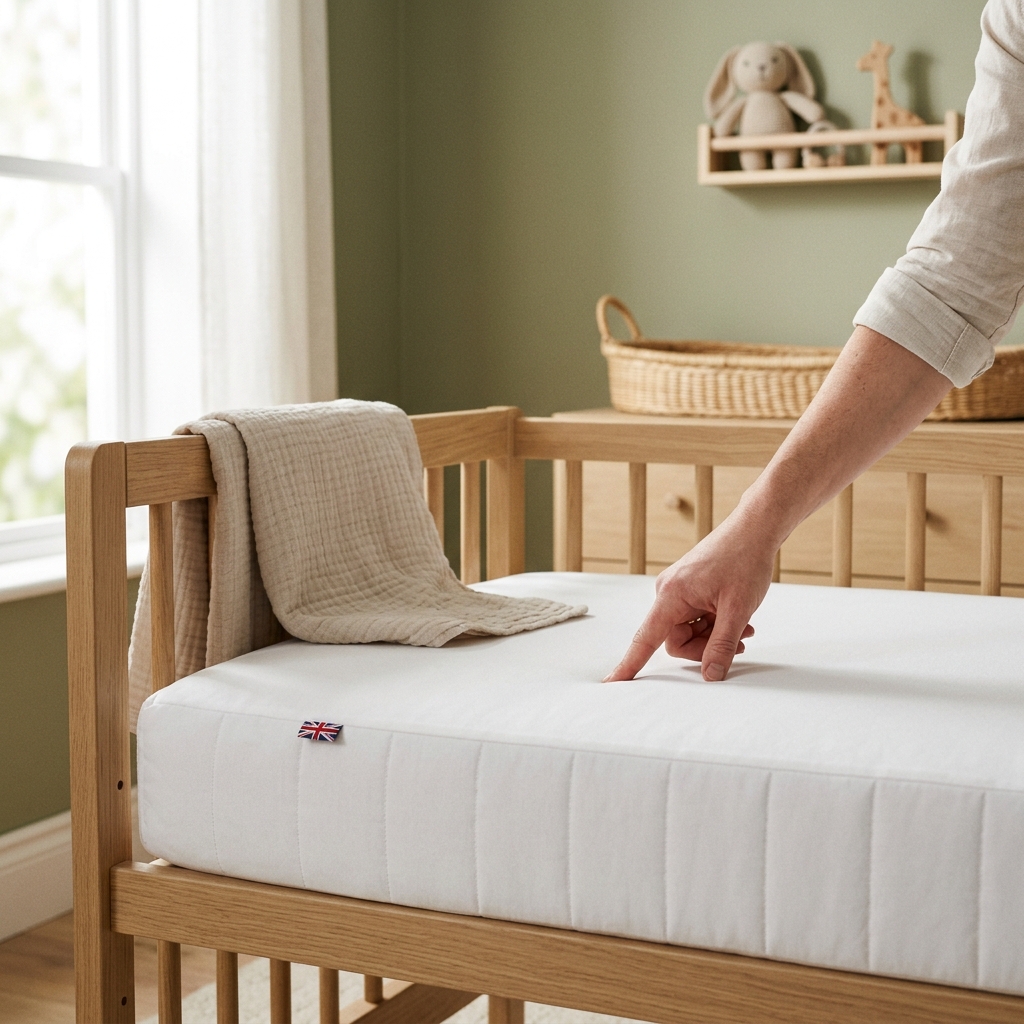
You can get a general idea of firmness by performing a simple ‘hand press’ test. Place your hand flat on the mattress surface and press down firmly. The mattress should spring back quickly and not leave a significant indentation. However, this test is *not* a substitute for verifying that the mattress complies with BS EN 16777:2023. Always look for the certification label.
Frequently Asked Questions (FAQs)
- What about memory foam mattresses? While some modern memory foam is designed to be breathable, traditional memory foam isn’t generally recommended for babies due to its conforming nature and potential suffocation risk.
- Is an organic mattress better? Organic mattresses often use natural materials like coir and organic cotton, which can be beneficial for sensitive skin. However, organic certification doesn’t guarantee safety – it’s still crucial to check for BS EN 16777 compliance.
- How often should I replace the baby mattress? It’s recommended to replace the mattress after your baby reaches 12-18 months, or sooner if it shows signs of wear and tear (sagging, indentation).
- Can I use a second-hand baby mattress? It is *strongly* discouraged to use a second-hand baby mattress. You cannot guarantee its history or whether it meets current safety standards.
- What does ‘waterproof’ mean? A waterproof mattress cover is essential. It prevents liquids from soaking into the mattress, reducing the risk of mould and bacteria growth. Ensure the cover is breathable to avoid overheating.
Conclusion: Prioritising Safe Sleep
Choosing the right baby mattress firmness is a critical step in creating a safe sleep environment for your little one. Always prioritise a firm, flat, and well-fitting mattress that meets the latest UK safety standards (BS EN 16777:2023). Remember, a firm mattress is a vital component of reducing the risk of SIDS and promoting healthy development. Don’t compromise on safety – your baby’s wellbeing is paramount.
Resources:
- The Lullaby Trust: https://www.lullabytrust.org.uk/
- NHS Safe Sleep Guidance: https://www.nhs.uk/conditions/baby/caring-for-a-baby/safe-sleep/
Example Products (2026):
| Product Name | Price (GBP) |
|---|---|
| Silentnight Safe Nights Baby Mattress | £79.99 |
| Red Kite Baby Sleep Tight Mattress | £64.99 |
| Mothercare Roam Cot Bed Mattress | £99.99 |
| Purflo Breathe Easy Mattress | £149.99 |
| Cuddlebug Foam Baby Mattress | £59.99 |