
Table of Contents
As an Amazon Associate, we earn from qualifying purchases. This means we may receive a small commission at no extra cost to you when you buy through links on this page.
What is i-Size?
i-Size, officially known as R129, is the newest European standard for car seats. Introduced to address limitations in the older R44/04 regulations, i-Size prioritises a child’s height rather than weight when selecting a car seat. The shift was motivated by research showing height is a more accurate indicator of a child’s physical development and appropriate car seat fit. R44/04 allowed for considerable variation in when children transitioned to the next seat group based purely on weight, sometimes meaning a child was moved too early. i-Size aims to provide a more consistent and, crucially, safer approach to child car seat safety. It also significantly improves side impact protection requirements.
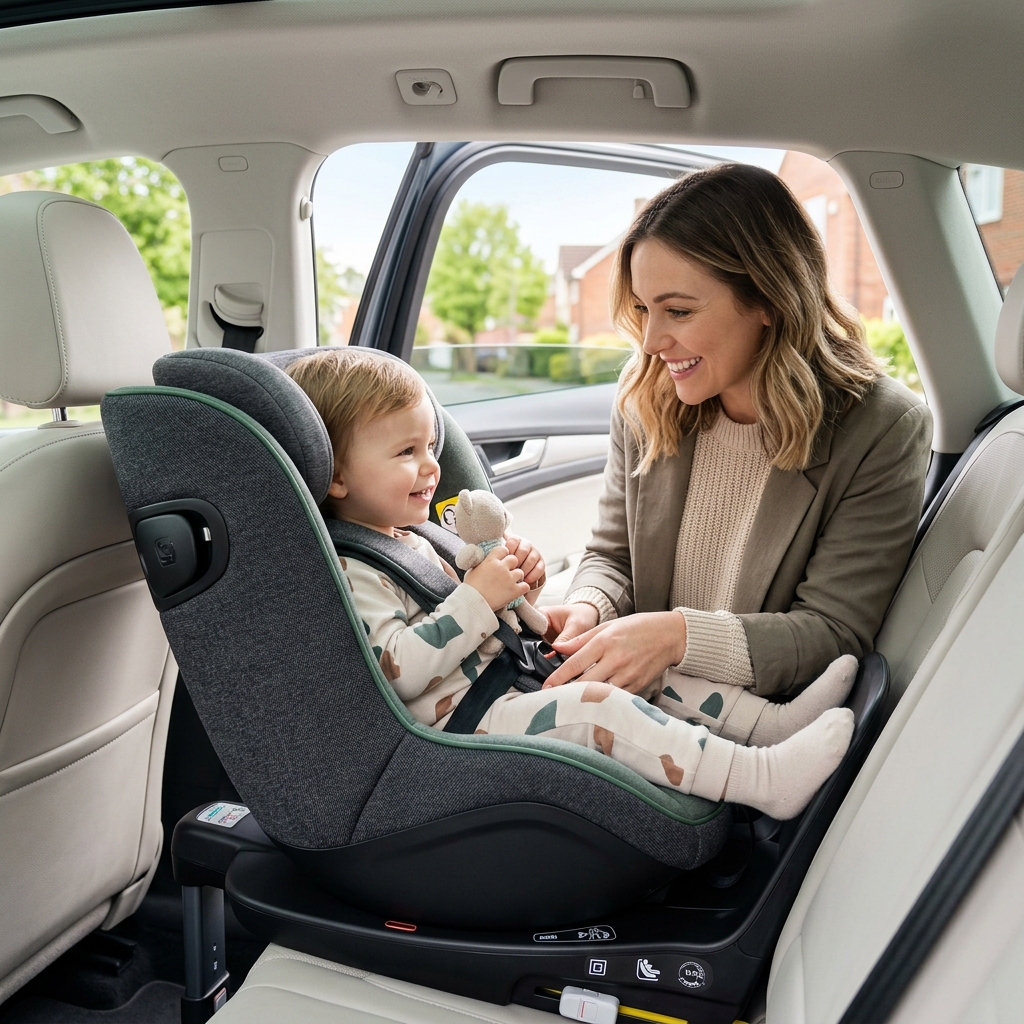
i-Size vs. RWF (Rearward Facing) – What’s the Difference?
It’s a common misconception that i-Size and Rearward Facing (RWF) are the same. They are intrinsically linked, but not identical. i-Size requires a child to travel rearward facing until at least 15 months old. This is a substantial safety improvement, as rearward facing is up to five times safer than forward facing for young children. However, a car seat can be RWF compliant under the older R44/04 standard *without* being i-Size. Conversely, all i-Size seats are designed to be used rearward facing for a minimum period, but not all RWF seats are i-Size approved. Look for the i-Size label (a small ‘i’ in a circle) to confirm compliance.
Key i-Size Requirements & Benefits
i-Size car seats adhere to stricter criteria than their R44/04 counterparts:
- Height Requirements: Focus on height, not weight, for determining seat suitability.
- ISOFIX Compatibility: i-Size seats *must* be installed using ISOFIX anchor points. This eliminates installation errors common with seat belt fitting.
- Side Impact Testing: i-Size regulations feature significantly enhanced side impact testing, offering better protection in these common accidents.
- Improved Safety Standards: Overall, i-Size aims for a more sophisticated and holistic approach to car seat safety, incorporating advancements in crash test technology and child biomechanics.
Benefits for Children: Enhanced protection, particularly in side impacts. A more appropriate fit based on height, ensuring optimal safety.
Benefits for Parents: Reduced installation errors thanks to ISOFIX. Clearer guidelines for choosing the right seat. Greater confidence in the safety of their child.
Height and Weight Guidelines: Finding the Right i-Size Seat
Determining the correct i-Size car seat group requires accurately measuring your child’s height. Weight is still a factor for seat limits, but height dictates the initial group.
| i-Size Group | Height Range | Approximate Age | Typical Seat Type |
|---|---|---|---|
| 0-40 | 40-60cm | Birth – 6 months (approx.) | Infant Carrier |
| 40-85 | 60-85cm | 6 months – 2 years (approx.) | Infant Carrier / Combination Seat (Rearward Facing) |
| 85-150 | 85-150cm | 2 years – 12 years (approx.) | Combination Seat / High-Back Booster |
Important Note: These are approximate ages. Always prioritize height measurements over age. Check the specific seat’s height and weight limits before purchasing.
Types of i-Size Car Seats
Infant Carriers (0-15 months)
Pros: Convenient for carrying baby. Often compatible with pushchair chassis. Typically fully rearward facing.
Cons: Limited lifespan as baby grows. Can become heavy to carry with a larger baby.
Combination Seats (Extending beyond infancy)
Pros: Longer lifespan – adapts as your child grows. Often rotate for easier access. Can be used rearward and forward facing.
Cons: Can be more expensive than infant carriers. May be bulkier.
High-Back Boosters
Pros: Provide a safe and comfortable ride for older children. Offer good side impact protection. Secure child with the vehicle’s seat belt.
Cons: Only suitable for children who have outgrown combination seats. Require correct vehicle seat belt fitting.
ISOFIX Explained: How i-Size Seats Attach
ISOFIX is an international standard for child car seat fitting. It uses dedicated anchor points built into your vehicle’s chassis, rather than the seat belt. i-Size seats are designed to be used exclusively with ISOFIX. Most i-Size seats also utilize a ‘Top Tether’ – a strap that anchors to a point on the vehicle’s seat back or frame, providing extra stability.
Step-by-Step Installation:
- Locate the ISOFIX anchor points in your vehicle (refer to your car’s manual).
- Attach the car seat to the ISOFIX base, ensuring it clicks securely into place.
- If applicable, attach the Top Tether and tighten it according to the seat’s instructions.
- Double-check the installation to ensure the seat is firmly secured and doesn’t move excessively.
Common Mistakes to Avoid:
- Not clicking the ISOFIX connectors fully into place.
- Incorrectly tightening the Top Tether.
- Exceeding the weight or height limits of the seat.
- Using a non-i-Size seat in an i-Size installation.
i-Size Car Seat Compatibility: Your Vehicle
Most cars manufactured after 2014 are ISOFIX compatible. However, i-Size compatibility is more specific. Check your vehicle’s manual to confirm it has i-Size anchor points. You can also consult websites like GOV.UK’s child car seat safety page for more information. Some manufacturers provide specific i-Size compatibility lists for their vehicle models. If your car isn’t fully i-Size compatible, you can still use an i-Size seat if it’s also approved under R44/04, but you won’t benefit from all the i-Size safety features.
Choosing the Best i-Size Car Seat: Key Features to Consider (2026)
When selecting an i-Size car seat in 2026, consider these factors:
- Safety Ratings: Look for seats with high ratings from independent testing organizations like ADAC and Which?.
- Comfort: Consider padding, recline options, and breathable fabrics.
- Recline Options: Essential for infant comfort and preventing head slump.
- Ease of Use: How easy is it to install, adjust, and clean?
- Fabric Quality: Durable, washable, and hypoallergenic fabrics are ideal.
- Additional Features: Rotating seats, integrated sun canopies, and adjustable headrests can add convenience.
i-Size Car Seat Laws and Regulations in the UK (2026)
UK law requires all children under 12 years old or 135cm tall to use a car seat. While both R44/04 and i-Size seats are currently legal, i-Size is becoming increasingly prevalent. There’s a growing push for all new car seats to be i-Size compliant to improve overall child safety standards. Failure to comply with car seat laws can result in a £500 fine and three penalty points on your license.
Frequently Asked Questions (FAQs) about i-Size Car Seats
Can I use a non-i-Size seat in an i-Size compatible car?
Yes, you can. If your car has i-Size anchor points, it will also be compatible with R44/04 seats fitted with seatbelts. However, you won’t benefit from the enhanced safety features of i-Size.
What happens if my child outgrows a seat?
You must move your child to the next appropriate i-Size group based on their height and weight. Continuing to use a seat beyond its limits is illegal and unsafe.
What about second-hand i-Size car seats?
It’s generally not recommended to buy a second-hand car seat. You cannot be certain of its history – it may have been involved in an accident, potentially compromising its structural integrity. Also, the seat may no longer meet current safety standards.
Does i-Size affect my car insurance?
No, using an i-Size compliant car seat shouldn’t directly affect your car insurance premiums. However, driving without a legal car seat, or using an incorrectly fitted one, could invalidate your insurance in the event of an accident.
Where can I find more information about i-Size?
The GOV.UK website provides comprehensive information on car seat safety, including i-Size regulations. Also, the websites of car seat manufacturers like Maxi-Cosi, Cybex, and Britax Römer offer detailed product information and guidance.