
Table of Contents
As an Amazon Associate, we earn from qualifying purchases. This means we may receive a small commission at no extra cost to you when you buy through links on this page.
Introduction: The Challenges of Car Seats for Tall Babies
Finding the right car seat for a tall baby can be a surprisingly tricky undertaking. While many parents focus on weight limits, height is increasingly becoming the limiting factor, meaning babies can quickly outgrow their seats even if they haven’t reached the maximum weight. This presents a unique set of challenges: discomfort for your little one as they become cramped, potential safety concerns if limbs are restricted, and the frustrating expense of needing to upgrade to the next stage sooner than anticipated. Extended rear-facing is widely recommended for optimal safety, but many standard car seats don’t accommodate taller children in this position for long enough. This guide aims to navigate these hurdles and help you choose the best car seat for your growing baby in the UK market.
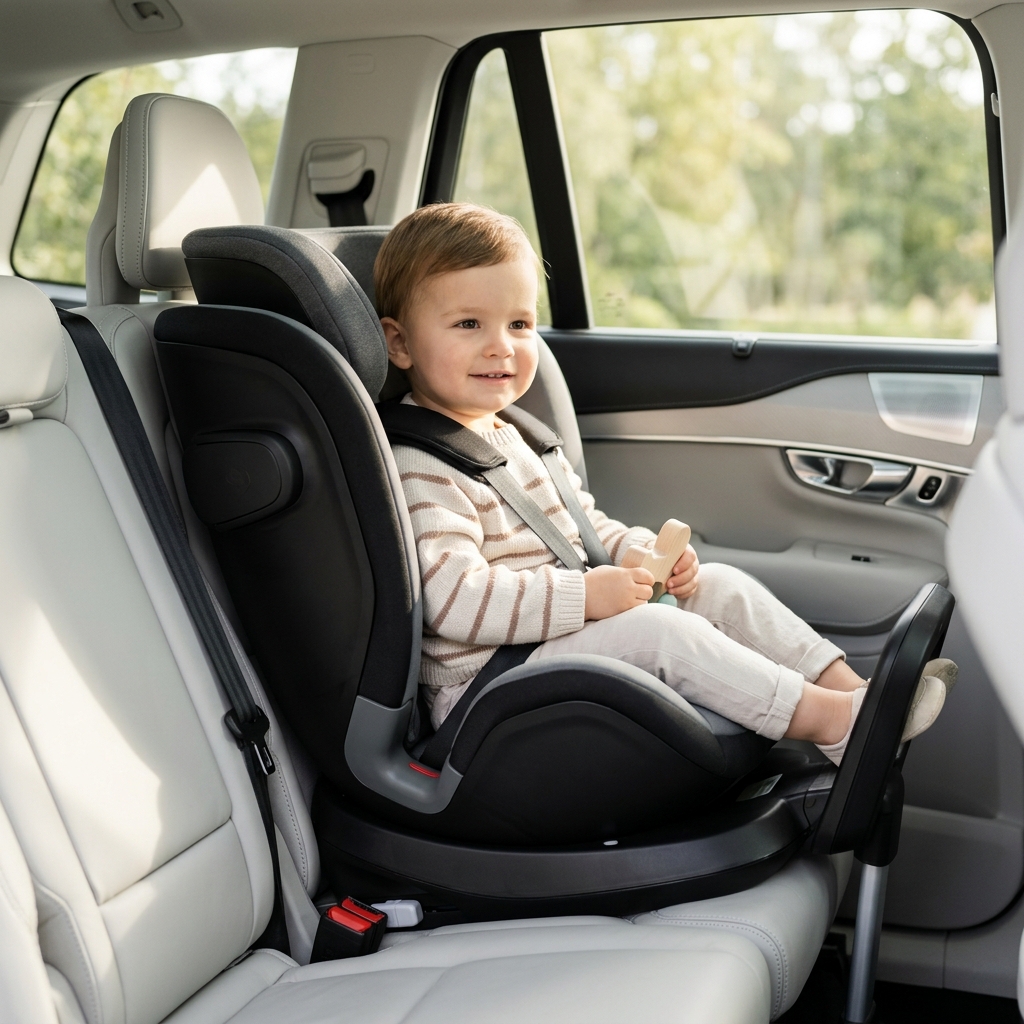
Understanding Car Seat Stages & Height Limits (UK Regulations 2026)
UK car seat regulations are primarily governed by R129 i-Size, which prioritises height over weight. Here’s a breakdown of the current groups (as of 2026):
- Group 0+ (Birth to approx. 83cm): Typically rear-facing only. Focuses on newborns and very young babies.
- Group 1 (83cm to 105cm): Can be rear or forward-facing, but i-Size regulations strongly encourage extended rear-facing within this group.
- Group 2 (105cm to 135cm): High-backed booster seats with a 5-point harness.
- Group 3 (135cm+): Booster cushions or high-backed booster seats without a harness.
Important Note: i-Size regulations mean height limits are becoming more standardised. Always check the manufacturer’s specifications for the exact height limit of each car seat. The move to i-Size is designed to offer better protection, particularly for taller children, but it’s crucial to understand the new guidelines.
Key Features to Look for in a Car Seat for Tall Babies
When selecting a car seat for a tall baby, consider these features:
- Adjustable Headrest: Essential for accommodating growth. Look for a headrest with multiple positions.
- Deep Side Wings: Provide crucial side impact protection, particularly important as your baby grows.
- Spacious Shell: A wider and deeper seat shell offers more room for legs and shoulders.
- Extended Rear-Facing Capabilities: Prioritise a seat that allows for rear-facing use up to at least 105cm.
- ISOfix Compatibility: Provides a secure and easy installation method.
- Impact-Absorbing Materials: Look for seats with advanced side impact protection systems.
- Breathable Fabrics: Keeps your baby comfortable, especially during warmer months.
Top Car Seats for Tall Babies: Our 2026 Reviews
Cybex Sirona S i-Size
Price: £350
The Cybex Sirona S i-Size is a highly rated rotating car seat offering extended rear-facing. It boasts excellent side impact protection and a comfortable, spacious design.
- Height Limit: Up to 105cm
- Weight Limit: Up to 18kg
- ISOfix: Yes
- Pros: 360° rotation, excellent safety features, extended rear-facing.
- Cons: Can be bulky, relatively expensive.
Joie i-Spin 360
Price: £280
The Joie i-Spin 360 is a more affordable option that still delivers on safety and comfort. It features 360° rotation and offers extended rear-facing capabilities.
- Height Limit: Up to 105cm
- Weight Limit: Up to 18kg
- ISOfix: Yes
- Pros: Affordable, 360° rotation, easy to install.
- Cons: May not be as spacious as some higher-end models.
Maxi-Cosi Pearl 360
Price: £320
Part of the Maxi-Cosi 360 family, the Pearl 360 is a rotating car seat renowned for its ease of use and safety features. It adapts well to growing babies.
- Height Limit: Up to 105cm
- Weight Limit: Up to 18kg
- ISOfix: Yes
- Pros: Easy rotation, comfortable padding, good safety ratings.
- Cons: Base unit sold separately.
Britax Römer Duo Plus i-Size
Price: £400
The Britax Römer Duo Plus i-Size is a premium option designed for extended rear-facing. It offers superior safety features and a comfortable ride for taller children.
- Height Limit: Up to 105cm
- Weight Limit: Up to 18kg
- ISOfix: Yes
- Pros: Excellent safety features, long-lasting, comfortable.
- Cons: High price point, can be heavy.
Nuna Rebl Next
Price: £450
The Nuna Rebl Next is a luxurious and highly-rated car seat known for its exceptional comfort and safety. It offers extended rear-facing and a sleek design.
- Height Limit: Up to 105cm
- Weight Limit: Up to 18kg
- ISOfix: Yes
- Pros: Premium materials, excellent comfort, easy to use.
- Cons: Most expensive option, can be bulky.
Recaro Salia Elite i-Size
Price: £380
The Recaro Salia Elite i-Size features a breathable fabric and a comfortable, ergonomic design. It’s designed to grow with your child, offering extended rear-facing and forward-facing options.
- Height Limit: Up to 105cm
- Weight Limit: Up to 18kg
- ISOfix: Yes
- Pros: Comfortable, breathable fabric, good safety features.
- Cons: May not rotate as smoothly as some other models.
Silver Cross Dream i-Size
Price: £300
The Silver Cross Dream i-Size is a stylish and practical car seat that is easy to use and offers extended rear facing capabilities.
- Height Limit: Up to 105cm
- Weight Limit: Up to 18kg
- ISOfix: Yes
- Pros: Affordable, easy to install, good value for money.
- Cons: Not as many features as some premium models.
| Car Seat Model | Price (GBP) | Height Limit (cm) | Weight Limit (kg) | ISOfix | Rotation |
|---|---|---|---|---|---|
| Cybex Sirona S i-Size | £350 | 105 | 18 | Yes | Yes |
| Joie i-Spin 360 | £280 | 105 | 18 | Yes | Yes |
| Maxi-Cosi Pearl 360 | £320 | 105 | 18 | Yes | Yes |
| Britax Römer Duo Plus i-Size | £400 | 105 | 18 | Yes | No |
| Nuna Rebl Next | £450 | 105 | 18 | Yes | No |
| Recaro Salia Elite i-Size | £380 | 105 | 18 | Yes | No |
| Silver Cross Dream i-Size | £300 | 105 | 18 | Yes | No |
Extended Rear-Facing: Why It’s Crucial for Tall Babies
Extended rear-facing (ERF) is the safest way for a child to travel in a car. In a frontal collision, the force of the impact is distributed across the entire back of the child’s body when rear-facing, minimising the risk of injury to the head, neck, and spine. For taller babies, this is even *more* critical, as their centre of gravity is higher, making them more vulnerable in a crash. Common myths about ERF include concerns about legroom, but modern car seats are designed to accommodate taller children comfortably. Don’t feel pressured to switch to forward-facing just because your baby seems big – prioritise safety!
Forward-Facing Car Seats for Tall Babies: When & How to Transition
While extended rear-facing is recommended for as long as possible, there will come a time when you need to transition to forward-facing. This is typically when your child reaches the maximum height or weight limit of their rear-facing seat. When choosing a forward-facing seat for a tall baby, look for a high-backed booster with a 5-point harness that can accommodate their height. Ensure the harness straps are at or above their shoulders and the side wings provide adequate head and neck support.
Car Seat Installation & Safety Checks: A UK Guide
Correct installation is paramount for car seat safety. Always follow the manufacturer’s instructions carefully. If using ISOfix, ensure the connectors are securely attached to the anchor points in your vehicle. If using a seatbelt, ensure it is threaded correctly and tightened securely. Check the angle indicator to ensure the seat is at the correct recline angle. Resources: RoSPA Car Seat Advice, GOV.UK Car Seat Safety.
Frequently Asked Questions (FAQs)
How do I know if my baby has outgrown their car seat?
Don’t rely solely on weight. Check your baby’s height against the car seat’s height limit. If their head or shoulders exceed the maximum height, or if the top of their ears are level with the top of the car seat shell, it’s time to upgrade.
What is i-Size?
i-Size (R129) is the latest European car seat safety standard. It prioritises height over weight and requires more rigorous testing. i-Size car seats are designed to be used with i-Size compatible vehicles, and often offer extended rear-facing capabilities.
How often should I replace a car seat?
Replace a car seat after any accident, even a minor one. Also, replace a car seat if it’s past its expiry date (typically 6-10 years from the date of manufacture) or if it shows signs of damage.
Can I use a second-hand car seat?
It’s generally not recommended to use a second-hand car seat unless you know its full history and can be certain it hasn’t been involved in an accident. You also need to verify it isn’t expired.
What is the best position in the car for a car seat?
The safest position is usually the rear middle seat, as it’s furthest from side impacts. However, always check your vehicle’s manual for specific recommendations.