
Table of Contents
As an Amazon Associate, we earn from qualifying purchases. This means we may receive a small commission at no extra cost to you when you buy through links on this page.
Introduction: Creating a Safe Haven
Bringing a new baby home is a joyous occasion, but it also comes with the significant responsibility of ensuring their safety. A nursery should be a haven, a secure space where your little one can explore and grow. Childproofing isn’t a one-time task; it’s an ongoing process that adapts as your baby develops. From the initial newborn stage, where risks include falls from changing tables and choking hazards, to the mobile and curious toddler phase, the potential dangers evolve.
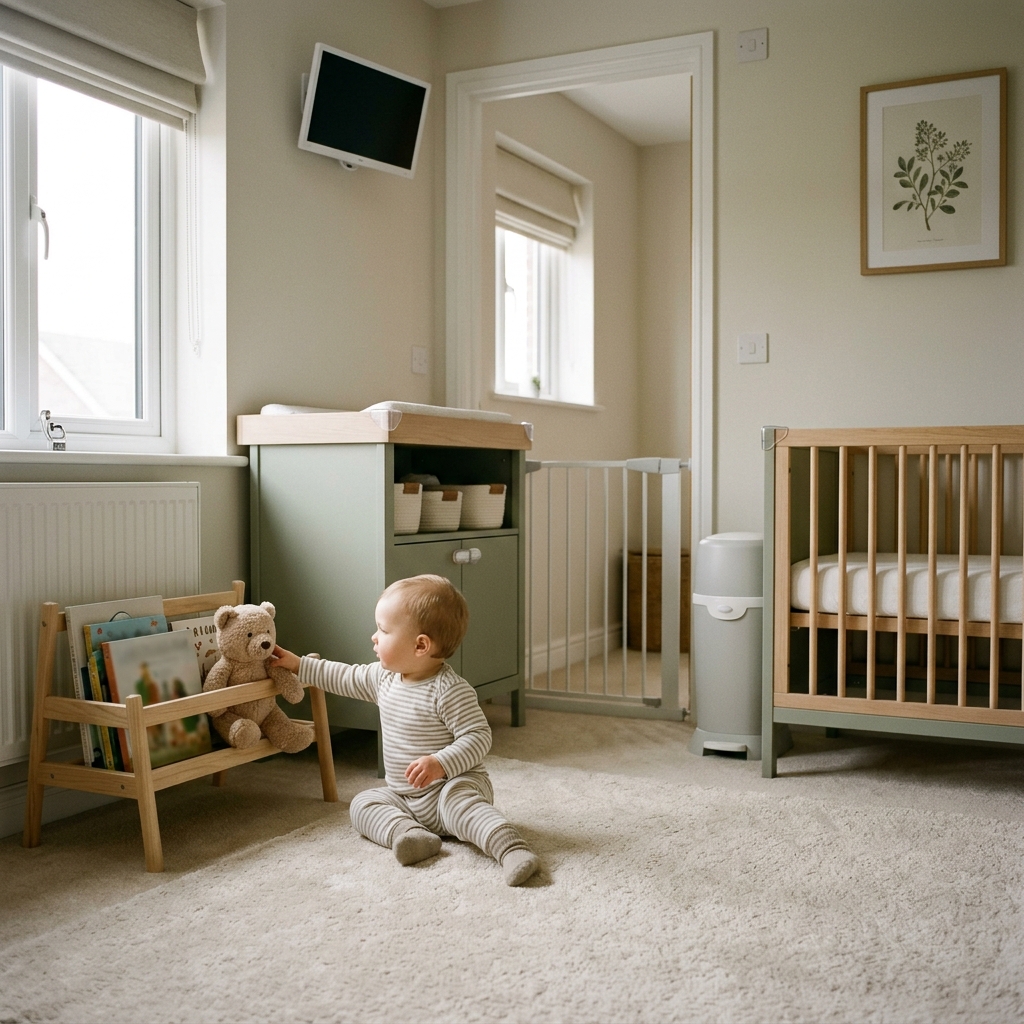
By 2026, we anticipate further refinements to UK safety standards regarding furniture stability and blind cords, driven by ongoing research into child accident prevention. Staying informed about these evolving guidelines is crucial. This checklist provides a comprehensive overview of how to create the safest possible nursery environment for your child, adhering to current best practices and anticipating future standards.
Electrical Safety First
Electricity and babies are a potentially dangerous combination. Focus on these key areas:
Socket Covers
Protect unused electrical sockets with safety covers. These prevent little fingers (and objects!) from accessing live connections.
Product Example: Dreambaby Socket Covers (Pack of 30) – £9.99
Cord Management
Loose electrical cords from lamps, baby monitors, and even window coverings pose a tripping hazard and can be chewed on. Keep cords short, tidied away, and out of reach. Consider cordless options where available.
Appliance Safety
Ensure all electrical appliances are in good working order and regularly checked. Keep them well away from water sources.
RCDs (Residual Current Devices)
RCDs are vital for electrical safety in any home, but especially where children are present. They quickly cut off the power supply if a fault is detected, preventing electric shocks. Ensure your nursery (and indeed, your entire home) has RCD protection on all circuits. Consult a qualified electrician if you’re unsure.
Smart Home Device Safety
As smart home technology becomes more prevalent, be mindful of device placement. Keep smart speakers and other connected devices out of reach and secure any trailing cables. Consider the data privacy implications of devices with cameras or microphones in a baby’s room.
Furniture Fixings: Anchoring for Stability
Tipping furniture is a significant hazard. Even seemingly stable pieces can be toppled by a determined baby.
Securing Furniture
Anchor all tall and heavy furniture – dressers, bookshelves, changing tables – to the wall using anti-tip straps. This is arguably the most important step in childproofing.
Product Example: Safety 1st Anti-Tip Furniture Straps (Pack of 2) – £12.99
Types of Fixings
Different types of fixings are available, depending on your wall type (plasterboard, brick, solid wood). Use appropriate screws and wall plugs. If you’re unsure, consult a DIY expert or a professional furniture installer.
Weight Limits & Wall Types
Check the weight capacity of the straps and ensure they are suitable for the furniture you are securing. Plasterboard walls require specialist fixings for maximum hold.
Window Safety: Cords, Blinds & Viewpoints
Windows present several potential hazards, from falls to strangulation.
Blind Cord Safety
Blind cords are a serious strangulation risk. Where possible, replace blinds with cordless options. If you have corded blinds, use cord shorteners or cleats to keep cords out of reach.
Product Example: Blackout Blind Cord Shorteners (Pack of 5) – £7.50
Window Restrictors
Fit window restrictors to prevent windows from opening more than a few inches. This reduces the risk of falls. Ensure restrictors are correctly installed and functioning.
Secure Window Fittings
Check that windows are securely fitted and operate smoothly. Address any drafts or loose frames.
Balcony Safety
If the nursery has access to a balcony, ensure the railings are securely fixed and meet current safety standards. Avoid placing furniture near the railing that a child could climb on.
Nursery Layout & Flooring: Minimising Hazards
The arrangement of furniture and the flooring can contribute to a safer environment.
Safe Furniture Placement
Position furniture away from windows and heaters. Avoid creating obstacles that a child could trip over. Ensure there’s plenty of clear floor space for play.
Flooring Considerations
Carpets are generally softer and safer than hard floors, but ensure edges are securely fastened to prevent tripping. Use a non-slip rug pad under any rugs to prevent them from sliding.
Product Example: Non-Slip Rug Pad (Large) – £39.99
Tripping Hazards
Be vigilant about eliminating potential tripping hazards, such as loose cables, toys left on the floor, and uneven surfaces.
Changing Table Safety: A Critical Zone
The changing table is a high-risk area. Never, ever leave a baby unattended on a changing table.
Height & Straps
Use a changing table with a safety strap. Ensure the table is at a comfortable height for you to avoid back strain.
Essential Items Within Reach
Keep essential items – nappies, wipes, cream – within easy reach, but out of the baby’s grasp.
Items to Keep Away
Never leave potentially hazardous items – creams, lotions, powders – within reach of the baby.
Toy Safety: Age-Appropriate & Secure
Toys are a source of joy, but also potential hazards.
Age-Appropriate Toys
Choose toys that are appropriate for your baby’s age and developmental stage. Pay attention to age recommendations on packaging.
Small Parts Hazards
Avoid toys with small parts that could be swallowed, posing a choking risk.
Battery Safety
Ensure battery compartments are securely fastened. Keep batteries out of reach. Dispose of used batteries safely.
Toy Storage
Use toy storage solutions that prevent toys from falling out and causing injury. Soft toy baskets are generally safer than hard plastic containers.
Baby Monitor Safety & Placement
Baby monitors provide peace of mind, but it’s important to use them safely.
Product Example: VTech VM3255 Video Baby Monitor – £149.99
Safe Placement
Position the monitor away from the crib and out of the baby’s reach. Secure any cords to prevent them from being pulled or chewed.
EMF Concerns
While research is ongoing, some parents are concerned about potential electromagnetic field (EMF) exposure from baby monitors. Consider a monitor with a low-emission mode or a DECT monitor, which uses a different frequency than Wi-Fi.
Modern Monitor Features
Many modern monitors offer features like temperature monitoring and two-way talk. Ensure you understand how to use these features safely and effectively.
First Aid Kit & Emergency Contacts
Be prepared for minor injuries.
Product Example: First Aid Kit – Baby & Child Specific – £25.0
Well-Stocked Kit
Keep a well-stocked first aid kit readily accessible, including baby-specific items like a thermometer, saline drops, and antiseptic wipes.
Emergency Contacts
Display a list of emergency contact numbers – your GP, the NHS 111 service, and local hospital – in a prominent location.
Regular Checks & Ongoing Safety
Childproofing is not a ‘set it and forget it’ task. As your baby grows and develops, their abilities change, and new hazards emerge. Regularly revisit this checklist and make adjustments as needed. Conduct regular safety checks to ensure all safety measures are still in place and functioning correctly.
FAQ
Q: How often should I re-evaluate my nursery’s childproofing?
At least every three months, and whenever your baby reaches a new developmental milestone (rolling over, sitting up, crawling, pulling to stand, walking).
Q: What’s the best way to secure furniture to the wall if I have plasterboard walls?
Use specialist plasterboard fixings designed for heavy loads. Toggle bolts or hollow wall anchors are good options. If you’re unsure, consult a professional.
Q: Are all window blind cords equally dangerous?
Yes, all looped cords pose a strangulation risk. Cordless blinds are the safest option. If you must use corded blinds, use cord shorteners or cleats and keep cords well out of reach.
Q: How important is an RCD in a nursery?
Critically important. RCDs significantly reduce the risk of electric shock. Ensure all circuits in the nursery (and the entire house) are RCD protected.
Q: What should I include in my baby-specific first aid kit?
A digital thermometer, saline drops, antiseptic wipes, plasters, gauze, baby pain relief (paracetamol/ibuprofen – consult your GP for dosage), a bulb syringe for nasal congestion, and a first aid guide designed for babies and children.