Table of Contents
As an Amazon Associate, we earn from qualifying purchases. This means we may receive a small commission at no extra cost to you when you buy through links on this page.
Why is Baby Sunscreen So Important?
Babies have incredibly delicate skin. It’s thinner than adult skin and contains less melanin, the pigment responsible for protecting against the sun’s harmful UV rays. This means babies are far more susceptible to sunburn and long-term skin damage. Sunburn in infancy isn’t just painful; it increases the lifetime risk of skin cancer, including melanoma.
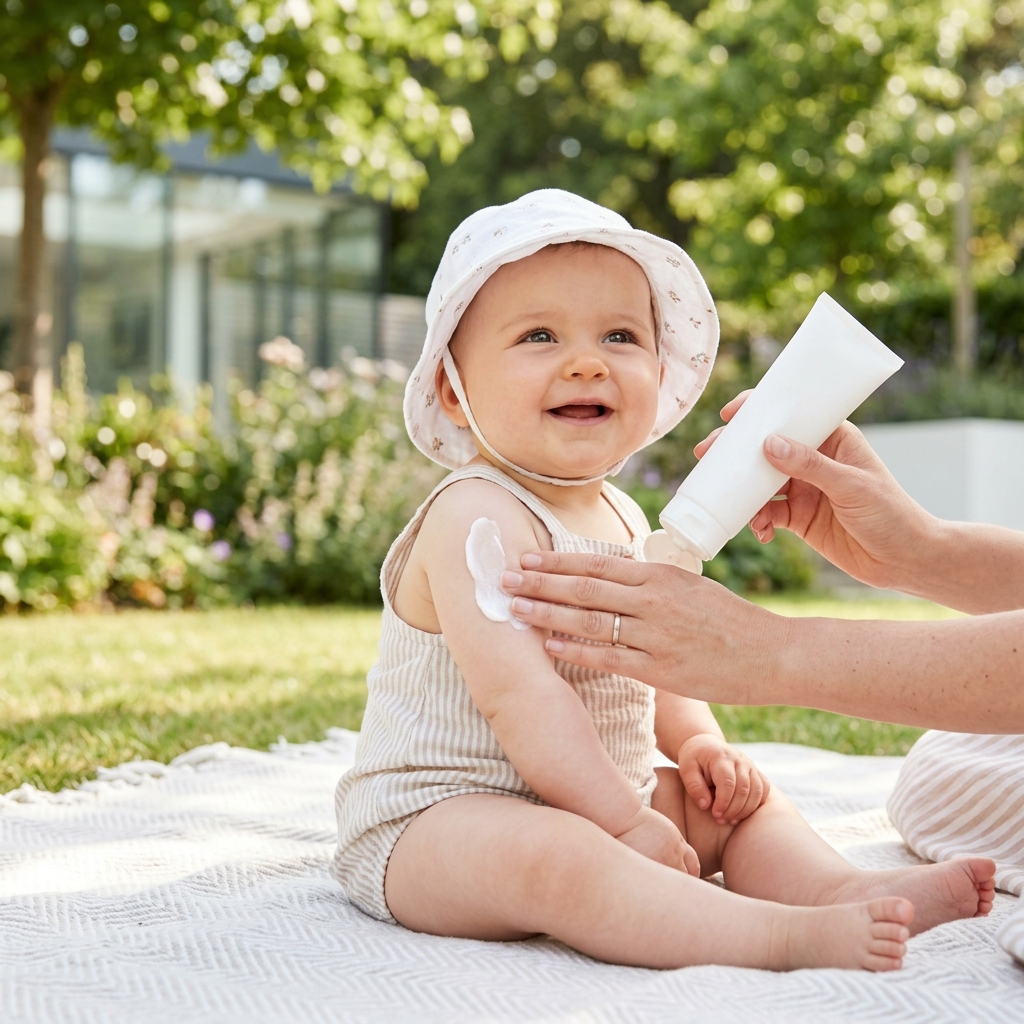
Even mild sun exposure can cause lasting damage. SPF 50 is crucial for babies because it blocks 98% of UVB rays, providing a much higher level of protection than lower SPF options. Protecting your little one from the sun from an early age is one of the best things you can do for their long-term health.
Understanding SPF & Sunscreen Labels for Babies
SPF (Sun Protection Factor) indicates how well a sunscreen protects against UVB rays, the primary cause of sunburn. However, UVB isn’t the only concern. UVA rays contribute to skin ageing and also increase the risk of skin cancer. Look for sunscreens labelled ‘broad spectrum’, meaning they protect against both UVA and UVB rays.
Mineral vs. Chemical Sunscreens: There are two primary types of sunscreen:
- Mineral Sunscreens: These use mineral ingredients like zinc oxide and titanium dioxide to create a physical barrier that reflects UV rays. They are generally considered gentler on sensitive skin and are often recommended for babies.
- Chemical Sunscreens: These absorb UV rays and convert them into heat. While effective, they can sometimes cause irritation in sensitive skin.
For babies, mineral sunscreens are often the preferred choice due to their lower risk of irritation. Always check the ingredient list for potential allergens.
Top 5 Baby Sunscreens UK SPF 50 (2026) – Our Picks
1. Nivea Sun Kids Sun Lotion SPF 50+
Price: £8.99
Nivea Sun Kids is a widely available and affordable option. It’s formulated specifically for children’s sensitive skin.
- Pros: Readily available, affordable, good SPF protection, paediatrician tested.
- Cons: Contains some chemical filters, fragrance present which may irritate some skin.
2. La Roche-Posay Anthelios Baby Sun Lotion SPF 50+
Price: £19.50
La Roche-Posay Anthelios is a dermatologist-recommended brand known for its high-quality sunscreens. The baby formula is designed for very sensitive skin.
- Pros: High UVA protection, fragrance-free, hypoallergenic, water-resistant.
- Cons: More expensive than other options.
3. Aveeno Baby Mineral Sunscreen Lotion SPF 50
Price: £12.00
Aveeno Baby Mineral Sunscreen uses 100% mineral sunscreen active ingredients (zinc oxide) and is formulated with soothing oat extract.
- Pros: Mineral-based, contains soothing oat extract, hypoallergenic, fragrance-free.
- Cons: Can leave a slight white cast on the skin, requires more rubbing in.
4. Altruist Dermatologist Sunscreen Baby SPF 50
Price: £9.50
Altruist is a dermatologist-developed brand focused on providing effective sun protection at an affordable price. The baby formula is fragrance-free and suitable for sensitive skin.
- Pros: High UVA protection, fragrance-free, affordable, dermatologist recommended.
- Cons: Less widely available than some other brands.
5. Badger Baby Sunscreen Cream SPF 30 (Certified Organic)
Price: £17.99
Badger Baby Sunscreen is a certified organic option made with simple, natural ingredients. While technically SPF 30, it provides excellent broad spectrum protection.
- Pros: Certified organic, mineral-based, water-resistant, reef-friendly.
- Cons: Higher price point, requires thorough rubbing in to avoid a white cast, lower SPF than some others.
Comparison Table:
| Product Name | Price (GBP) | SPF | Type | Key Features |
|---|---|---|---|---|
| Nivea Sun Kids Sun Lotion SPF 50+ | £8.99 | 50+ | Chemical & Mineral | Affordable, readily available |
| La Roche-Posay Anthelios Baby Sun Lotion SPF 50+ | £19.50 | 50+ | Chemical & Mineral | High UVA protection, fragrance-free |
| Aveeno Baby Mineral Sunscreen Lotion SPF 50 | £12.00 | 50 | Mineral | Oat extract, hypoallergenic |
| Altruist Dermatologist Sunscreen Baby SPF 50 | £9.50 | 50 | Chemical & Mineral | Dermatologist recommended, affordable |
| Badger Baby Sunscreen Cream SPF 30 | £17.99 | 30 | Mineral | Certified organic, reef-friendly |
Our Top Pick
La Roche-Posay Anthelios Baby Sun Lotion SPF 50+ is our top pick. While it’s the most expensive option, the exceptionally high UVA protection, fragrance-free formula, and dermatologist recommendation make it worth the investment for protecting your baby’s delicate skin. However, for a great value and widely available option, Nivea Sun Kids Sun Lotion SPF 50+ is also an excellent choice.
How to Choose the Right Baby Sunscreen
Consider these factors when choosing a baby sunscreen:
- Skin Sensitivity: If your baby has sensitive skin or eczema, opt for a mineral sunscreen with minimal ingredients.
- Age of Baby: Sunscreen is generally recommended for babies 6 months and older. For younger babies, focus on protective clothing and shade.
- Water Resistance: If your baby will be swimming or sweating, choose a water-resistant sunscreen. Remember to reapply frequently, even water-resistant formulas.
- Ingredient Preferences: Decide whether you prefer a mineral or chemical sunscreen.
- Allergies: Always check the ingredient list for potential allergens.
Application Tips: How to Apply Sunscreen to Your Baby
Applying sunscreen correctly is just as important as choosing the right product:
- Apply liberally 15-30 minutes before sun exposure.
- Use about a teaspoon of sunscreen to cover your baby’s face and neck.
- Don’t forget often-missed areas like ears, feet, and the back of the neck.
- Reapply every two hours, or more frequently if your baby is swimming or sweating.
- For newborns (under 6 months), avoid direct sun exposure and use protective clothing and shade. Consult your GP before using sunscreen on newborns.
Beyond Sunscreen: Complete Sun Protection for Babies
Sunscreen is only one part of sun protection. Combine it with these strategies:
- Protective Clothing: Long-sleeved shirts, trousers, and wide-brimmed hats offer excellent sun protection.
- Hats: Choose a hat that shades the face, ears, and neck.
- Sunglasses: Protect your baby’s eyes with sunglasses designed for infants.
- Seek Shade: Especially between 11 am and 3 pm, when the sun’s rays are strongest.
- Timing: Avoid prolonged sun exposure during peak hours.
Frequently Asked Questions (FAQs)
Q: When can I start using sunscreen on my baby?
The general recommendation is to start using sunscreen on babies 6 months and older. For babies younger than 6 months, focus on protective clothing, hats, and shade. Always consult your GP.
Q: How often should I reapply sunscreen to my baby?
Reapply sunscreen every two hours, or more frequently if your baby is swimming or sweating. Even water-resistant sunscreens need to be reapplied regularly.
Q: What should I do if my baby gets sunburned?
Get your baby out of the sun immediately. Cool their skin with a cool bath or compress. Apply a soothing moisturiser, such as aloe vera. If the sunburn is severe (blistering, fever, pain), consult your GP.
Q: Are mineral sunscreens better for babies with eczema?
Mineral sunscreens are generally recommended for babies with eczema as they are less likely to cause irritation. Look for fragrance-free formulas with minimal ingredients.
Q: Can I use the same sunscreen on my baby as I use on myself?
While you *can* in a pinch, it’s best to use a sunscreen specifically formulated for babies’ sensitive skin. Baby sunscreens typically have milder ingredients and are less likely to cause irritation.