
Table of Contents
As an Amazon Associate, we earn from qualifying purchases. This means we may receive a small commission at no extra cost to you when you buy through links on this page.
Introduction: Why Baby Proofing is Essential
Bringing a new baby into your home is a joyous occasion, but it also brings a new level of responsibility – ensuring a safe environment for your little one to explore and grow. Baby proofing isn’t just about preventing accidents; it’s about allowing your baby the freedom to learn and develop without constant restriction. Babies go through rapid developmental stages. Initially, they’re limited to reaching and grabbing, but quickly progress to rolling, sitting, crawling, pulling to stand, and eventually walking. Each stage introduces new hazards, meaning baby proofing is an ongoing process, not a one-time fix.
Legal Considerations: If you are renting, your landlord is legally obligated to ensure the property is safe and habitable. However, baby proofing specifically for a young child is generally the responsibility of the parents or guardians. It’s always best to discuss any concerns with your landlord, particularly regarding structural modifications like stair gate installations. Updated regulations in 2026 place greater emphasis on landlords providing information regarding potential hazards like lead paint and asbestos.
Room-by-Room Baby Proofing Checklist
This guide provides a detailed, room-by-room checklist to help you identify and address potential hazards in your home. Remember to get down on your hands and knees to see the world from your baby’s perspective – you’ll be surprised what you discover!
Living Room Safety
The living room is often a central hub for family activity, but it can also be a hotspot for dangers. Here’s what to check:
- Furniture Anchoring: Secure bookcases, chests of drawers, and TVs to the wall to prevent them from tipping over.
- TV Safety: Mount the TV securely to the wall or place it on a stable, low stand.
- Fireplace Safety: Use a fireplace guard to prevent burns.
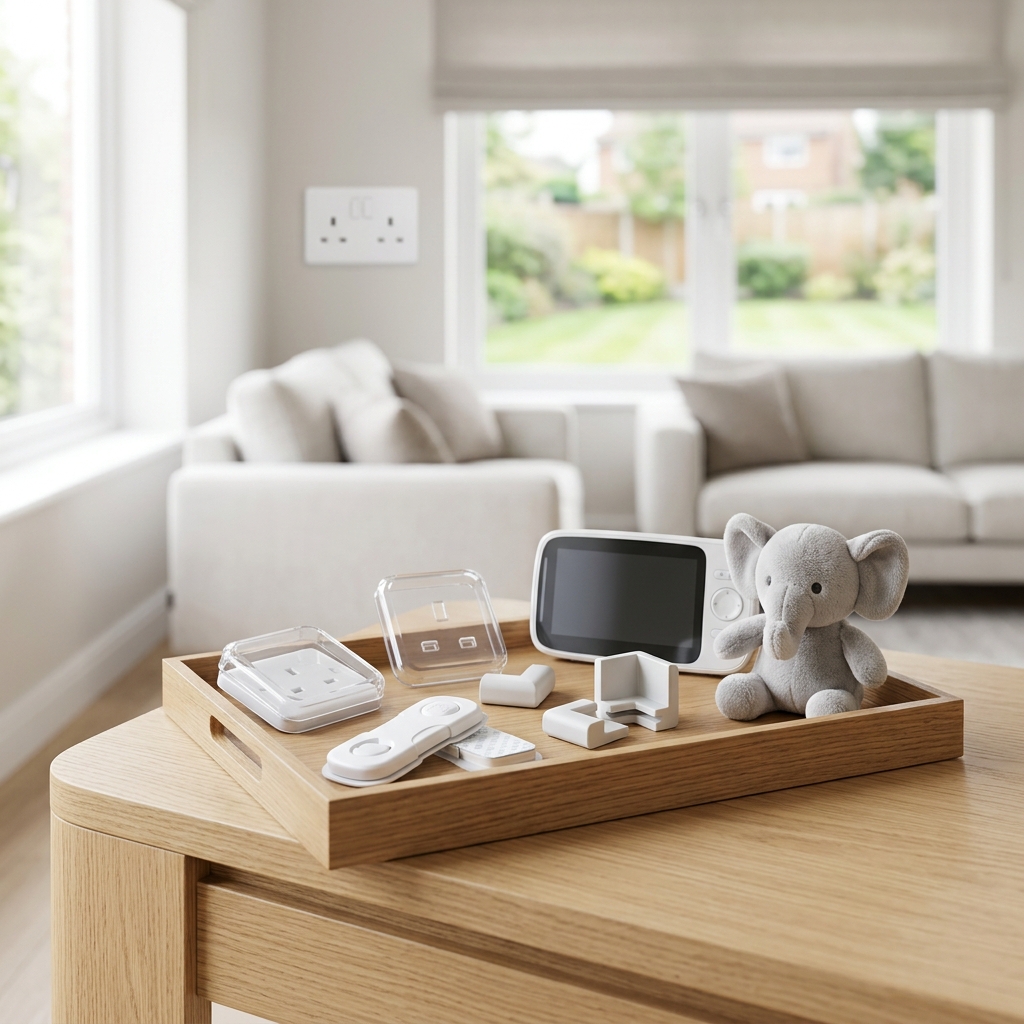
- Electrical Outlet Covers: Cover all unused electrical sockets. Dreambaby Outlet Covers (30 pack) – £12.99 offer excellent value.
- Cord Management: Tuck away loose electrical cords and blind cords.
- Sharp Edges: Use corner protectors on sharp furniture edges. Safety 1st SecureStore Corner Guards (4 pack) – £7.99 provide good coverage.
- Small Objects: Remove small objects (coins, buttons, batteries) that could be choking hazards.
- Rug Safety: Secure rugs with non-slip rug pads to prevent slips and falls.
Kitchen Hazards & Solutions
The kitchen is full of potential dangers, from hot surfaces to sharp objects.
- Oven/Hob Safety: Use hob guards and turn pot handles inwards.
- Cabinet Locks: Install cabinet locks to prevent access to cleaning supplies and sharp objects.
- Cleaning Product Storage: Store cleaning products and chemicals in high, locked cabinets.
- Sharp Utensils: Keep knives and other sharp utensils out of reach.
- Hot Liquids: Never leave hot drinks unattended within reach of a baby.
- Appliance Cord Safety: Keep appliance cords short and out of reach.
- Bin Access: Secure the bin with a childproof lock or place it out of reach.
- Food Warming: Consider a food warmer for preparing baby food safely. Tommee Tippee Closer to Nature Food Warmer – £45.00 offers precise temperature control.
Bathroom Baby Proofing
Bathrooms present unique hazards due to water and slippery surfaces.
- Water Temperature Control: Install a thermostatic mixing valve (TMV) to prevent scalding.
- Non-Slip Mats: Use non-slip mats in the bath and on the bathroom floor.
- Toilet Locks: Install a toilet lock to prevent accidental drowning.
- Medicine Cabinet Security: Keep medicines and toiletries locked away.
- Electrical Appliance Safety: Store hair dryers, straighteners, and other electrical appliances out of reach and unplugged.
- Bath Time Safety: Never leave a baby unattended in the bath, even for a second.
Bedroom Safety for Baby
Creating a safe sleep environment is paramount.
- Cot Safety: Ensure your cot meets current safety standards (updated in 2026). Slats should be close together, and the mattress should fit snugly.
- Blind Cord Safety: Replace cords with cordless blinds or use cord shorteners.
- Furniture Stability: Secure all furniture to the wall.
- Toy Storage Safety: Use toy boxes with lightweight, hinged lids.
- Nightlight Considerations: Use a low-wattage nightlight if needed.
Stairs and Hallways: Preventing Falls
Stairs are a major fall risk for babies and toddlers.
- Stair Gates: Install stair gates at the top and bottom of the stairs. Lindam Sure Close Stair Gate – £39.99 and BabyDan Flexi Fit Gate – £55.00 are popular choices. Pressure-mounted gates are suitable for the bottom of stairs, while screw-mounted gates are recommended for the top.
- Hallway Clear-Up: Keep hallways clear of clutter.
- Lighting Improvements: Ensure hallways are well-lit.
Electrical Safety: Protecting from Shocks
Electricity poses a serious risk to babies. Updated standards in 2026 require all new builds to have enhanced surge protection.
- Socket Covers: Use socket covers to prevent access to electrical outlets.
- Cord Concealers: Use cord concealers to hide and protect electrical cords.
- Appliance Safety: Regularly check appliances for damage.
- RCD (Residual Current Device) Testing: Ensure your RCDs are working correctly. It’s recommended to have them tested annually by a qualified electrician.
Furniture Anchoring: Preventing Tip-Overs
Furniture tip-overs are a leading cause of serious injuries. Clingit Furniture Anti Tip Straps (4 pack) – £19.99 are an easy and effective solution.
- Why it’s Crucial: Babies love to pull themselves up on furniture, making tip-overs a real threat.
- Anchoring Methods: Use anti-tip straps or brackets to secure furniture to the wall studs.
Toxic Substances: Keeping Harmful Products Secure
Babies explore by putting things in their mouths, making it crucial to secure all toxic substances.
- Cleaning Supplies: Store cleaning supplies in high, locked cabinets.
- Medications: Keep medications locked away.
- Cosmetics: Store cosmetics out of reach.
- Plants: Remove poisonous plants or keep them out of reach.
- Carbon Monoxide Detectors: Install carbon monoxide detectors on each level of your home. VisiSafe Carbon Monoxide Alarm – £29.99 provides reliable protection.
First Aid & Emergency Preparedness
Being prepared for emergencies is vital.
- First Aid Knowledge: Take a baby first aid course.
- Emergency Contact Numbers: Keep emergency contact numbers readily available.
- Baby Safety Kit: Create a baby safety kit with essential items like bandages, antiseptic wipes, and a thermometer.
- CPR Training: Learn infant CPR.
- Baby Monitor: A reliable baby monitor can provide peace of mind. Philips Avent Digital Audio Baby Monitor – £89.99 offers clear sound and a long range.
Baby Proofing Checklist: Final Review & Ongoing Maintenance
Before you consider your home fully baby-proofed, conduct a final review using the following checklist:
- All furniture is anchored.
- Electrical outlets are covered.
- Cords are managed.
- Sharp edges are protected.
- Toxic substances are secured.
- Stair gates are installed correctly.
- Water temperature is controlled.
- A first aid kit is readily available.
Remember, baby proofing is an ongoing process. As your baby grows and develops, their abilities and curiosity will change, requiring you to regularly reassess your home’s safety. Revisit this checklist every few months, and always be vigilant about potential hazards.
FAQ
Q: When should I start baby proofing?
It’s best to start baby proofing well before your baby becomes mobile, ideally during pregnancy. This gives you time to address potential hazards without the pressure of a rapidly developing baby.
Q: What’s the difference between pressure-mounted and screw-mounted stair gates?
Pressure-mounted gates are held in place by pressure and are suitable for doorways or the bottom of stairs. Screw-mounted gates are screwed into the wall and are recommended for the top of stairs for added security.
Q: How often should I check my carbon monoxide detectors?
You should test your carbon monoxide detectors monthly and replace the batteries at least once a year. Detectors themselves should be replaced every 7-10 years.
Q: Are there any grants available in the UK to help with baby proofing costs?
Currently, there are no specific government grants for baby proofing. However, some local councils offer support for low-income families, which *may* include assistance with home safety improvements. It’s worth checking with your local authority.