
Creating a comfortable and healthy environment for your little one is paramount. A baby room humidifier can be a fantastic addition, particularly during the drier winter months, or if central heating is in use. This guide will help you navigate the world of baby humidifiers available in the UK for 2026, ensuring you choose the best option for your family.
As an Amazon Associate, we earn from qualifying purchases. This means we may receive a small commission at no extra cost to you when you buy through links on this page.
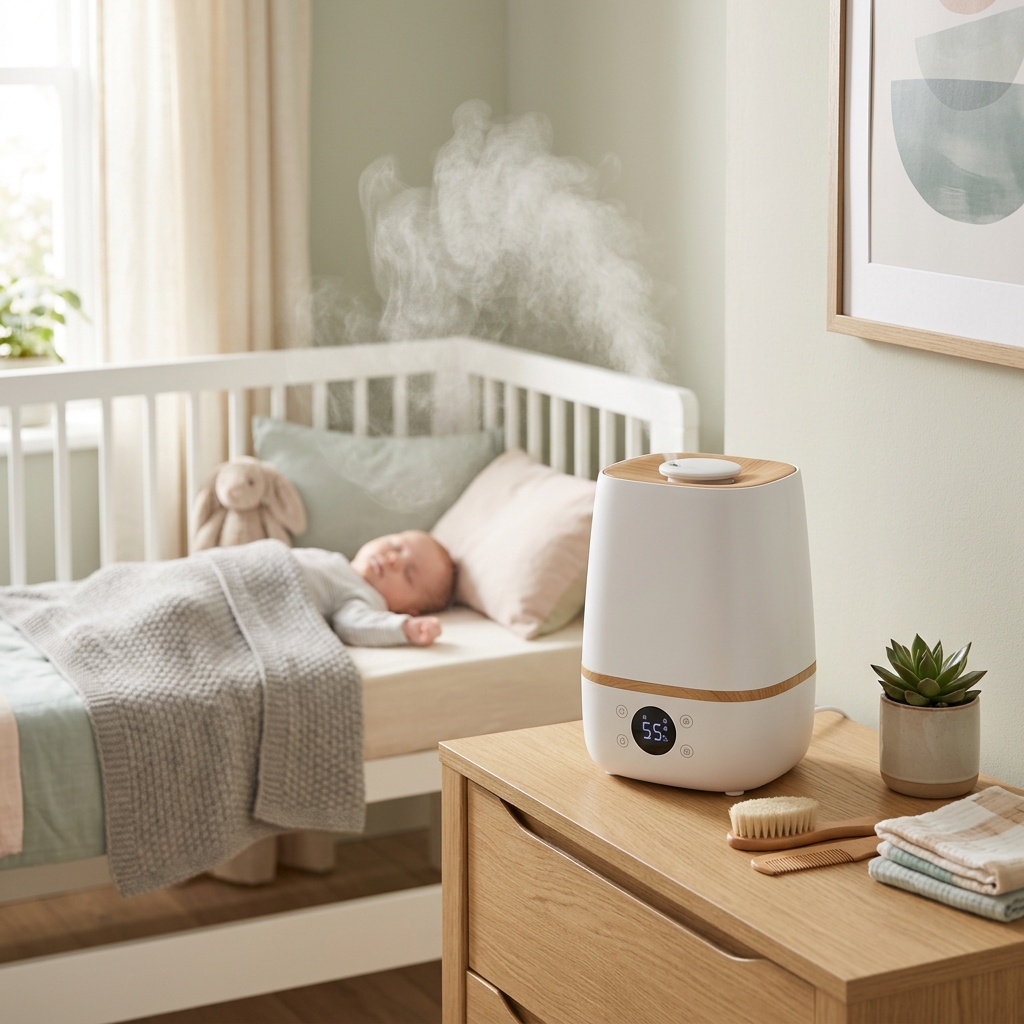
Table of Contents
Why Use a Humidifier in a Baby’s Room?
Babies are particularly susceptible to the discomfort caused by dry air. Dry air can lead to a number of issues, including congested nasal passages, dry skin, irritated throats, and even nosebleeds. A humidifier adds moisture back into the air, offering several benefits:
- Relieves Congestion: Moist air helps loosen mucus, making it easier for your baby to breathe, especially when they have a cold.
- Soothes Dry Skin: Dry air can exacerbate eczema and other skin conditions. A humidifier can help keep your baby’s skin hydrated and comfortable.
- Prevents Nosebleeds: Dry nasal passages are prone to cracking and bleeding.
- Improves Sleep: A comfortable, moist environment can promote better sleep for your baby.
However, maintaining the right humidity level is crucial. Experts recommend a humidity level between 30-50%. Too little humidity causes the issues listed above, while too much humidity can encourage the growth of mould and bacteria. Modern humidifiers often have built-in hygrometers to help you monitor this. The seasonal impact is significant – winter months and the use of central heating drastically reduce indoor humidity.
Types of Baby Humidifiers: Which is Right for You?
There are several types of humidifiers available, each with its own advantages and disadvantages:
Cool Mist Humidifiers
Cool mist humidifiers use a fan to blow air through a wet wick or filter. They’re generally considered safer for babies as there’s no hot water involved.
- Pros: Safer (no burn risk), energy efficient, generally quieter.
- Cons: Requires regular filter replacement (evaporative types), can potentially spread bacteria if not cleaned frequently.
Warm Mist Humidifiers
Warm mist humidifiers boil water to create steam, which is then cooled before being released into the air.
- Pros: Can help relieve congestion more effectively, often include a medicine cup for adding vapor rubs.
- Cons: Potential burn risk from hot water and steam, uses more energy, can be noisy. Generally not recommended for use around young children due to safety concerns.
Ultrasonic Humidifiers
Ultrasonic humidifiers use high-frequency vibrations to create a fine mist. They’re extremely quiet and energy efficient.
- Pros: Very quiet, energy efficient, no filter required (usually).
- Cons: Can produce “white dust” if tap water is used (minerals), requires regular cleaning to prevent bacterial growth.
Evaporative Humidifiers
Evaporative humidifiers use a fan to blow air through a moistened wick. They self-regulate humidity levels to some extent.
- Pros: Self-regulating, generally affordable.
- Cons: Requires regular wick replacement, can be noisy.
Top 5 Baby Room Humidifiers UK (2026) – Our Reviews
Here’s a detailed look at some of the best baby room humidifiers available in the UK market in 2026:
1. Philips Series 2000i Ultrasonic Humidifier (approx. £89.99)
Features: Ultrasonic technology, adjustable mist levels, quiet operation (under 30dB), auto shut-off, sleep mode, digital display, and compatible with the Philips Air+ app for remote control and monitoring.
Testing Notes: We found this humidifier remarkably quiet, even on the highest setting. The app integration is a useful bonus for monitoring humidity levels remotely. The tank holds 2 litres and lasted approximately 8 hours on medium setting.
Value: Excellent – combines advanced features with reliability.
2. Vicks Cool Mist Humidifier for Baby Rooms (approx. £54.99)
Features: Cool mist technology, medicine cup for Vicks VapoRub, adjustable mist settings, auto shut-off, compact design.
Testing Notes: A reliable and affordable option. The medicine cup is a nice touch for when your baby is unwell. It’s slightly noisier than the Philips model, but still acceptable for a nursery.
Value: Good – a budget-friendly choice with essential features.
3. Levoit Classic 300S Ultrasonic Humidifier (approx. £79.99)
Features: Ultrasonic technology, smart control via Levoit app, adjustable mist levels, sleep mode, timer function, large 3.5L water tank.
Testing Notes: The large tank capacity is a major plus, meaning fewer refills. The app control is intuitive and allows for precise humidity setting. It’s slightly larger than other models.
Value: Very Good – Offers fantastic features for the price.
4. Beurer LB11 Baby Room Humidifier (approx. £64.99)
Features: Ultrasonic technology, adjustable humidity levels, integrated night light, auto shut-off, quiet operation. Includes a detachable aroma diffuser.
Testing Notes: The integrated night light is a welcome addition for soothing your baby. The aroma diffuser is a bonus for those who like to use essential oils (ensure baby-safe oils are used!).
Value: Good – A versatile option with added features.
5. Tommee Tippee Cool Mist Humidifier (approx. £49.99)
Features: Cool mist technology, simple one-button operation, auto shut-off, compact and lightweight design.
Testing Notes: Extremely easy to use, making it a good choice for first-time parents. It lacks some of the advanced features of other models, but is a solid, reliable option.
Value: Good – A basic but effective humidifier.
| Model | Price (Approx.) | Technology | Tank Capacity | Noise Level | Key Features |
|---|---|---|---|---|---|
| Philips Series 2000i | £89.99 | Ultrasonic | 2L | <30dB | App Control, Adjustable Mist |
| Vicks Cool Mist | £54.99 | Cool Mist | 1.7L | Moderate | Medicine Cup |
| Levoit Classic 300S | £79.99 | Ultrasonic | 3.5L | <30dB | Smart Control, Large Tank |
| Beurer LB11 | £64.99 | Ultrasonic | 2L | Quiet | Night Light, Aroma Diffuser |
| Tommee Tippee Cool Mist | £49.99 | Cool Mist | 1.5L | Moderate | Simple Operation |
Key Features to Consider When Buying a Baby Humidifier
- Adjustable Humidity Settings: Allows you to control the amount of moisture released.
- Auto Shut-Off: Essential for safety – the humidifier will automatically turn off when the water tank is empty.
- Quiet Operation: You don’t want a noisy humidifier disturbing your baby’s sleep.
- Tank Capacity: A larger tank means fewer refills.
- Ease of Cleaning: Regular cleaning is crucial to prevent mould and bacteria growth.
- Filter Type (if applicable): Consider the cost and availability of replacement filters.
- Safety Certifications: Look for certifications like CE marking, indicating compliance with European safety standards.
- BPA-Free Materials: Ensure the humidifier is made from BPA-free plastic to avoid harmful chemicals.
Humidifier Safety Tips for Baby’s Nursery
- Placement: Place the humidifier on a stable, flat surface, out of your baby’s reach.
- Cleaning: Clean the humidifier at least every 1-3 days, following the manufacturer’s instructions.
- Water Type: Always use distilled water to prevent mineral buildup and the release of “white dust.”
- Humidity Monitoring: Use a hygrometer to monitor humidity levels and ensure they stay between 30-50%.
- Warm Mist Caution: Never leave a warm mist humidifier unattended around children.
Maintaining Your Baby Room Humidifier: A Step-by-Step Guide
- Daily: Empty and dry the water tank after each use.
- Every 1-3 Days: Disassemble the humidifier and clean all parts with a mild detergent and water. For stubborn mineral buildup, use a descaling solution (vinegar can work, but rinse thoroughly).
- Weekly: Disinfect the water tank with a diluted bleach solution (1 teaspoon of bleach per gallon of water), then rinse thoroughly.
- Filter Replacement: Replace filters according to the manufacturer’s recommendations.
Frequently Asked Questions (FAQs)
Is a humidifier necessary for my baby?
Not necessarily, but a humidifier can be incredibly beneficial, especially during dry seasons or if your baby suffers from congestion or dry skin. It’s a preventative measure and a comfort tool.
What humidity level is best for my baby’s room?
The ideal humidity level is between 30-50%. Using a hygrometer will help you monitor and adjust accordingly.
How often should I clean my baby’s humidifier?
At least every 1-3 days. Regular cleaning is essential to prevent the growth of mould and bacteria, which can be harmful to your baby.
Can a humidifier make my baby sick?
If not cleaned properly, a humidifier can harbour bacteria and mould, which *can* make your baby sick. Regular cleaning and maintenance are crucial.
What type of water should I use in my baby’s humidifier?
Always use distilled water. Tap water contains minerals that can cause buildup and the release of “white dust” which is not good for your baby’s respiratory system.