
Table of Contents
As an Amazon Associate, we earn from qualifying purchases. This means we may receive a small commission at no extra cost to you when you buy through links on this page.
Introduction: Car Seat Safety in the UK
Ensuring your child’s safety whilst travelling in a vehicle is paramount. Correct installation of a car seat base is arguably the most critical aspect of this. A properly installed car seat can dramatically reduce the risk of injury or fatality in the event of a collision. This guide will provide a comprehensive, up-to-date overview of how to install a car seat base correctly in the UK, as of 2026. UK law requires all children under 12 years old or 135cm (approximately 4ft 5in) tall to use a child car seat. Failure to comply can result in a £500 fine and 3 penalty points on your license. Incorrect installation not only breaches the law but, more importantly, compromises your child’s safety. The consequences of a poorly fitted car seat can be devastating, rendering the safety features ineffective during an accident.
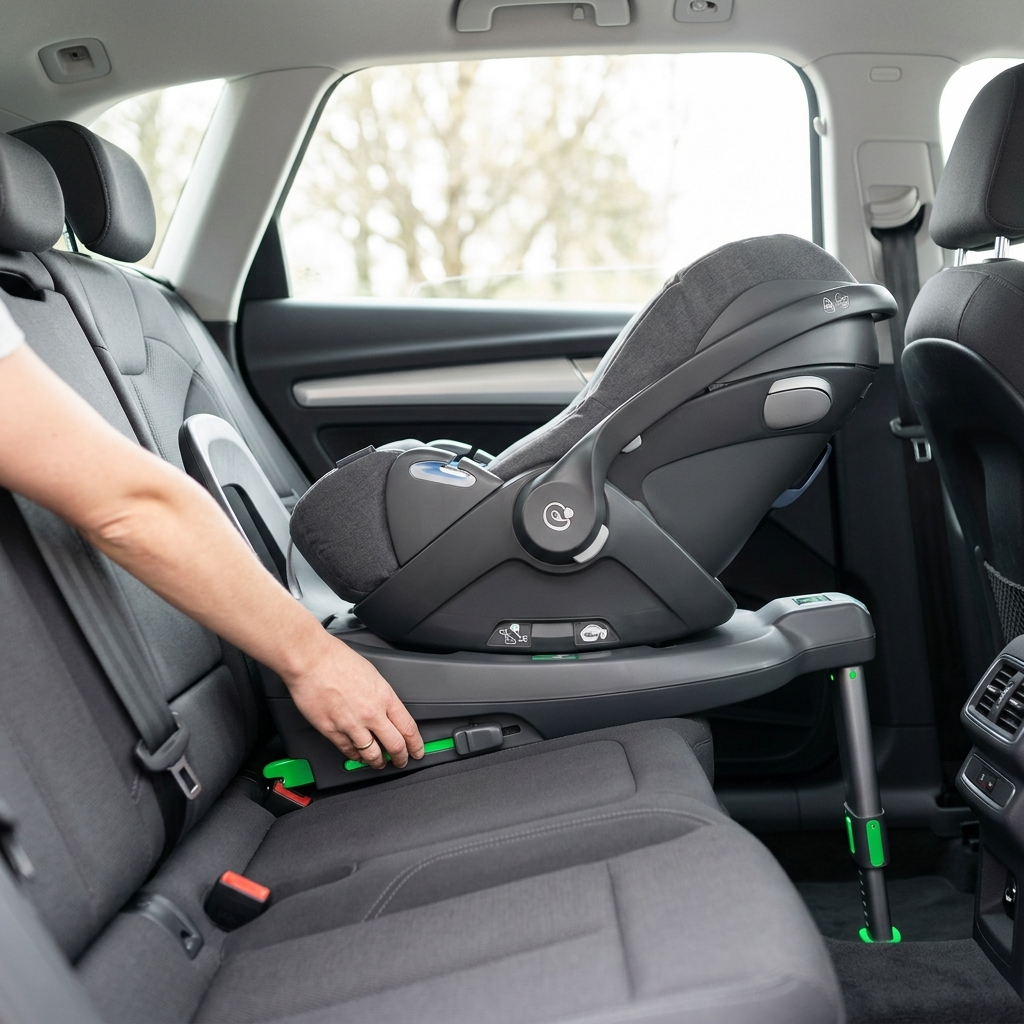
Understanding Car Seat Bases & Compatibility
What is a Car Seat Base?
A car seat base is a platform that remains installed in your vehicle, allowing you to quickly and easily click your car seat in and out. This offers convenience and, importantly, a more secure and consistent installation compared to repeatedly fitting the car seat directly with the seatbelt. Bases typically come in two main types: ISOFIX and seatbelt-fitting.
Types of Car Seat Bases
ISOFIX bases utilise dedicated anchor points built into your vehicle. These provide a rigid connection, minimising movement. Seatbelt bases, as the name suggests, are secured using the vehicle’s seatbelts. While generally easier to transfer between vehicles, they require careful installation to ensure a tight and secure fit.
Checking Compatibility
Not all car seats and bases are compatible with all vehicles. Before purchasing, always check the manufacturer’s compatibility list. This is typically available on their website or through retailers. Key considerations include:
- Vehicle ISOFIX Points: Ensure your vehicle has ISOFIX anchor points and that they are accessible.
- Base and Seat Compatibility: The base must be specifically designed for use with your chosen car seat model.
- Vehicle Seat Shape: Certain car seat bases may not fit well with heavily contoured vehicle seats.
The Importance of Manufacturer Instructions
Always refer to both the car seat and car seat base manufacturer’s instructions. These provide detailed guidance specific to your products and are crucial for correct installation. Don’t assume all bases are installed the same way.
ISOFIX Base Installation: A Step-by-Step Guide
(Content creation note: Include images/illustrations at each step showing the process clearly.)
- Locate ISOFIX Anchor Points: These are usually found between the seat base and backrest. They are often marked with ISOFIX labels. Consult your vehicle’s handbook if you’re unsure of their location.
- Attach the Base: Extend the ISOFIX connectors on the base and click them into the anchor points. You should hear a distinct ‘click’ indicating a secure connection.
- Adjust the Top Tether (if applicable): Some bases have a top tether strap that secures to an anchor point in your vehicle. This provides additional stability.
- Check Indicator Lights/Signals: Most ISOFIX bases have indicator lights (usually green) to confirm correct installation. Pay close attention to these – a red light indicates an issue.
- Tighten the Base: Some bases allow for tightening to further secure the fit.
Common Issues: Difficult access to anchor points can occur in some vehicles. Consider using an ISOFIX installation aid if you struggle to reach the points comfortably.
Seatbelt Installation: A Step-by-Step Guide
(Content creation note: Include images/illustrations at each step.)
- Position the Base: Place the base on the vehicle seat in the desired direction (rear-facing or forward-facing).
- Route the Seatbelt: Follow the manufacturer’s instructions to route the vehicle’s seatbelt through the designated belt path on the base. This is crucial – incorrect routing can prevent a secure installation.
- Lock the Seatbelt: Different cars have different seatbelt locking mechanisms. Some require you to pull the seatbelt all the way out, while others have a locking clip. Consult your vehicle’s handbook.
- Tighten the Seatbelt: Push down firmly on the base while simultaneously pulling the seatbelt tight. You should not be able to move the base more than 1 inch (2.5cm) side-to-side or front-to-back.
- Re-Check: Repeat the tightening process several times to ensure a consistently secure fit.
Common Issues: Seatbelt slack is a common problem. Ensure the seatbelt is fully locked and pulled taut before releasing pressure. Incorrect routing of the seatbelt can also lead to instability.
Checking Your Installation: Key Safety Checks
Once installed, perform these checks:
- Stability Test: Grasp the base firmly and try to move it side-to-side and front-to-back. It should not move more than 1 inch (2.5cm) in any direction.
- Recline Angle: Ensure the base is at the correct recline angle for your child’s age and weight. Many bases have an angle indicator.
- Locking Mechanism: Verify that the ISOFIX connectors or seatbelt are securely locked.
- Belt Routing: Double-check that the seatbelt is routed correctly through the base, according to the manufacturer’s instructions.
- The ‘Pinch Test’: Attempt to pinch the seatbelt at the point where it exits the base. You should not be able to pinch any slack.
UK Car Seat Laws and Regulations (2026 Update)
As of 2026, the UK car seat laws remain largely unchanged, adhering to UN R129 (i-Size) and UN R44/04 standards. Key points include:
- Under 12 months: Rear-facing car seat is mandatory.
- 12 months – 15 months: Can travel forward-facing, but rear-facing is recommended for as long as possible.
- Over 15 months: Can travel forward-facing, provided the car seat is appropriate for their weight and height.
- Minimum height & weight requirements apply to each car seat group (0+, 1, 2, 3).
Anticipated Changes (2026): Discussions are ongoing regarding mandating i-Size (UN R129) car seats for all new vehicles sold after 2028. This regulation is still under review and may be subject to change.
Resources:
Common Mistakes to Avoid When Installing a Car Seat Base
- Incorrect Belt Routing: The most frequent error. Always follow the manufacturer’s diagrams precisely.
- Loose Installation: Failing to tighten the seatbelt or ISOFIX connectors sufficiently.
- Using Incompatible Bases: Attempting to use a base not designed for your car seat.
- Failing to Check the Angle Indicator: Incorrect recline angle can compromise safety.
- Ignoring the Manufacturer’s Instructions: The most critical mistake.
When to Replace Your Car Seat Base
A car seat base should be replaced in the following circumstances:
- After an Accident: Even if there is no visible damage, the base’s structural integrity may be compromised.
- Expiry Date: Car seat bases have an expiry date, typically 5-7 years from the date of manufacture.
- Damage or Wear and Tear: Cracks, broken parts, or significant wear can affect the base’s safety.
Resources & Further Help
- GOV.UK – Child Car Seats Law
- RoSPA – Child Car Seats
- Manufacturer Support Pages: Visit the websites of the car seat and base manufacturers for specific support and FAQs.
- Local Car Seat Fitting Services: Many local councils and retailers offer car seat fitting services for a fee (typically £20-£40).
Popular Car Seat Base & Seat Combinations (2026)
Here’s a comparison of some popular options currently available in the UK:
| Product Name | Price (GBP) | Base Type | Pros | Cons |
|---|---|---|---|---|
| Maxi-Cosi Pearl 360 with FamilyFix3 Base | £349.0 | ISOFIX | 360° rotation, easy to use, excellent safety ratings | Relatively expensive |
| Cybex Sirona S i-Size with Base Station | £399.95 | ISOFIX | Advanced side impact protection, recline function, suitable from birth | Can be bulky |
| Britax Römmer Baby-Safe 3 i-Size with Flex Base | £280.0 | ISOFIX | Lie-flat option for newborns, easy installation, good value for money | Base sold separately |
| Joie i-Base Encore with i-Snug Baby Seat | £220.0 | ISOFIX | Affordable, compact, suitable for newborns | Limited recline options |
| Nuna PIPA Lite RX with Nuna BASE | £450.0 | ISOFIX | Ultra-lightweight, premium materials, excellent safety features | Most expensive option |