
Table of Contents
As an Amazon Associate, we earn from qualifying purchases. This means we may receive a small commission at no extra cost to you when you buy through links on this page.
What is ISOFIX and Why Use It?
ISOFIX is an international standard for child car seat fitting systems. It provides a direct connection between the car seat and the vehicle’s chassis, eliminating the need to use the car’s seatbelts for installation. This dramatically reduces the risk of incorrect fitting, a common cause of injury in car accidents. ISOFIX systems typically consist of two metal anchor points built into the vehicle seat, and a corresponding connector on the car seat base.
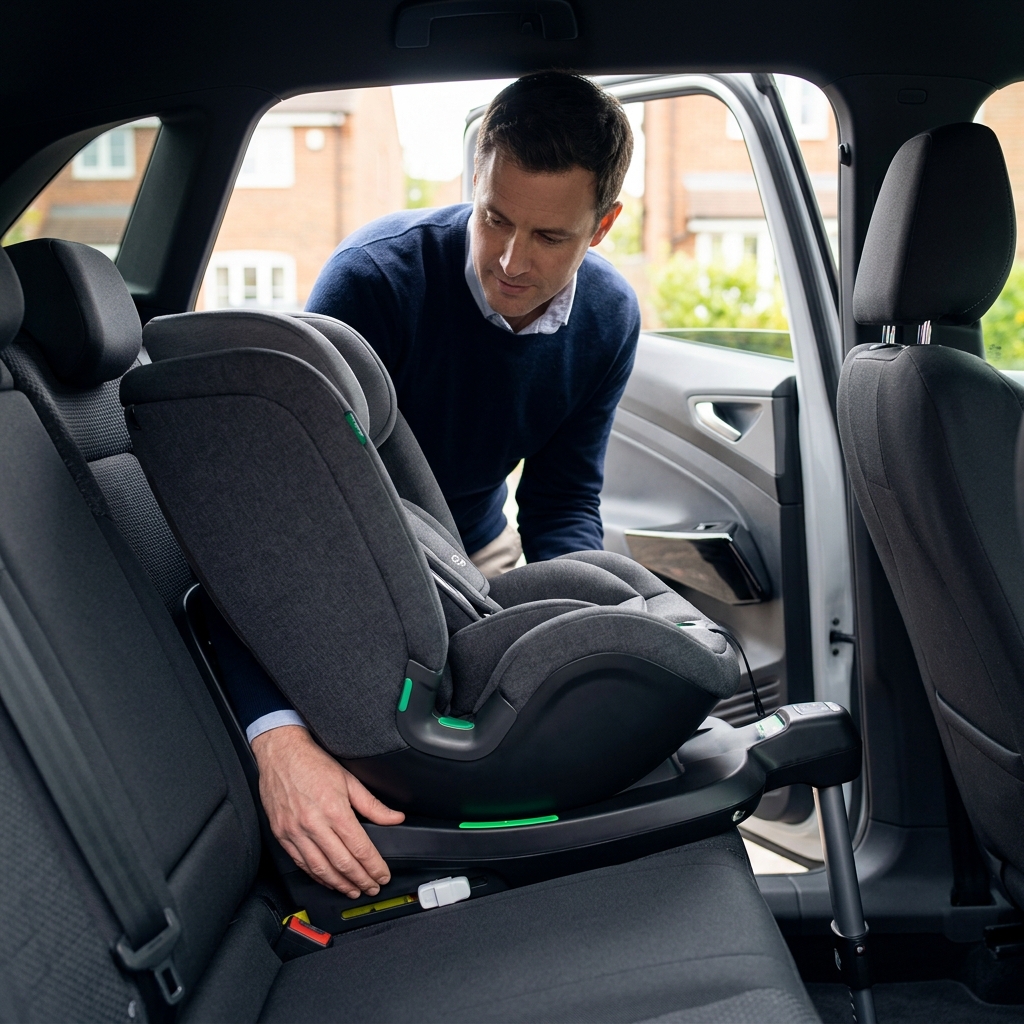
Compared to traditional seatbelt installation, ISOFIX is generally quicker, easier, and more secure. It also works in conjunction with i-Size regulations, a newer standard focusing on achieving optimal protection based on the child’s height rather than weight. i-Size car seats are designed to be used with ISOFIX and offer enhanced side impact protection.
Understanding Your Car’s ISOFIX Points
Locating your car’s ISOFIX anchor points is the first step. These are usually found:
- Between the seat back and the seat cushion.
- Often marked with ISOFIX logos or labels.
The location varies depending on the vehicle type:
- Saloon/Sedan: Generally found on the outer rear seats.
- Hatchback: Often found on all rear seats, or the outer ones.
- SUV: May be found on all rear seats, and sometimes even on the front passenger seat (check your car’s handbook!).
Important: Always consult your car’s handbook. It will provide precise diagrams and instructions specific to your vehicle model. Some cars have hidden covers over the anchor points which need to be removed before installation.
Types of ISOFIX Car Seats
ISOFIX car seats are grouped based on the child’s weight and height. Here’s a breakdown:
- Group 0/1 (Birth to 18kg, approximately 0-4 years): Often rear-facing initially, then converts to forward-facing.
- Group 1/2/3 (9kg to 36kg, approximately 9 months to 12 years): Typically forward-facing, with adjustable harness and headrest.
- i-Size (Birth to 150cm, approximately 0-12 years): Based on child height. These seats *must* be used with ISOFIX and are designed for rearward facing for longer.
Forward vs. Rear-facing: Rear-facing is significantly safer for younger children, as it distributes the impact force across the entire back. Current recommendations are to keep children rear-facing for as long as possible, ideally until at least 15 months, but longer is preferable.
Step-by-Step ISOFIX Installation Guide
- Locate the ISOFIX anchor points in your car (refer to your car’s handbook).
- Position the car seat base onto the vehicle seat.
- Connect the ISOFIX connectors to the anchor points. You should hear a click, indicating a secure connection.
- Check the indicator lights on the car seat base. These will usually turn green when correctly connected.
- Tighten the ISOFIX straps. Most car seats have a tightening mechanism to remove any slack.
- Check the top tether (if applicable). Some seats require a top tether strap to be connected to an anchor point in the car.
- Ensure a secure fit. The car seat should not move more than 1 inch side to side or front to back when tested.
Prevention Tip: Avoid forcing the connectors. If they don’t click easily, double-check alignment and ensure no obstructions are present.
Top ISOFIX Installation Mistakes to Avoid
Incorrect installation can significantly compromise safety. Here are common mistakes:
- Incorrect Base Attachment: Not fully clicking the ISOFIX connectors into the anchor points.
- Loose Straps: Failing to tighten the ISOFIX straps, allowing the seat to move.
- Improper Recline Angle: Not adjusting the recline angle correctly, especially for newborns.
- Neglecting Car Seat Compatibility: Using a car seat that isn’t compatible with your vehicle.
Example of what NOT to do: Imagine a car seat that is loosely fitted, wobbling significantly when pushed. This indicates a dangerous installation.
ISOFIX Compatibility: Car & Car Seat Check
Not all car seats fit all cars, even with ISOFIX. Before purchasing a car seat, check compatibility:
- Online Compatibility Checkers: Many car seat manufacturers offer online tools to check compatibility with specific vehicle models.
- Consult Car Seat/Vehicle Manufacturers: Contacting the manufacturer directly can provide definitive answers.
- Check Weight and Height Limits: Ensure the car seat is appropriate for your child’s weight and height.
ISOFIX and i-Size: What’s the Difference?
ISOFIX is the fitting system, while i-Size is a regulation. i-Size focuses on achieving optimal safety based on the child’s height. Here’s a comparison:
| Feature | ISOFIX | i-Size |
|---|---|---|
| Focus | Fitting System | Safety Regulation (height-based) |
| Standard | ECE R44/04 (older) | UN R129 (i-Size) |
| Compatibility | Can be used with both R44/04 and R129 seats | Requires ISOFIX fitting; designed for optimal protection. |
| Rearward Facing | Not always mandatory | Mandatory to at least 15 months |
i-Size seats often offer better side impact protection and are designed to be used rearward-facing for longer, enhancing safety.
Checking Your ISOFIX Installation – The Pinch Test
Once installed, verifying a secure fit is crucial. The Pinch Test is a reliable method:
- Grasp the car seat near the ISOFIX connectors.
- Try to move it side to side and front to back.
- If you can pinch more than 1 inch of webbing at the belt path, the installation is not tight enough.
- Re-tighten the straps and repeat the test.
Regularly check the installation, especially after adjusting the seat or after another person has used the vehicle.
ISOFIX Car Seat Regulations & UK Law (2026)
In the UK, it is a legal requirement that all children under 12 years old or 135cm tall (whichever is lower) must use a child car seat. ISOFIX seats must comply with either ECE R44/04 or UN R129 (i-Size) standards.
Failure to comply with car seat laws can result in a £500 fine and 3 penalty points on your driving license.
Frequently Asked Questions (FAQ)
Q: Can I use an ISOFIX car seat in the front passenger seat?
A: Yes, but only if your car allows it and the airbag is deactivated. Never place a rear-facing car seat in front of an active airbag.
Q: How often should I check my ISOFIX installation?
A: You should check the installation every time you adjust the seat, after another person has used the vehicle, and at least every few journeys.
Q: What if my car doesn’t have ISOFIX?
A: You can still use a car seat secured with the vehicle’s seatbelt. Ensure it is installed correctly according to the manufacturer’s instructions.
Q: What’s the best ISOFIX car seat to buy in 2026?
A: The best car seat depends on your child’s age, weight, and your vehicle. Here’s a quick comparison of popular options:
| Car Seat | Price (GBP) | Group | i-Size |
|---|---|---|---|
| Maxi-Cosi Pearl 360 i-Size Car Seat | £289.00 | 0/1 | Yes |
| Joie i-Spin 360 Car Seat | £249.99 | 0/1 | Yes |
| Britax Römer Dualfix i-Size Car Seat | £349.00 | 0/1 | Yes |
| Cybex Sirona S i-Size Car Seat | £320.00 | 0/1 | Yes |
| Nuna Rebl Plus i-Size Car Seat | £429.00 | 0/1 | Yes |
Q: Can I use a second-hand ISOFIX car seat?
A: It’s not recommended. You won’t know the seat’s history (e.g., if it’s been involved in an accident), and components may be damaged or worn, compromising safety.