
Table of Contents
As an Amazon Associate, we earn from qualifying purchases. This means we may receive a small commission at no extra cost to you when you buy through links on this page.
Introduction: The Psychology of Colour & Baby Sleep
Creating a serene and restful environment is paramount when preparing a nursery for your little one. Colour plays a surprisingly significant role in influencing mood, emotion, and crucially, sleep. A baby’s brain is rapidly developing, making them particularly sensitive to external stimuli, including colour. Unlike adults, babies don’t come with pre-conceived notions about colour; their responses are more instinctive. Therefore, carefully considering the colour palette of the nursery is a vital step in promoting healthy sleep patterns and a sense of calm for your baby.
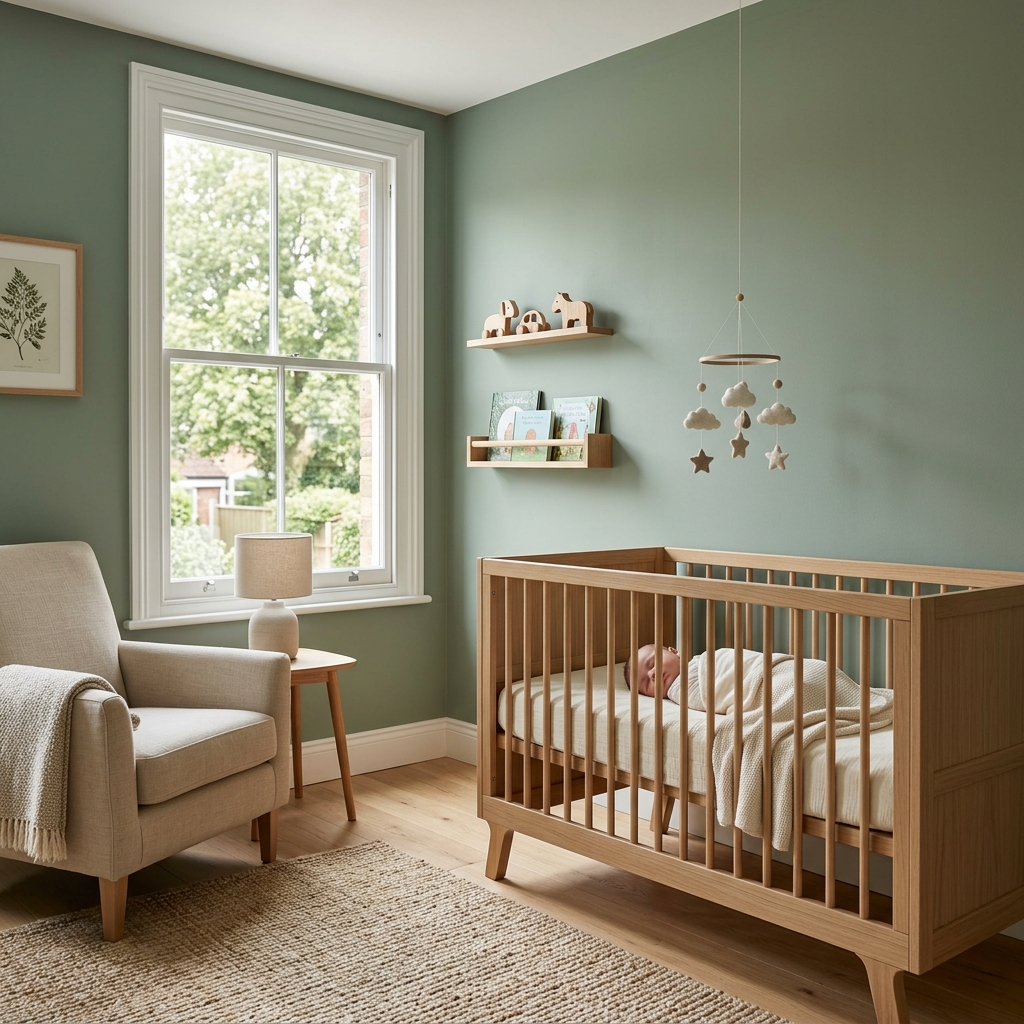
Understanding Colour Temperature: Warm vs. Cool Tones
Colour temperature refers to how warm or cool a colour appears. Warm colours (reds, oranges, yellows) are generally perceived as energetic and stimulating, evoking feelings of excitement and warmth. Cool colours (blues, greens, purples) are associated with calmness, serenity, and relaxation.
For a nursery aimed at fostering sleep, cool tones are generally preferred. They encourage a sense of peace and tranquility. However, it’s not about excluding warm tones completely. A balanced approach – using cool colours as the dominant shade and incorporating warmer accents – can create a soothing yet inviting atmosphere. Too much of a cool colour can feel stark and impersonal, while too much warmth can be overstimulating.
The Top 5 Best Nursery Paint Colours for Sleep (UK 2026)
1. Soft Blues
Colour Psychology: Blue is universally associated with calm, peace, and tranquility. It evokes feelings of spaciousness and serenity, mirroring the sky and sea. Light blues are particularly effective for nurseries as they’re gentle on the eyes and promote relaxation.
Shade Recommendations:
- Dulux Tranquil Dawn (2): A soft, muted blue with a hint of grey. (£35.00 for 2.5L)
- Little Greene Pale Powder (302): A classic, delicate blue, perfect for a traditional nursery. (£48.00 for 2.5L)
- Farrow & Ball Borrowed Light (235): A calming, grey-infused blue, creating a soothing atmosphere. (£55.00 for 2.5L)
Pairs Well With: White, grey, pale yellow, natural wood tones.
2. Gentle Greens
Colour Psychology: Green represents nature, growth, and harmony. It’s a soothing and restful colour that promotes a sense of wellbeing. Gentle greens are less stimulating than blues, offering a subtle calming effect.
Shade Recommendations:
- Dulux Sage Green (1): A classic, calming green shade. (£35.00 for 2.5L)
- Little Greene Soft Grey (12): Although named grey, it has a strong green undertone. (£48.00 for 2.5L)
- Farrow & Ball Pigeon (25): A versatile grey-green that works beautifully in nurseries. (£55.00 for 2.5L)
Pairs Well With: White, cream, light wood tones, blush pink.
3. Lavender/Lilac
Colour Psychology: Lavender and lilac are associated with creativity, tranquility, and peace. They’re gentle and soothing colours that evoke a sense of calm and relaxation.
Shade Recommendations:
- Dulux Lavender Wish (3): A soft, dreamy lavender shade. (£35.00 for 2.5L)
- Little Greene Rolling Fog (26): A muted lilac that creates a tranquil atmosphere. (£48.00 for 2.5L)
Pairs Well With: Grey, white, pale peach, silver accents.
4. Warm Greys
Colour Psychology: Grey is a neutral colour that provides a calming backdrop. Warm greys – those with subtle undertones of beige or brown – feel more inviting and less stark than cooler greys.
Shade Recommendations:
- Dulux Polished Pebble (10): A warm, sophisticated grey. (£35.00 for 2.5L)
- Farrow & Ball Cornforth White (228): A popular, versatile warm grey. (£55.00 for 2.5L)
Pairs Well With: White, pastel shades (blue, green, peach), natural wood.
5. Pale Peach
Colour Psychology: Peach is a warm, inviting colour that evokes feelings of comfort and nurturing. Pale peach is a softer alternative to brighter oranges and pinks, providing a gentle, calming effect.
Shade Recommendations:
- Dulux Ambiance Breatheable Paint – Soft Peach: A breathable paint perfect for nurseries. (£35.00 for 2.5L)
Pairs Well With: Grey, white, cream, light wood tones.
Beyond the Colour: Paint Finishes & Their Impact
The paint finish you choose is just as important as the colour itself. Here’s a breakdown:
| Paint Finish | Durability | Washability | Light Reflection | Suitability for Nurseries |
|---|---|---|---|---|
| Matte | Low | Low | Low | Good for hiding imperfections, but not ideal for high-traffic areas. |
| Eggshell | Medium | Medium | Medium | A good all-rounder, offering a balance of durability and a soft finish. Popular for nurseries. |
| Satin | High | High | High | More durable and washable, but can be more reflective and show imperfections. |
VOC Content: Always choose low-VOC or zero-VOC paints for nurseries. VOCs (Volatile Organic Compounds) are chemicals that can off-gas and potentially harm your baby’s health. Products like the VOC-Free Nursery Paint Set (Various Colours) – £79.99 offer peace of mind.
Colour Combinations for a Serene Nursery
Here are a few colour palette suggestions:
- Blue & Grey: A classic combination that evokes calm and tranquility. Use a soft blue on the walls and grey for furniture and accents.
- Green & White: A fresh and natural palette that promotes a sense of wellbeing.
- Lavender & Peach: A dreamy and whimsical combination that’s perfect for a girl’s nursery.
- Warm Grey & Pale Yellow: A sophisticated and calming palette that’s gender-neutral.
Avoiding Colours That Can Disrupt Sleep
Bright reds, oranges, and yellows are generally best avoided as primary colours in a nursery. These colours are stimulating and can make it difficult for your baby to relax and fall asleep. While small accents of these colours can be used, it’s best to keep them to a minimum.
Where to Buy Nursery Paint in the UK (2026)
Final Thoughts & Resources
Choosing the right paint colour for your nursery is a crucial step in creating a calming and restful environment for your baby. Remember to consider the psychology of colour, the temperature of the shades you choose, and the paint finish. Don’t forget the importance of low-VOC paints for your baby’s health.
Ultimately, the best colour for your nursery will depend on your personal preferences and your baby’s individual temperament. Observe your baby’s reactions to different colours and adjust accordingly.
Useful Resources:
- The Lullaby Trust – Information on safe sleep for babies.
- NHS – Creating a safe sleep environment for babies
Don’t forget essential tools! A Paint Roller & Tray Kit – Nursery Specific (Low Pile) – £22.5 will ensure a smooth, even finish.