
Table of Contents
As an Amazon Associate, we earn from qualifying purchases. This means we may receive a small commission at no extra cost to you when you buy through links on this page.
Introduction: Keeping Your Child Safe on the Road
Ensuring your child’s safety whilst travelling in a vehicle is paramount. Choosing the right car seat can feel overwhelming, with a plethora of options available. This guide aims to demystify the process, providing a comprehensive overview of UK car seat laws, types, safety features, and recommendations for 2026. We’ll cover everything you need to know to make an informed decision and protect your little one. Significant updates to car seat regulations are anticipated around 2026, primarily focused on increased adoption of the i-Size standard and further refinements to side-impact testing.
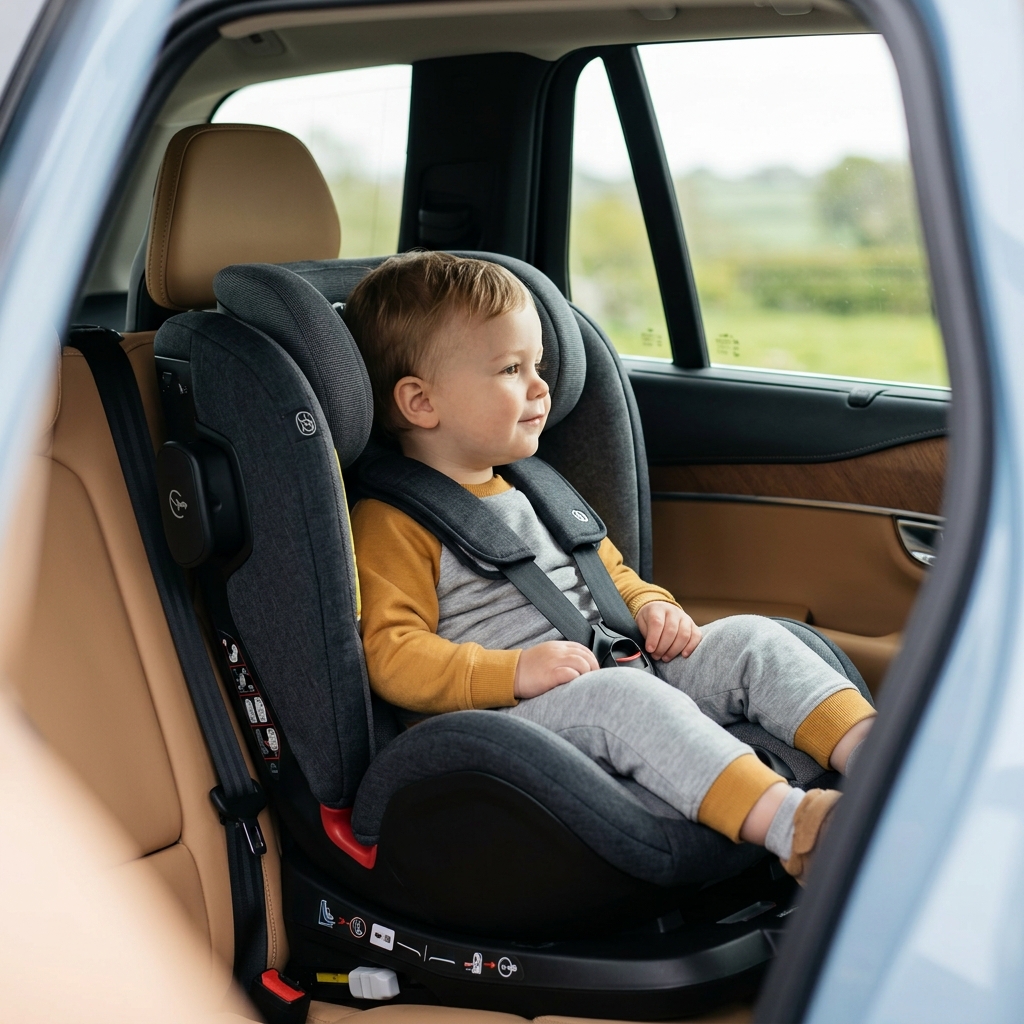
UK Car Seat Laws & Regulations (2026 Update)
Currently, in the UK, all children must be secured in an appropriate car seat until they are 12 years old or 135cm (approximately 4ft 5in) tall, whichever comes first. The law states that a car seat must conform to either the R44/04 or R129 (i-Size) standard. By 2026, the government is expected to accelerate the transition to i-Size, potentially incentivising manufacturers to focus solely on i-Size compliant seats. This means more emphasis on height-based rather than weight-based selection.
Here’s a breakdown of the current weight/height guidelines (subject to potential revisions in 2026):
- Group 0+ (Birth to 13kg / approx. 15 months): Rear-facing only.
- Group 1 (9kg to 18kg / approx. 9 months to 4 years): Can be rear or forward-facing, but rear-facing for as long as possible is recommended.
- Group 2 (15kg to 25kg / approx. 4 to 7 years): Forward-facing with a 5-point harness.
- Group 3 (22kg to 36kg / approx. 7 to 12 years): High-back booster seat.
Understanding Car Seat Groups & i-Size
Traditionally, car seats have been categorised by weight (Groups 0+, 1, 2, 3). However, the newer i-Size (R129) standard is based on the child’s height. This is considered a more accurate measure of safety, as weight can vary greatly for children of the same age. i-Size also mandates ISOFIX installation, offering a more secure and consistent fit.
Here’s a comparison:
| Feature | R44/04 (Weight-Based) | R129 (i-Size – Height-Based) |
|---|---|---|
| Selection Criteria | Child’s weight | Child’s height |
| Installation | Seatbelt or ISOFIX | ISOFIX (mandatory) |
| Side Impact Testing | Less rigorous | More rigorous and standardised |
| Rearward Facing | Minimum 9kg | Minimum 40cm and recommended for at least 15 months |
| Compatibility | Can fit in most cars | Requires i-Size compatible vehicles. |
Types of Car Seats: A Comprehensive Overview
Rear-Facing Car Seats (RWF)
Considered the safest option for young children. RWF car seats distribute impact forces more evenly across the entire back, reducing the risk of injury. Experts recommend keeping children rear-facing for as long as their size and the car seat’s specifications allow – often well beyond 15 months.
Forward-Facing Car Seats
Used once a child has outgrown their rear-facing seat. These seats offer good protection but are inherently less safe than RWF options. Ensure a secure harness fit and proper headrest adjustment.
Combination Car Seats
These versatile seats transition from rear-facing to forward-facing, and then often convert into a high-back booster. They offer good value but may not be as specialised as dedicated seats.
Booster Seats (High-Back & Backless)
For older children who have outgrown their forward-facing seats. High-back boosters provide head and side impact protection, while backless boosters simply raise the child to ensure the vehicle’s seatbelt fits correctly.
Key Safety Features to Look For
Side Impact Protection (SIP)
Crucial for protecting the child’s head, neck, and torso in a side collision. Look for seats with enhanced SIP features.
ISOFIX vs. Seatbelt Installation
ISOFIX provides a more secure and consistent installation compared to seatbelts, reducing the risk of errors. However, not all cars have ISOFIX anchor points.
5-Point Harness System
The safest harness type, distributing impact forces across five points – shoulders, hips, and crotch.
Headrest Adjustability
Essential for ensuring the headrest provides optimal support and protection as the child grows.
Energy-Absorbing Materials
Foam and other materials designed to absorb impact energy, reducing the force on the child.
Choosing the Right Car Seat: A Step-by-Step Guide
Here’s how to select the best car seat for your child and vehicle:
- Child’s Weight and Height: Use these measurements to determine the appropriate car seat group or i-Size height range.
- Your Vehicle: Check for ISOFIX compatibility and available space.
- Budget: Car seat prices range from £180 to £400+.
- Lifestyle: Consider how often you’ll be moving the seat between vehicles.
Installation & Best Practices
Correct installation is vital. Always follow the manufacturer’s instructions meticulously. If using ISOFIX, ensure the indicators show a secure connection. If using a seatbelt, ensure it’s tightened correctly and doesn’t have any slack. It’s highly recommended to get your car seat installation checked by a trained professional. Common mistakes include loosening the harness straps too much, not adjusting the headrest properly, and incorrect seatbelt routing.
Top Car Seat Recommendations (UK – 2026)
| Car Seat Model | Type | i-Size | Price (approx.) |
|---|---|---|---|
| Maxi-Cosi Pearl 360 | Rotating | Yes | £280 |
| Cybex Sirona S i-Size | Rotating | Yes | £350 |
| Britax Römer Kidfix SL SICT | High-Back Booster | No | £220 |
| Joie i-Spin 360 | Rotating | Yes | £250 |
| Nuna Rebl Plus i-Size | Rotating | Yes | £400 |
| Graco SlimFit i-Size | Combination | Yes | £180 |
| Recaro Primo Zero 1 i-Size | Rotating | Yes | £300 |
| Cosatto Cabana i-Size | Group 0+/1 | Yes | £270 |
| BeSafe iZi Flex Fix i-Size | High-Back Booster | Yes | £330 |
| Silver Cross Mode i-Size | Rotating | Yes | £290 |
Car Seat Accessories: What You Need
Consider these useful accessories:
- Car Seat Protectors: Prevent damage to your vehicle’s seats.
- Sunshades: Protect your child from glare.
- Travel Bags: Make it easier to transport the car seat.
- Spill Mats: For inevitable sticky fingers!
Frequently Asked Questions (FAQs)
Q: When can my child move from a rear-facing to a forward-facing car seat?
As late as possible! Current recommendations (and likely to be reinforced in 2026 updates) are to keep your child rear-facing until they reach the maximum height or weight limit of their rear-facing seat. Many children can remain rear-facing until age 4 or even older.
Q: What does i-Size actually mean?
i-Size (R129) is a new car seat safety standard based on the child’s height rather than weight. It also mandates ISOFIX installation and has more stringent side-impact testing requirements.
Q: Is it okay to buy a second-hand car seat?
It’s generally not recommended. You won’t know the seat’s history – it may have been involved in an accident or have hidden damage. Also, you may not be able to verify it meets current safety standards.
Q: How often should I replace my car seat?
After any accident, even a minor one. Also, check the manufacturer’s expiry date – car seats have a limited lifespan, typically around 6-10 years.
Q: What if my car doesn’t have ISOFIX?
You can still use a car seat installed with the vehicle’s seatbelt. Ensure it’s installed correctly and tightened securely.