
Table of Contents
As an Amazon Associate, we earn from qualifying purchases. This means we may receive a small commission at no extra cost to you when you buy through links on this page.
Introduction to Car Seat Laws UK 2026
Ensuring the safety of children in vehicles is paramount, and understanding UK car seat laws is crucial for every parent and guardian. These laws are in place to significantly reduce the risk of injury or fatality in the event of a road traffic accident. This comprehensive guide details the current regulations as they stand in 2026, covering all aspects of car seat usage, from birth to 12 years old, or 135cm tall, whichever comes first. While the transition to i-Size (R129) is well underway, the complete phasing out of R44/04 regulations is a continuing discussion. We’ll explore this further. Staying informed about potential updates is vital, as regulations can evolve based on ongoing safety research and European standards. This guide will provide you with the knowledge to make safe and legally compliant choices for your child.
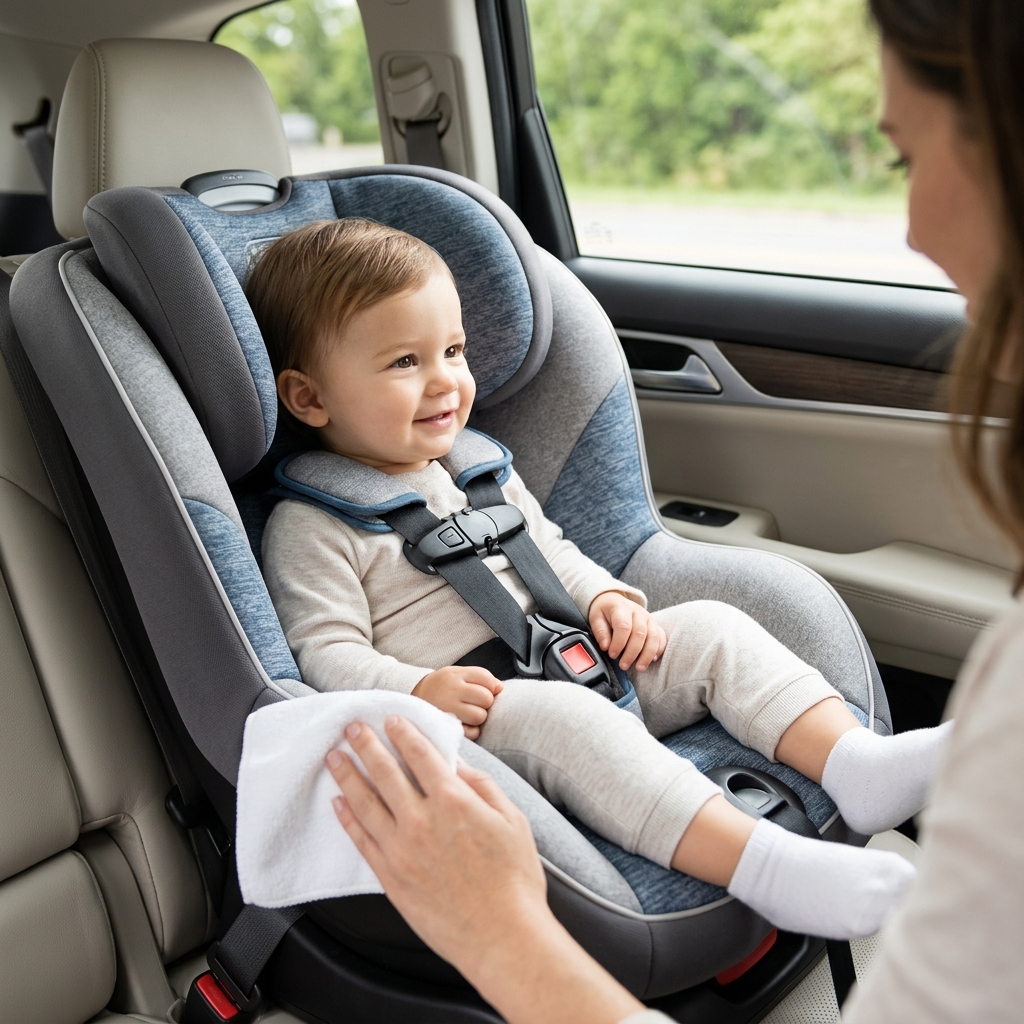
Understanding i-Size (R129) vs. R44/04 Car Seat Regulations
Currently, both R44/04 and i-Size (R129) car seats are legal in the UK. However, i-Size is the newer and generally considered safer standard. The key difference lies in the testing criteria. R44/04 focuses on weight, while i-Size prioritises a child’s height. i-Size car seats are also designed to be used with ISOFIX anchor points, offering a more secure and reliable installation.
By 2026, while not yet enforced, there is increasing pressure to fully phase out R44/04 seats. Major retailers are increasingly focusing on i-Size compliant models, and the long-term goal is to have all new car seats meet the higher safety standards of i-Size.
i-Size Benefits:
- Enhanced side impact protection.
- More stringent crash testing.
- Focus on height-based selection, offering a better fit for the child.
- ISOFIX compatibility improves installation reliability.
UK Car Seat Laws by Child’s Weight and Height (2026)
The following outlines the legal requirements based on a child’s height and weight. Remember, always check the specific car seat’s compatibility with your vehicle.
Group 0+ (Birth to approx. 13kg)
Height: Up to 83cm
Requirement: Rear-facing infant carrier. This is the safest position for newborns and young babies.
Group 1 (9kg to 18kg)
Height: 61cm – 105cm
Requirement: Rear-facing or forward-facing car seat. However, rear-facing is strongly recommended for as long as possible.
Group 2 (15kg to 25kg)
Height: 100cm – 135cm
Requirement: Forward-facing car seat with a five-point harness or a high-back booster seat.
Group 3 (22kg to 36kg)
Height: 135cm and above
Requirement: Forward-facing car seat with a five-point harness or a high-back booster seat. Once the child exceeds 135cm in height, a booster cushion *may* be used, but a high-back booster is still recommended for added safety.
| Group | Approx. Weight | Approx. Height | Legal Requirement (2026) |
|---|---|---|---|
| 0+ | Up to 13kg | Up to 83cm | Rear-facing infant carrier |
| 1 | 9kg – 18kg | 61cm – 105cm | Rear or Forward-facing (Rear preferred) |
| 2 | 15kg – 25kg | 100cm – 135cm | Forward-facing with harness or High-back Booster |
| 3 | 22kg – 36kg | 135cm+ | Forward-facing with harness or High-back Booster (Booster cushion permissible above 135cm) |
Rearward vs. Forward-Facing Car Seats: What the Law Says
While the law permits forward-facing car seats once a child reaches a certain weight and height, experts overwhelmingly recommend keeping children rear-facing for as long as possible. Rear-facing seats offer significantly better protection for the head, neck, and spine in a frontal collision, distributing the impact force over a larger area of the child’s body.
By 2026, there’s an increasing expectation that parents will embrace extended rear-facing (ERF). While not legally mandated beyond Group 1, the benefits are becoming widely recognised.
Forward-facing is permitted once a child reaches 9kg and is at least 76cm tall, but it’s crucial to ensure the seat is correctly installed and adjusted.
Booster Seats: UK Regulations in 2026
Booster seats are used to raise a child so that the vehicle’s seat belt fits correctly. There are two main types:
- High-back boosters: These provide head and side impact protection. These are generally considered safer.
- Booster cushions: These only raise the child and offer no side impact protection. Only legally permissible for children 135cm or taller.
Minimum requirements for booster seat use:
- Child must be at least 22kg (approx. 4 years old).
- For booster cushions, child must be at least 135cm tall.
- The vehicle’s seat belt must fit correctly across the child’s shoulder and lap.
Approved Car Seats: What to Look For (2026)
Always ensure the car seat you choose is approved for use in the UK. Look for the ECE R44/04 or ECE R129 (i-Size) approval mark displayed on the seat. This indicates the car seat has met rigorous safety standards.
Reputable testing organisations include:
- ADAC (German Automobile Club): Conducts independent crash tests.
- Which? (UK): Provides independent product reviews and testing.
Check the manufacturer’s website for compatibility information with your vehicle. Some car seats may not be suitable for all cars.
Car Seat Installation: A Step-by-Step Guide
Correct installation is vital for car seat safety. Follow these steps:
- Read the car seat and vehicle manuals carefully.
- ISOFIX Installation: Locate the ISOFIX anchor points in your vehicle. Connect the car seat securely until you hear a click.
- Seat Belt Installation: Thread the seat belt through the designated slots on the car seat. Ensure the belt is tightened correctly and doesn’t have any slack.
- Check for Stability: The car seat should not move more than 2.5cm side to side or front to back when firmly pushed.
Common Mistakes to Avoid:
- Loosely fitted seat belts.
- Incorrect routing of the seat belt.
- Using a car seat that is past its expiry date.
- Not adjusting the headrest to the correct height.
Official installation guides can be found on the Gov.uk website.
What Happens if You Break Car Seat Laws in the UK?
Driving with a child in an incorrectly fitted or inappropriate car seat is illegal. The penalty is a £100 fine and 3 penalty points on your license. More importantly, you are putting your child’s life at risk.
Future Changes to Car Seat Laws: What to Expect Beyond 2026
While specific changes are not yet confirmed, several trends suggest potential future developments. We anticipate further emphasis on i-Size regulations, possibly leading to a complete ban on the sale of R44/04 car seats. There is also ongoing research into advanced restraint systems (ARS) that offer even greater protection, potentially influencing future standards. Improved crash test protocols, incorporating more realistic scenarios, are also likely. Furthermore, the integration of smart technology – such as sensors that detect incorrect installation or alert parents if a child unbuckles the harness – may become more commonplace.
Resources & Further Information
Our Top Pick
Based on safety features, ease of use, and i-Size compliance, the Maxi-Cosi Pearl 360 i-Size Car Seat (£250) stands out as our top pick in 2026. It’s a rotating car seat allowing for easy access and offers excellent side impact protection.
| Car Seat Model | Price (GBP) | i-Size Compliant | Pros | Cons |
|---|---|---|---|---|
| Maxi-Cosi Pearl 360 | £250 | Yes | Rotating, Excellent Safety, Easy Installation | Can be bulky |
| Cybex Sirona S i-Size | £300 | Yes | Advanced Side Impact Protection, Reclining Feature, Long-Lasting | Expensive |
| Britax Römer Kidfix III M i-Size | £220 | Yes | Affordable, Adjustable Headrest, Easy to Use | Less Reclining Options |
| Joie i-Spin 360 | £200 | Yes | Good Value, Rotating, Easy to Clean | May not be as robust as premium options |
| Nuna Rebl Plus i-Size | £350 | Yes | Premium Materials, Comfortable, Easy to Install | Most Expensive |
FAQ
1. Can I still use my R44/04 car seat in 2026?
Yes, R44/04 car seats are still legal in 2026, provided they meet the required safety standards and are in good condition. However, the focus is shifting towards i-Size, and availability of R44/04 seats may decrease.
2. What is the safest way to position my child in a car seat?
Rear-facing is the safest position for children, particularly for younger babies and toddlers. Keep your child rear-facing for as long as possible, ideally until they reach the maximum height or weight limit of their rear-facing car seat.
3. How often should I replace my car seat?
Car seats have an expiry date, typically 6-10 years from the date of manufacture. Check the label on your car seat for the expiry date. You should also replace a car seat if it has been involved in a collision, even if there is no visible damage.
4. What does ISOFIX mean?
ISOFIX is an international standard for child car seats and corresponding anchor points in vehicles. It provides a direct connection between the car seat and the vehicle chassis, offering a more secure and reliable installation compared to seat belt installation.
5. Is it legal to use a second-hand car seat?
While legal, it’s generally not recommended to use a second-hand car seat. You cannot be certain of its history, whether it has been involved in a collision, or if it has been properly stored. Damage or wear may compromise its safety.