
Table of Contents
As an Amazon Associate, we earn from qualifying purchases. This means we may receive a small commission at no extra cost to you when you buy through links on this page.
Introduction: Why Car Seat Safety Matters
Every year, countless children are injured or killed in road traffic accidents. In the UK, statistics from RoSPA show that, even with improvements in vehicle safety, children remain vulnerable passengers. Correctly fitted car seats are estimated to reduce the risk of fatal injury by up to 90%. This guide provides a comprehensive car seat safety checklist, updated for 2026 regulations, to ensure your little one travels as safely as possible. It’s vital to understand and adhere to the legal requirements, as using an incorrect or improperly fitted car seat can result in a £500 fine and three penalty points on your driving license. This article reflects the latest guidance as of 2026, including changes to i-Size regulations and best practices.
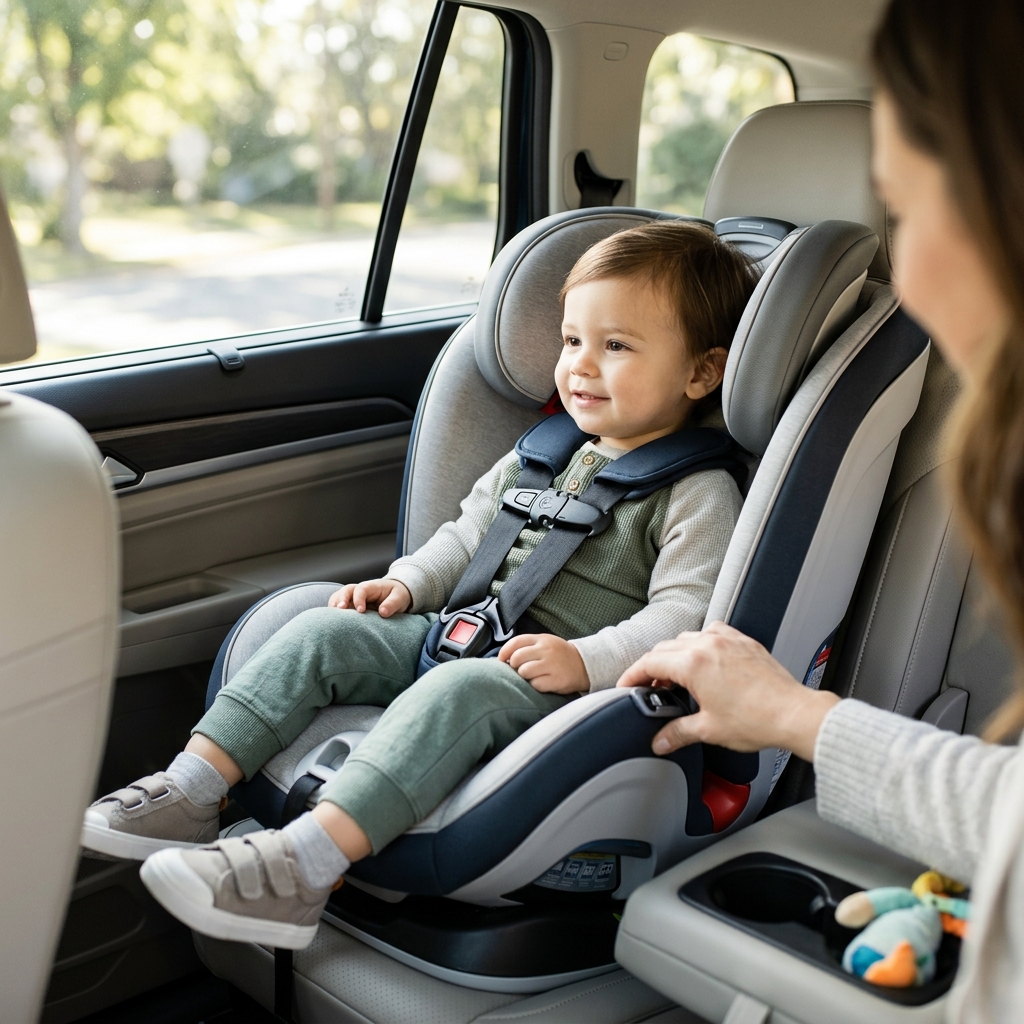
Understanding Car Seat Groups (2026 Standards)
Car seats are categorised into groups based on a child’s weight and height. Here’s a breakdown of the current groups, aligning with 2026 standards:
- Group 0+ (Birth to 13kg / approx. 15 months): Rear-facing only. Designed for newborns and very young infants.
- Group 1 (9-18kg / approx. 9 months – 4 years): Can be rear-facing or forward-facing. However, experts strongly recommend keeping children rear-facing for as long as possible, ideally until at least 15 months.
- Group 2 (15-25kg / approx. 4 – 7 years): High-backed booster seats. Focuses on providing side impact protection.
- Group 3 (22-36kg / approx. 6 – 12 years): Booster seats (high-backed or backless). These elevate the child to ensure the vehicle’s seatbelt fits correctly.
i-Size (R129) vs R44/04
The newer i-Size (R129) standard is increasingly becoming the norm. It differs significantly from the older R44/04 regulation. i-Size focuses on a child’s height rather than weight, offering greater clarity. Crucially, i-Size car seats must be rear-facing until at least 15 months, and often longer. They also undergo more rigorous side impact testing. While R44/04 seats are still legal to use if they meet safety standards, i-Size is considered the safest option and is the future of car seat regulation in the UK. Many newer vehicles are designed with i-Size compatible ISOFIX anchor points.
Pre-Installation Checklist: Is Your Car Compatible?
Before you even think about installing a car seat, check your vehicle’s manual. It will detail whether your car is compatible with ISOFIX, and if so, where the anchor points are located.
- ISOFIX: Look for metal brackets located between the seat back and seat base.
- Seatbelt Routing: If using a seatbelt-fitted car seat, ensure the seatbelt has a three-point system and that it can lock into place (often achieved by pulling the belt fully extended).
- Vehicle Safety Features: Be aware of your car’s advanced safety systems (like automatic seatbelt pre-tensioners or airbags) and how they might interact with the car seat. Consult your car’s manual for specific advice.
Installation: A Step-by-Step Guide (ISOFIX & Seatbelt)
ISOFIX Installation
- Locate the ISOFIX anchor points in your car.
- Attach the car seat’s ISOFIX connectors to the anchor points. You should hear a distinct ‘click’ confirming they are securely attached.
- If your car seat has a ‘top tether’ or ‘support leg’, attach it according to the manufacturer’s instructions.
- Ensure the car seat is level and doesn’t move more than 2.5cm side to side or front to back.
Seatbelt Installation
- Place the car seat in the vehicle.
- Route the vehicle’s seatbelt through the designated belt path on the car seat.
- Pull the seatbelt tight and ensure it locks into place. Most cars require you to pull the belt fully extended to engage the locking mechanism.
- Again, ensure the car seat is level and doesn’t move more than 2.5cm side to side or front to back.
Common Mistakes: Forgetting to fully extend the seatbelt, not securing the top tether (if applicable), and failing to check for excessive movement.
Harness Adjustment & Recline Positions
Once installed, correct harness adjustment is critical.
- Harness Straps: The harness straps should lie flat against your child’s shoulders and be snug – you shouldn’t be able to pinch any slack.
- Harness Height: Adjust the harness height so the straps are at or slightly below your child’s shoulders for rear-facing seats, and at or slightly above for forward-facing seats.
- Recline Angle: Newborns require a more reclined position to support their developing spines. As your child grows, gradually adjust the recline to a more upright position. Refer to the car seat’s manual for recommended angles.
Checking for a Secure Installation: The Pinch Test
The ‘pinch test’ is a simple way to verify installation stability.
- Grasp the car seat near the belt path or ISOFIX connectors.
- Attempt to move the car seat side to side and front to back.
- If you can pinch more than 2.5cm of webbing or the seat moves excessively, the installation is not secure. Re-check the installation steps.
Pass: Minimal movement (less than 2.5cm). Fail: Excessive movement or the ability to easily pinch webbing.
Legal Requirements in the UK (2026)
In the UK, all children must legally use a car seat until they are 12 years old or 135cm tall (whichever comes first). The car seat must be appropriate for their weight and height. As of 2026, the emphasis continues to be on i-Size compliance and rear-facing travel for as long as possible. Failure to comply with these regulations can result in a £500 fine and three penalty points on your driving license. There are no anticipated major changes to the law for 2026, but continued monitoring of European standards and best practice is expected.
Car Seat Maintenance & Cleaning
- Cleaning: Regularly clean your car seat with a mild detergent and warm water. Avoid harsh chemicals. Check the manufacturer’s instructions for specific cleaning guidance.
- Wear and Tear: Inspect the straps, buckles, and shell for any signs of damage.
- Replacement: Replace any worn or damaged parts immediately.
- After an Accident: Always replace the car seat after any accident, even if there is no visible damage. The impact can compromise the structural integrity of the seat.
What to Do After a Car Accident
If you are involved in a car accident while your child is in a car seat:
- Ensure your child is safe and unharmed.
- Immediately replace the car seat, even if there is no visible damage.
- Document the accident thoroughly for insurance purposes.
Frequently Asked Questions (FAQs)
Can I use a second-hand car seat?
It’s generally not recommended to use a second-hand car seat unless you know its full history, including whether it has been involved in an accident. You can’t be certain of its structural integrity.
What about car seat mirrors?
Car seat mirrors are a great way to keep an eye on your child while driving, particularly when they are rear-facing. They don’t affect the safety of the car seat itself, but they enhance visibility for the driver.
What if my child outgrows their seat before they reach the weight limit?
Height is becoming the primary factor with i-Size seats. If your child reaches the maximum height for their seat, you must move them up to the next group, even if they haven’t reached the weight limit.
Are all ISOFIX bases compatible with all ISOFIX seats?
No. While ISOFIX is a standard fitting, not all bases and seats are compatible. Always check the manufacturer’s compatibility list before purchasing a base and seat combination.
Where can I find a qualified car seat fitter?
RoSPA (The Royal Society for the Prevention of Accidents) and Britax Römer both offer directories of qualified car seat fitters on their websites.
Comparison Table: Popular Car Seats (2026)
| Product Name | Group | i-Size | Price (GBP) | Pros | Cons |
|---|---|---|---|---|---|
| Maxi-Cosi Pearl 360 i-Size | 0+/1 | Yes | 289 | 360° rotation, easy to adjust, comfortable | Can be bulky |
| Cybex Sirona S i-Size | 0+/1 | Yes | 320 | Excellent side impact protection, rear-facing for longer | More expensive |
| Britax Römer Kidfix 3 i-Size | 2/3 | Yes | 220 | Secure, comfortable, good value | Not suitable for younger children |
| Joie i-Spin 360 | 0+/1 | Yes | 240 | Affordable, rotating seat, easy to install | May not be as premium feeling as other brands |
| Nuna Rebl Next i-Size | 0+/1 | Yes | 450 | Premium materials, sleek design, very safe | Most expensive option |