
Table of Contents
As an Amazon Associate, we earn from qualifying purchases. This means we may receive a small commission at no extra cost to you when you buy through links on this page.
Introduction: Car Seat Safety in 2026
Ensuring your child’s safety on the road is paramount. Car seats are a non-negotiable investment for every parent. As we move towards 2026, car seat regulations and technology continue to evolve. We’re seeing a continued shift towards i-Size (ECE R129) car seats, which offer enhanced safety features and a more height-based approach to selecting the right seat. Furthermore, the benefits of Rearward Facing (RWF) installation are becoming increasingly recognised, encouraging parents to keep their little ones facing backwards for longer. This guide will provide you with the latest information and advice to navigate the world of car seats in 2026.
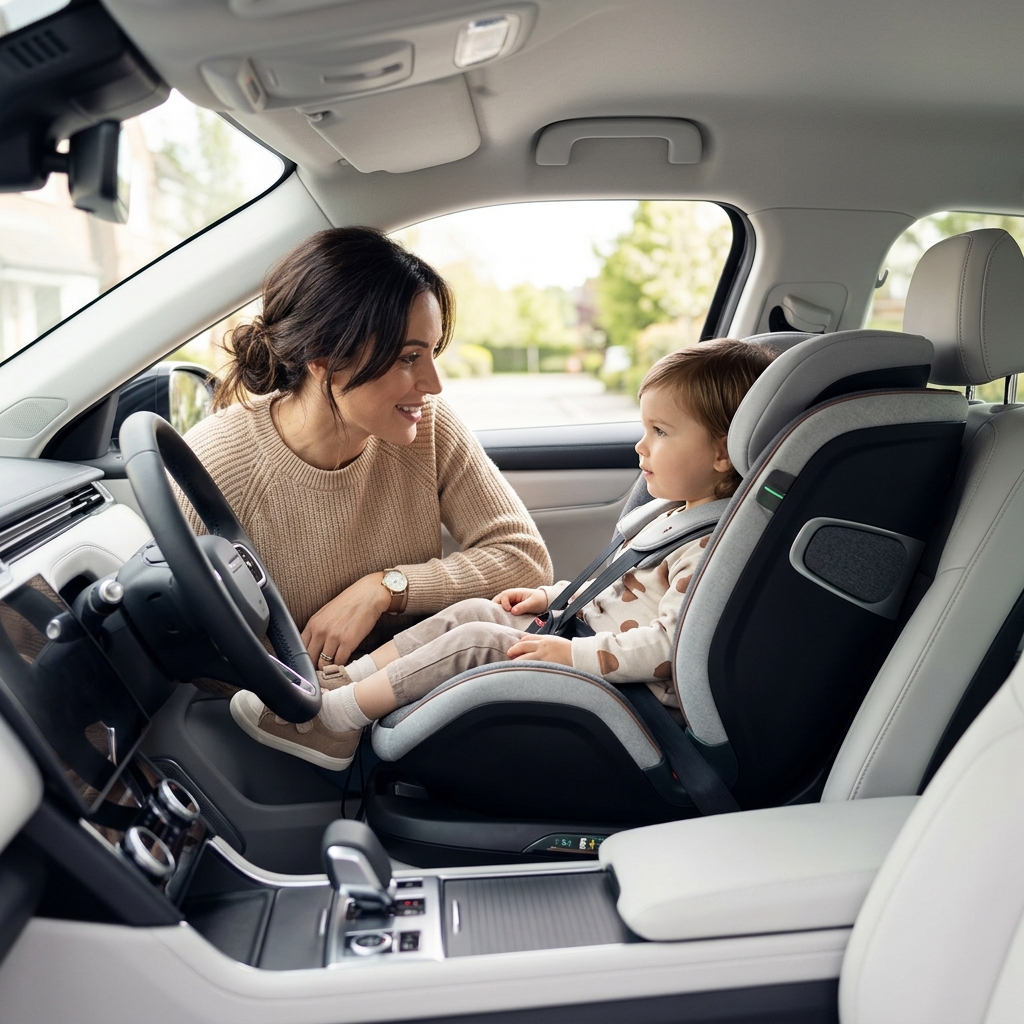
Understanding UK Car Seat Laws & Regulations (2026)
UK law requires all children under 12 years or 135cm (whichever comes first) to use a car seat. There are currently two main safety standards in use:
- ECE R44/04: This is the older standard, and while still legal, it’s gradually being phased out. Car seats meeting this standard are grouped by weight.
- ECE R129 (i-Size): This is the newer, more comprehensive standard. i-Size car seats are designed to be used with ISOFIX, and they are categorised by the child’s height rather than weight. In 2026, we anticipate further restrictions on the sale of R44/04 seats, with a full phase-out expected in the coming years.
Here’s a breakdown of the current and anticipated requirements:
- Group 0/0+ (Birth to 13kg): Lie-flat or rear-facing infant carriers.
- Group 1 (9-18kg): Rear or forward-facing seats.
- Group 2/3 (15-36kg): High-back boosters or booster cushions.
- i-Size: Heights start at approximately 40cm and continue upwards. Regulations will increasingly focus on height and compatibility with ISOFIX systems.
It’s crucial to choose a car seat that’s appropriate for your child’s weight *and* height, and that complies with the latest regulations.
Types of Car Seats: Which is Right for Your Child?
Choosing the right car seat can feel overwhelming. Here’s a breakdown of the different types:
Group 0/0+ (Infant Carriers)
Designed for newborns and babies up to 13kg. They’re typically rear-facing and can be easily carried using a handle. They often click into a base that stays in the car.
- Pros: Portable, convenient, provides excellent protection for newborns.
- Cons: Children quickly outgrow them, can be expensive.
Group 1 (Toddler Seats)
For children from 9-18kg. These can be rear or forward-facing, but rearward facing for as long as possible is recommended.
- Pros: More spacious than infant carriers, often have recline options.
- Cons: Less portable than infant carriers.
Group 2/3 (High-Back Boosters)
For children from 15-36kg. These seats elevate your child so that the adult seatbelt fits correctly. High-back boosters offer more side impact protection than booster cushions.
- Pros: Affordable, often comfortable for older children.
- Cons: Provide less protection in a crash than seats with a full harness.
Combination Seats
These seats combine multiple groups, offering extended use. They can transition from rear-facing to forward-facing and often convert into a high-back booster.
- Pros: Cost-effective, long-lasting.
- Cons: May not be as specialised as dedicated seats.
i-Size vs. R44/04: Decoding the Standards
Understanding the differences between i-Size and R44/04 is crucial.
| Feature | ECE R44/04 | ECE R129 (i-Size) |
|---|---|---|
| Classification | By weight | By height |
| Installation | Seatbelt or ISOFIX | Primarily ISOFIX |
| Testing | Less rigorous | More rigorous, including side impact testing |
| Compatibility | Can fit in any car | Designed to fit specific car models (check compatibility lists) |
i-Size offers potential benefits in terms of safety and ease of installation, but it’s important to ensure the seat is compatible with your vehicle.
Rearward Facing (RWF) vs. Forward Facing: The Safety Debate
Extensive research consistently shows that rearward-facing car seats offer significantly better protection in a crash, especially for young children. This is because a rear-facing seat distributes the impact force over the entire back, whereas a forward-facing seat concentrates the force on the neck and spine.
Experts recommend keeping children rear-facing for as long as possible, ideally until at least 15 months, but preferably longer – even up to 4 years if the seat and your child’s size allow. Switching to forward-facing should only occur when the child reaches the maximum height or weight limit of the rear-facing seat.
ISOFIX vs. Seatbelt Installation: Which is Safer & Easier?
ISOFIX is a standardised fitting system that attaches the car seat directly to the car’s chassis. Seatbelt installation uses the car’s seatbelts to secure the car seat.
| Feature | ISOFIX | Seatbelt Installation |
|---|---|---|
| Ease of Installation | Generally easier, less prone to errors | Can be more challenging, requires careful threading of the seatbelt |
| Security | Very secure when installed correctly | Secure when installed correctly, but more susceptible to errors |
| Compatibility | Requires ISOFIX anchor points in the car | Compatible with all cars |
While both methods are safe when installed correctly, ISOFIX reduces the risk of installation errors.
Choosing the Right Car Seat Fit for Your Car
Not all car seats fit all cars. Before purchasing, check your car’s manual to see which car seats are compatible. Many car seat manufacturers provide compatibility checkers on their websites. Always try the car seat in your vehicle before buying to ensure a secure fit.
Budget & Features: What to Consider
Car seat prices range from around £80 to over £500. While expensive features like rotating bases and luxurious fabrics can be appealing, they aren’t always essential. Prioritise safety features such as side impact protection, a secure harness, and a well-padded headrest. Consider your budget and your needs. A well-fitting, correctly installed car seat is far more important than a fancy one.
Top Car Seat Recommendations for 2026 (UK)
- Maxi-Cosi Pearl 360 (i-Size) – £280: Excellent rotating seat, easy to get your child in and out.
- Cybex Sirona S i-Size – £350: Offers superior side impact protection and comfortable recline options.
- Britax Römer Dualfix i-Size – £400: Known for its ease of use and robust construction.
- Joie i-Spin 360 – £250: A more affordable option with a rotating seat and good safety features.
- Nuna Rebl Plus – £450: Premium materials and sleek design with extended rearward facing capabilities.
- Recaro Zero.1 i-Size – £320: Advanced safety features and a comfortable design.
- BeSafe iZi Twist i-Size – £380: Focuses on extended rearward facing and ease of rotation.
- Silver Cross Dream i-Size – £300: Offers good value with a focus on comfort and safety.
- Cosatto Cabana i-Size – £220: Stylish and affordable, with a focus on colourful designs.
- Jane Revelation i-Size – £330: Provides a comfortable and secure ride for your little one.
Car Seat Installation & Safety Checks
Step-by-step installation guide:
- Read the car seat and vehicle manuals carefully.
- Ensure the car seat is compatible with your vehicle.
- For ISOFIX, locate the anchor points and attach the car seat securely.
- For seatbelt installation, thread the seatbelt through the designated slots and tighten it firmly.
- Check for any slack in the installation.
- Ensure the harness is correctly adjusted and fits snugly on your child.
Resources:
- RoSPA: https://www.rospa.com/road-safety/advice/child-car-seats/ (Example Link)
- Local council road safety officers offer car seat checking services.
Frequently Asked Questions (FAQs)
Q: When can my child move to a forward-facing car seat?
Ideally, keep your child rear-facing for as long as possible, even beyond 15 months. Only switch to forward-facing when they reach the maximum height or weight limit of their rear-facing seat.
Q: Is an expensive car seat always safer?
Not necessarily. A correctly fitted car seat that meets current safety standards is the most important thing. Focus on fit, features like side impact protection, and ease of installation.
Q: What does ‘i-Size’ mean?
i-Size (ECE R129) is a newer car seat standard that categorises seats by the child’s height rather than weight and prioritises ISOFIX installation. It offers more rigorous safety testing.
Q: Can I use a second-hand car seat?
It’s strongly advised against using a second-hand car seat unless you know its full history. You can’t be sure if it’s been involved in an accident or if parts are missing or damaged.
Q: How often should I check my car seat installation?
Check the installation every time you adjust the car seat or if you’ve moved it between vehicles. Regularly inspect the car seat for any signs of damage.