
Table of Contents
As an Amazon Associate, we earn from qualifying purchases. This means we may receive a small commission at no extra cost to you when you buy through links on this page.
Introduction: Why a Baby Gate is Essential
Bringing a little one into your home is a joyous occasion, but it also brings a whole new set of safety concerns. One of the simplest, yet most effective, ways to protect your child is with a baby gate. From preventing tumbles down stairs to keeping curious explorers away from potentially hazardous areas like kitchens and fireplaces, a well-chosen baby gate offers invaluable peace of mind. As your child develops – from crawling to cruising to confidently walking – their needs change, and so must your safety provisions. A gate that worked perfectly at six months might not be sufficient at twelve. This guide will help you navigate the UK market and choose the best baby gate for your family in 2026.
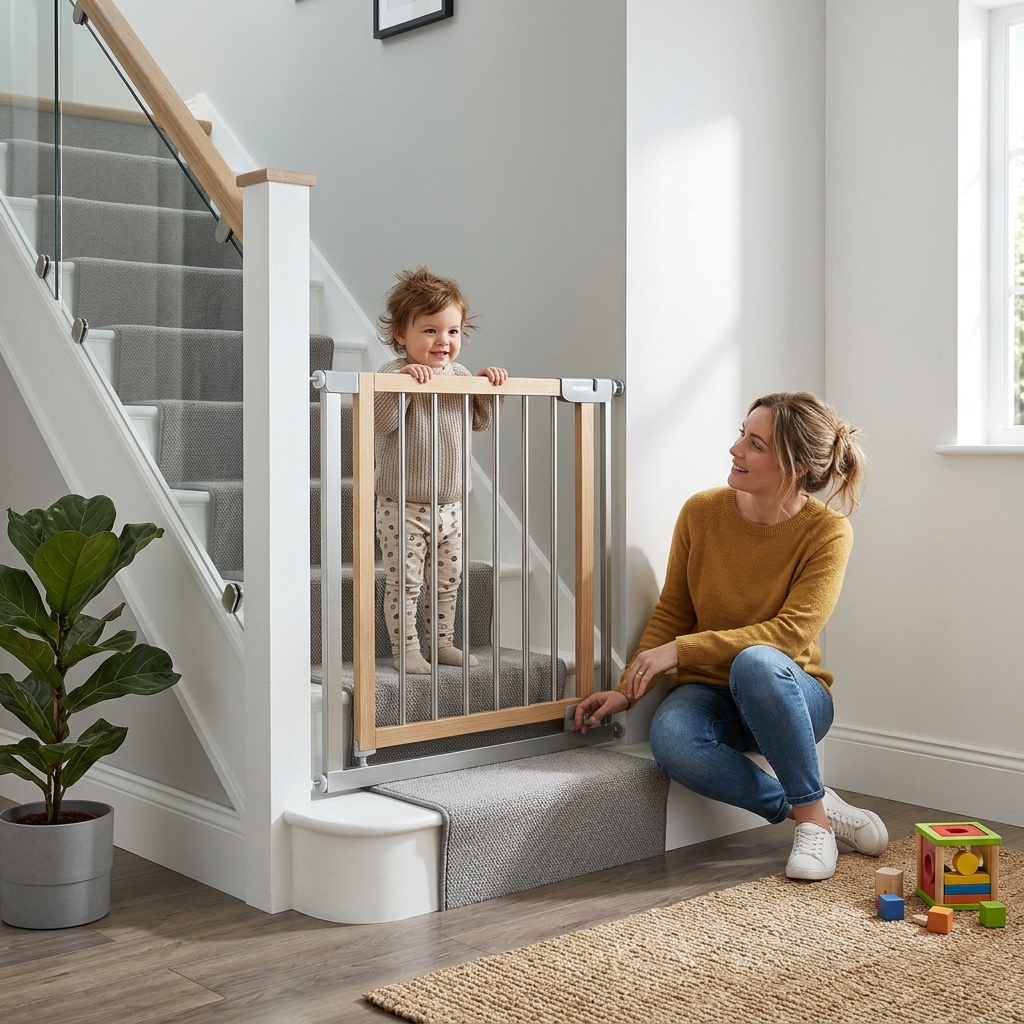
Types of Baby Gates: Finding the Right Fit
The market offers a diverse range of baby gates, each with its own strengths and weaknesses. Understanding these differences is crucial for making the right choice.
Pressure-Mounted Gates
These gates utilise pressure against the walls to stay in place. They’re easy to install and require no drilling, making them ideal for renters or those who prefer a temporary solution. However, they aren’t suitable for top-of-stairs installations due to the risk of being pushed over.
- Pros: Easy installation, no drilling required, portable, generally more affordable.
- Cons: Not suitable for top of stairs, can be pushed over with sufficient force, may damage walls if pressure is too high.
Hardware-Mounted Gates
These gates are screwed directly into the walls, providing a significantly more secure and permanent solution. They are the recommended choice for top-of-stairs and landings where stability is paramount. Installation does require some DIY skill.
- Pros: Extremely secure, suitable for top of stairs, less likely to be damaged.
- Cons: Requires drilling, more permanent, potential for wall damage upon removal.
Retractable/Roller Gates
These gates roll up into a compact unit when not in use, making them ideal for situations where you need the opening to be clear frequently. They are typically hardware-mounted for stability.
- Pros: Space-saving, convenient, good for doorways that need to be clear regularly.
- Cons: Can be more expensive, may require more complex installation, may not be as robust as traditional gates.
Extra-Tall Gates
Designed for particularly agile or determined toddlers who are learning to climb, these gates offer increased height, making them harder to scale.
- Pros: Enhanced safety for climbers, provides extra peace of mind.
- Cons: Can be more expensive, may obstruct views.
Top-of-Stair Gates
Specifically designed for use at the top of stairs, these gates *must* be hardware-mounted and offer a secure locking mechanism. Directional hinges are a vital safety feature.
- Pros: Essential for preventing falls down stairs.
- Cons: Requires careful installation, must be hardware-mounted.
Speciality Gates
Some gates are designed with pets in mind, featuring lower sections or adjustable bars. Others may be wider to accommodate larger openings.
Key Features to Consider in 2026
Beyond the basic type, several features can significantly impact a baby gate’s functionality and safety.
One-Hand Operation
Crucial when you’re holding a baby! A gate that can be opened and closed with one hand is a lifesaver.
Auto-Close
This feature automatically closes the gate after you pass through, ensuring it’s always secured. A must-have for busy parents.
Directional Hinges
Essential for top-of-stairs gates. These hinges allow the gate to swing in only one direction, preventing it from opening outwards onto the stairs.
Width & Height Adjustability
Allows the gate to fit a variety of openings and accommodate growing children.
Locking Mechanisms
Look for secure, easy-to-use locking mechanisms that are difficult for a child to operate.
Material Quality
Wood offers a classic look but can be less durable. Metal gates are generally stronger and more resistant to damage. Plastic gates are lightweight and affordable.
Safety Certifications
Ensure the gate meets the current British Standards (BS EN 1930:2011/2018) for safety. This certification indicates the gate has undergone rigorous testing.
Measuring for a Baby Gate: Ensuring a Secure Fit
Accurate measurement is vital for a secure installation. Follow these steps:
- Measure the opening width: Measure at the narrowest point of the opening, typically at the bottom.
- Consider skirting boards & banister posts: If your opening has skirting boards or banister posts, you’ll need to account for these when choosing a gate. Some gates come with adaptors for these situations.
- Check the gate’s width range: Ensure the gate you choose falls within the measured width range.
- Measure the height: Determine if the gate height is suitable for your child’s development.
Common Mistakes: Forgetting to account for skirting boards, measuring at the widest point instead of the narrowest, and not checking the gate’s maximum width capacity.
Installation Guide: Pressure-Mounted vs. Hardware-Mounted
Pressure-Mounted Gates
- Position the gate within the opening.
- Extend the pressure posts until they firmly contact the walls.
- Ensure the gate is level and secure.
- Test the gate’s stability before relying on it.
Hardware-Mounted Gates
- Mark the screw positions on the walls.
- Drill pilot holes.
- Attach the mounting brackets to the walls using appropriate fixings (ensure they are suitable for your wall type).
- Attach the gate to the brackets.
- Test the gate’s security and locking mechanism.
Safety Warning: Always follow the manufacturer’s instructions carefully. Use appropriate fixings for your wall type. Never modify the gate.
Top Baby Gate Recommendations for UK Homes (2026)
Here’s a comparison of some popular baby gates available in the UK market:
| Product Name | Type | Price (GBP) | Key Features | Pros | Cons |
|---|---|---|---|---|---|
| Dreambaby Chelsea Extra Tall Pressure Mount Gate | Pressure-Mounted | 45.99 | Extra Tall, Auto-Close | Easy to install, Good for climbers | Not for top of stairs |
| Safety 1st Auto Close Baby Gate | Pressure-Mounted | 39.99 | Auto-Close, One-Hand Operation | Affordable, Convenient | Less secure than hardware-mounted |
| Lindam SureClose Baby Gate | Pressure-Mounted | 59.99 | Auto-Close, One-Hand Operation, Wide Opening | Versatile, Easy to use | Can damage walls with excessive pressure |
| East Coast Hands Free Gate | Pressure-Mounted | 49.99 | One-Hand Operation, Auto-Close | Good value for money, Easy to operate | Not suitable for top of stairs |
| Jané Retractable Safety Gate | Retractable/Roller | 69.99 | Space-Saving, Hardware Mounted | Convenient, Minimal obstruction | More complex installation |
| Brica Foldaway Gate | Pressure-Mounted | 54.99 | Foldaway Design, Portable | Easy to store, Ideal for travel | Not as robust as other options |
Baby Gate Safety Tips & Maintenance
Maintaining your baby gate is just as important as installing it correctly.
- Regularly check security: Ensure all fixings are tight and the gate operates smoothly.
- Teach family members: Make sure everyone who cares for your child knows how to open and close the gate correctly.
- Avoid modifications: Never alter the gate in any way.
- Replace damaged parts: If any part of the gate is damaged, replace it immediately.
- Cleaning: Wipe down the gate regularly with a damp cloth and mild detergent.
Frequently Asked Questions (FAQs)
When should I stop using a baby gate?
Generally, you can stop using a baby gate when your child can consistently climb over it or understand how to open and close it themselves. This is usually around the age of two to three, but it depends on your child’s development.
Can I use a baby gate at the top of stairs?
Yes, but *only* a hardware-mounted gate with directional hinges is suitable for the top of stairs. Pressure-mounted gates are not safe for this purpose.
How do I choose a gate for uneven surfaces?
Look for gates with adjustable posts or adaptors that can accommodate uneven surfaces. Some gates are specifically designed for angled openings.
What if my opening is wider than a standard gate?
Consider using gate extensions, which are available separately, to widen the gate’s coverage. Alternatively, look for gates specifically designed for wider openings.
Are all baby gates compatible with banister rails?
Not all are. Check if the gate comes with adaptors for banister rails, or if adaptors are available for purchase separately. Ensure the adaptors are securely attached to the banister.