Table of Contents
As an Amazon Associate, we earn from qualifying purchases. This means we may receive a small commission at no extra cost to you when you buy through links on this page.
Introduction: Why Nursery Cleaning Matters
Bringing a new baby home is one of life’s most joyous experiences. Creating a safe, healthy, and nurturing environment for your little one is paramount, and a clean nursery is a crucial part of that. Beyond aesthetics, a thoroughly cleaned nursery minimises exposure to allergens – dust mites, pet dander, pollen – which can exacerbate allergies and respiratory issues in babies. Germs, too, are a constant concern, particularly for newborns with developing immune systems. Post-pandemic, hygiene standards have rightly increased, and maintaining a consistently clean nursery in 2026 is more important than ever. Regular cleaning isn’t just about preventing illness; it contributes to a baby’s cognitive development and overall wellbeing, allowing them to explore their surroundings confidently and safely.
Creating a Nursery Cleaning Schedule
Life with a new baby is hectic! A realistic cleaning schedule is key. Here’s a breakdown to help you stay on top of things. Don’t feel pressured to achieve perfection; consistent small efforts are more effective than infrequent deep cleans.
Daily (15-20 minutes)
- Quick tidy of toys and clutter.
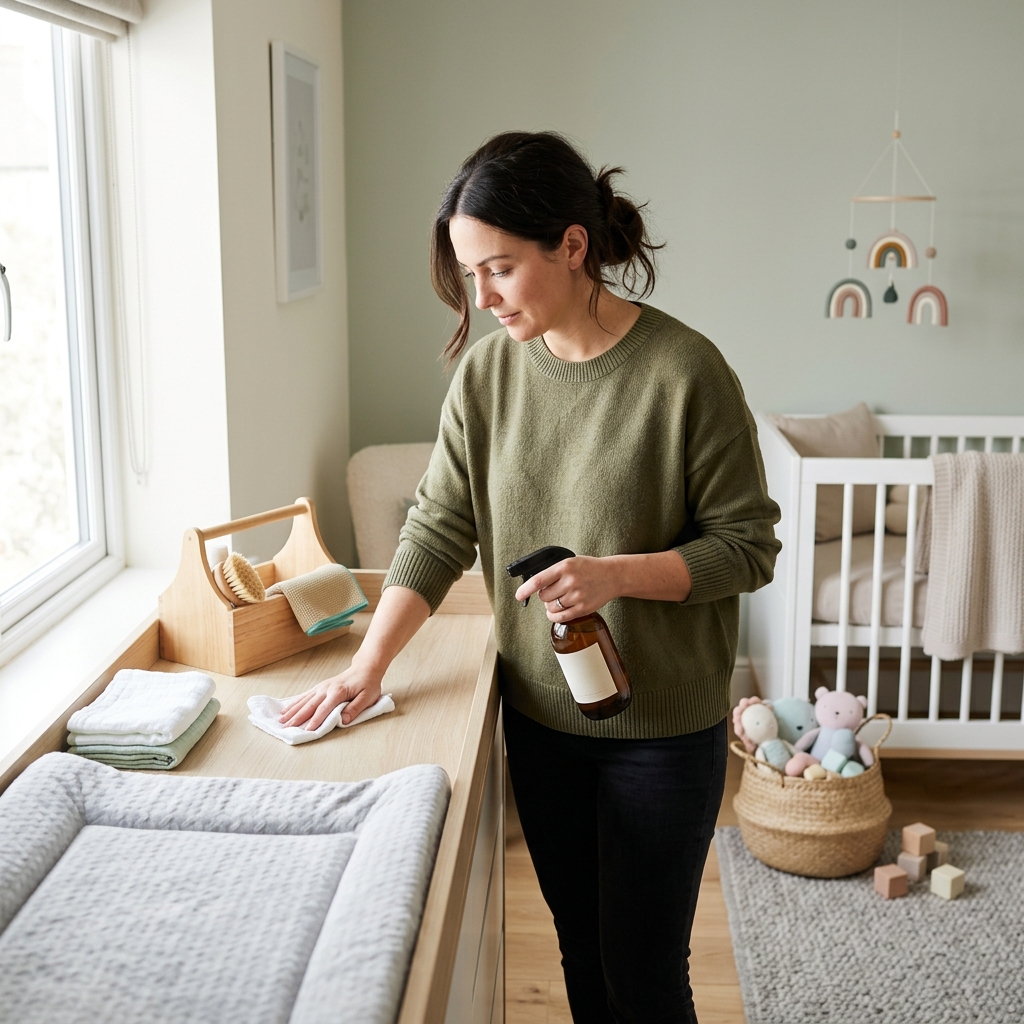
- Wipe down changing table after each use.
- Spot clean any spills immediately.
- Air the room for at least 10 minutes.
Weekly (30-60 minutes)
- Vacuum or sweep floors.
- Dust all surfaces (furniture, shelves, window sills).
- Wash soft toys (see section on fabric cleaning).
- Empty and disinfect the nappy bin.
- Wash cot sheets and changing pad covers.
Monthly (1-2 hours)
- Deep clean crib/cot (mattress, frame).
- Wash curtains or blinds.
- Clean windows and mirrors.
- Organise drawers and wardrobes.
- Check and disinfect all toys thoroughly.
Pre-Baby Deep Clean (4-8 hours)
- Complete all monthly tasks.
- Wash all bedding and fabrics with a baby-safe detergent.
- Disinfect all surfaces.
- Assemble furniture and organise storage.
- Ensure all cleaning products are safely locked away.
Downloadable Checklist: We’ll be releasing a printable nursery cleaning checklist on our website shortly – check back next month!
Essential Cleaning Supplies for a Nursery (UK Approved)
Choosing the right cleaning products is vital. Opt for non-toxic, baby-safe options wherever possible. Look for products with Allergy UK approval where applicable.
Recommended Products:
- Method All-Purpose Cleaner (Baby-Safe): £3.5 from Waitrose, Sainsbury’s and online retailers. Gentle yet effective.
- Milton Sterilising Fluid: £6.99 from Boots, Superdrug and Amazon. Excellent for disinfecting toys and surfaces.
- Dyson Omni-glide Cordless Vacuum: £349.99 from Dyson and Currys. Lightweight and powerful for quick clean-ups.
- Vax ONEPWR Blade 4 Cordless Vacuum: £199.0 from Vax and Argos. A more affordable cordless option.
- Philips 2000i Series Air Purifier: £229.0 from Philips and John Lewis. Helps remove allergens and pollutants.
DIY Cleaning Solutions (with Caution)
- Vinegar & Water: A natural disinfectant. Dilute white vinegar with water (1:1 ratio) for cleaning floors and surfaces. Caution: Avoid using vinegar on marble or granite.
- Baking Soda Paste: Effective for removing stains and odours. Mix baking soda with water to form a paste. Caution: Test on an inconspicuous area first.
Important Note: Always rinse surfaces thoroughly after using any DIY cleaning solution to remove residue.
Room-by-Room Nursery Cleaning Guide
Crib/Cot
- Mattress: Vacuum weekly. Spot clean stains with a mild detergent and water. Consider a waterproof mattress protector.
- Wood Frame: Wipe down weekly with a damp cloth and baby-safe wood polish.
- Detergent: Use a pH-neutral, baby-safe detergent.
Changing Table
- Surfaces: Disinfect after every use with Milton Sterilising Fluid or a baby-safe disinfectant wipe.
- Changing Pad: Wash the cover regularly according to the manufacturer’s instructions.
- Organisation: Keep changing supplies organised and within easy reach.
Floors
- Carpet: Vacuum regularly (at least twice a week). Steam clean every 6-12 months.
- Wood/Laminate: Sweep or vacuum daily. Mop weekly with a mild detergent and water. Avoid excessive moisture.
Walls & Windows
- Dusting: Dust walls and skirting boards weekly.
- Spot Cleaning: Remove marks with a damp cloth and mild detergent.
- Windows: Clean with a baby-safe window cleaner.
Furniture (Drawers, Wardrobes)
- Dusting: Dust surfaces weekly.
- Organisation: Regularly declutter and organise drawers and wardrobes.
- Fabric Care: Follow washing instructions for any fabric liners or soft furnishings.
Toys
- Disinfecting: Regularly disinfect toys with Milton Sterilising Fluid or baby-safe wipes.
- Washing: Wash plush toys according to the manufacturer’s instructions.
- Storage: Use toy storage boxes or shelves to keep toys organised and dust-free.
Dealing with Common Nursery Messes
Spills and messes are inevitable! Here’s how to tackle them:
| Mess | Solution |
|---|---|
| Milk/Formula Spill | Blot immediately. Clean with warm soapy water and rinse thoroughly. |
| Food Spill | Remove solids. Clean with warm soapy water. For stubborn stains, use a baking soda paste. |
| Vomit | Remove solids. Disinfect the area with Milton Sterilising Fluid. Ventilate the room well. |
| Diaper Leak | Clean up immediately. Disinfect the area thoroughly. Wash affected bedding or clothing. |
Air Quality in the Nursery: Ventilation & Air Purifiers
Good air quality is essential for a baby’s respiratory health. Ensure adequate ventilation by opening windows regularly, even in winter (for short periods). An air purifier can help remove allergens and pollutants.
Air Purifier Options (2026):
- Philips 2000i Series Air Purifier: A popular choice with HEPA filtration and smart features.
- Dyson Purifier Cool Formaldehyde: Excellent for removing formaldehyde and other harmful gases.
- Levoit Core 300S: A more affordable option with good filtration.
Cleaning Fabric Items: Curtains, Rugs & Soft Toys
- Curtains & Rugs: Wash or dry clean according to the manufacturer’s instructions. Regular vacuuming is essential.
- Soft Toys: Wash regularly, following care label instructions. Many soft toys can be machine washed on a gentle cycle.
- Steam Cleaning: A good option for rugs and upholstery to kill dust mites and allergens.
Safety First: Cleaning Product Storage & Babyproofing
Cleaning Product Storage: ALWAYS store cleaning products in a locked cabinet, completely out of reach of children.
Babyproofing:
- Secure electrical cords from vacuum cleaners and air purifiers.
- Ensure furniture is stable and won’t tip over.
- Use outlet covers to prevent access to electrical sockets.
Conclusion: Maintaining a Healthy Nursery Environment
A clean nursery is a happy and healthy nursery. By establishing a regular cleaning schedule, using safe cleaning products, and prioritising air quality, you can create a nurturing environment for your baby to thrive. Remember, consistency is key – small, regular efforts will make a big difference in the long run. Don’t be afraid to ask for help from family or friends, and remember to prioritise your own wellbeing alongside your baby’s!
FAQ
Q: How often should I change my baby’s bedding?
Ideally, cot sheets should be changed at least twice a week, or more often if soiled. Changing pad covers should be changed after every use.
Q: Are homemade cleaning solutions safe for nurseries?
While some DIY solutions like vinegar and baking soda can be effective, use them with caution. Always dilute them properly, rinse surfaces thoroughly, and be mindful of potential allergens. It’s generally safer to opt for baby-safe commercial products.
Q: How can I prevent dust mites in the nursery?
Regular vacuuming, washing bedding frequently in hot water, and using dust mite-proof mattress and pillow protectors can help minimise dust mite populations.
Q: Is it necessary to sterilise everything in the nursery?
While sterilising isn’t necessary for all surfaces, it’s important to disinfect frequently touched areas like the changing table and toys, especially during the first few months.
Q: What is the best type of vacuum cleaner for a nursery?
A cordless vacuum cleaner with good suction and a HEPA filter is ideal for quick clean-ups and allergen removal. The Dyson Omni-glide and Vax ONEPWR Blade 4 are both excellent options.