
Table of Contents
As an Amazon Associate, we earn from qualifying purchases. This means we may receive a small commission at no extra cost to you when you buy through links on this page.
What is Isofix and Why Does Angle Adjustment Matter?
Isofix is an international standard for car seat fitting, designed to make car seat installation simpler and more secure than traditional seatbelt fitting. It involves attaching the car seat directly to dedicated Isofix anchor points in your vehicle. These anchor points are typically located between the seat back and the seat base. The benefits include reduced installation errors, increased stability, and a generally more secure fit. But simply *having* an Isofix seat isn’t enough – correct angle adjustment is absolutely critical.
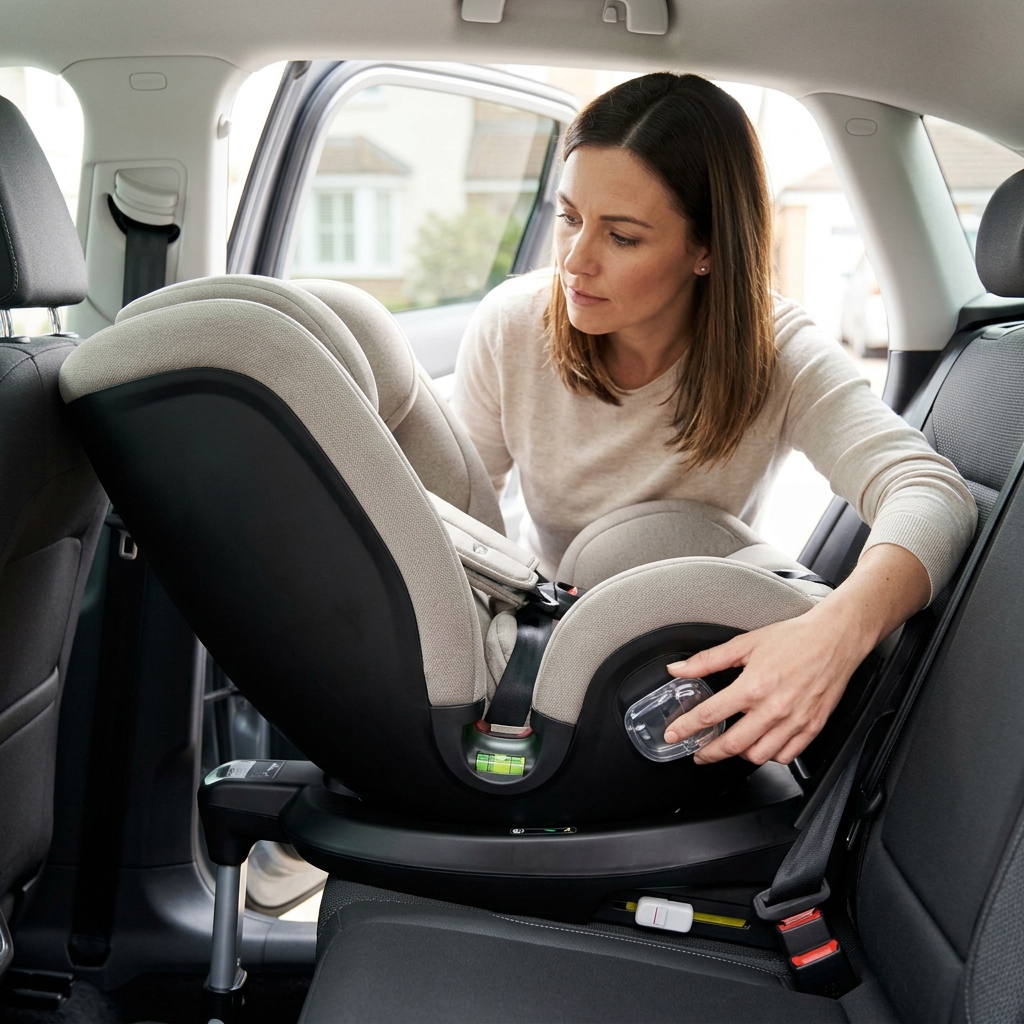
The angle of a car seat, particularly when rear-facing, is vital for ensuring your child’s airway remains open and their head doesn’t slump forward, which can be extremely dangerous. Proper recline supports the natural curvature of a baby’s spine and provides optimal protection in the event of a collision. For younger babies, a more reclined position is essential. As your child grows, the angle needs to be adjusted to maintain safety and comfort.
UK Car Seat Regulations & Angle Requirements (2026)
In the UK, car seat regulations are primarily governed by two standards: R44/04 and the newer, more comprehensive R129 i-Size. By 2026, R129 i-Size is expected to be the predominant standard, offering improved side-impact protection and requiring Isofix fitting. R44/04 will likely still be permitted for existing seats, but new models will overwhelmingly adhere to R129.
Under R129 i-Size, the regulations specify minimum recline angles based on the child’s weight and height. Generally:
- Newborn to approximately 6 months (under 40cm): A recline angle of at least 165 degrees is recommended, aiming for a nearly flat position. Lie-flat carriers are often used for this stage.
- 6 months to 15 months (40-76cm): A recline angle of at least 150 degrees is usually required.
- 15-36 months (76-105cm): A minimum recline angle of 140 degrees is generally expected.
Important Resources:
Angle Adjustment by Child’s Age & Weight Stage
0-6 Months (Newborn to Lie-Flat)
This stage prioritises a near-flat recline to support a newborn’s developing spine and airway. Lie-flat car seat carriers or car seats with extensive recline options are ideal. Frequent adjustments aren’t usually needed during this phase, but ensure the initial angle is correct before each journey.
6-15 Months
As your baby gains head control, the recline angle can be gradually reduced. Continue to monitor the angle and ensure it remains above the 150-degree minimum. This is a crucial period for adjustments as your child grows quickly.
15-36 Months
Continue adjusting the recline as needed to maintain a comfortable and safe angle. Pay attention to your child’s posture; if their head appears to be slumping forward, increase the recline. Around 15 months, you’ll likely begin thinking about transitioning to a more upright position.
Transitioning to Booster Seats
Once your child exceeds the height or weight limit of their extended rear-facing car seat, it’s time to move to a high-backed booster seat. Booster seats typically don’t have significant recline adjustment features, as they’re designed for older, more developed children. Ensure the booster seat is compatible with your vehicle’s Isofix system or fits securely with a seatbelt.
Types of Isofix Car Seat Angle Adjustment Mechanisms
Isofix car seats employ various methods for adjusting the angle. Here’s a breakdown:
Manual Adjustment
This involves a hand-operated lever or dial to adjust the seat’s recline. It’s common and relatively straightforward.
Load Leg Adjustment
The load leg (or support leg) extends from the car seat to the vehicle floor. Adjusting the length of the load leg can influence the recline angle. This is often coupled with manual adjustments.
Built-in Recline Features
Some car seats have multiple pre-set recline positions. This is convenient but may not offer precise angle control.
Automatic Adjustment Systems
More advanced car seats feature systems that automatically adjust the recline angle based on the car’s seat contours. These are typically found in higher-end models.
How to Correctly Adjust the Angle of Your Isofix Car Seat
Step 1: Consult your car seat’s instruction manual. This is *essential* as procedures vary between models.
Step 2: Locate the angle adjustment mechanism (lever, dial, load leg adjustment).
Step 3: Adjust the mechanism to achieve the correct recline angle for your child’s age/weight. Use a spirit level app on your smartphone to check the angle (though always refer to the car seat’s angle indicator as primary source).
Step 4: Check the car seat’s built-in angle indicator. Most Isofix seats have a visual indicator that shows when the correct angle is reached.
Step 5: Ensure the load leg is firmly planted on the vehicle floor and adjusted to the correct length.
Common Mistakes to Avoid When Adjusting Isofix Angle
- Incorrect Load Leg Use: Failing to extend the load leg fully or placing it on an uneven surface.
- Overlooking the Angle Indicator: Relying on visual estimation instead of using the car seat’s indicator.
- Adjusting Beyond Safe Limits: Reclining the seat too far back or upright.
- Ignoring the Manual: Not reading and understanding the car seat’s instructions.
- Adjusting While the Child is in the Seat: While some minimal adjustments might be possible, major angle changes should be done with the child removed for safety.
Best Isofix Car Seats with Excellent Angle Adjustment Features (UK 2026)
Here’s a comparison of some top-rated Isofix car seats in the UK, focusing on their angle adjustment capabilities:
| Car Seat Model | Age/Weight Group | Angle Adjustment Type | RRP (GBP) | Key Features |
|---|---|---|---|---|
| Maxi-Cosi Pearl 360 | Birth – 4 years (approx. 0-18kg) | Manual & Load Leg | £250 | 360° rotation, easy recline adjustment, i-Size compliant. |
| Cybex Sirona S i-Size | Birth – 4 years (approx. 0-18kg) | Manual & Integrated Linear Side-Impact Protection | £320 | Advanced side impact protection, extended rear-facing, i-Size compliant. |
| Britax Römer Dualfix i-Size | Birth – 4 years (approx. 0-18kg) | Automatic & Load Leg | £380 | Automatic angle adjustment, 360° rotation, i-Size compliant. |
| Joie i-Spin 360 | Birth – 4 years (approx. 0-18kg) | Manual & Load Leg | £200 | 360° rotation, multiple recline positions, affordable i-Size option. |
| Nuna Rebl Plus | Birth – 4 years (approx. 0-18kg) | Manual & Load Leg | £450 | Exceptional build quality, simple recline adjustment, i-Size compliant. |
Frequently Asked Questions (FAQs)
What if my car seat doesn’t adjust enough?
If your car seat doesn’t recline enough, it may not be suitable for your vehicle or your child’s age/weight. Check your vehicle’s manual to ensure compatibility. You may need to try a different car seat model.
Can I adjust the angle while the child is in the seat?
Minor adjustments can sometimes be made with the child in the seat, but significant angle changes should *always* be done with the child removed for safety. Ensure the buckles are released first.
How often should I check the angle?
Check the angle every time you install the car seat and regularly throughout use, especially as your child grows. A quick check before each journey is a good habit.
What happens if the angle is incorrect?
An incorrect angle can compromise your child’s airway and spinal support, increasing the risk of injury in a collision. It’s crucial to maintain the correct recline angle at all times.
Where can I find professional help with Isofix installation?
Many retailers offer car seat fitting services. Alternatively, you can find a qualified car seat technician through the RoSPA website or contact your local council for advice.