
Table of Contents
As an Amazon Associate, we earn from qualifying purchases. This means we may receive a small commission at no extra cost to you when you buy through links on this page.
Introduction: Why Isofix Car Seat Expiry Matters
Ensuring your child’s safety on the road is paramount, and a crucial aspect of this is understanding the lifespan of their car seat. Isofix car seats, while incredibly effective at protecting little ones, don’t last forever. Knowing and adhering to expiry dates isn’t merely a legal requirement; it’s a matter of your child’s safety. Over time, the materials used in car seat construction degrade, impacting their ability to provide optimal protection in a crash. Furthermore, safety standards evolve, meaning older car seats may not meet the latest requirements. Ignoring expiry dates can significantly increase the risk of injury in the event of an accident. This guide will provide a comprehensive overview of Isofix car seat expiry in the UK for 2026.
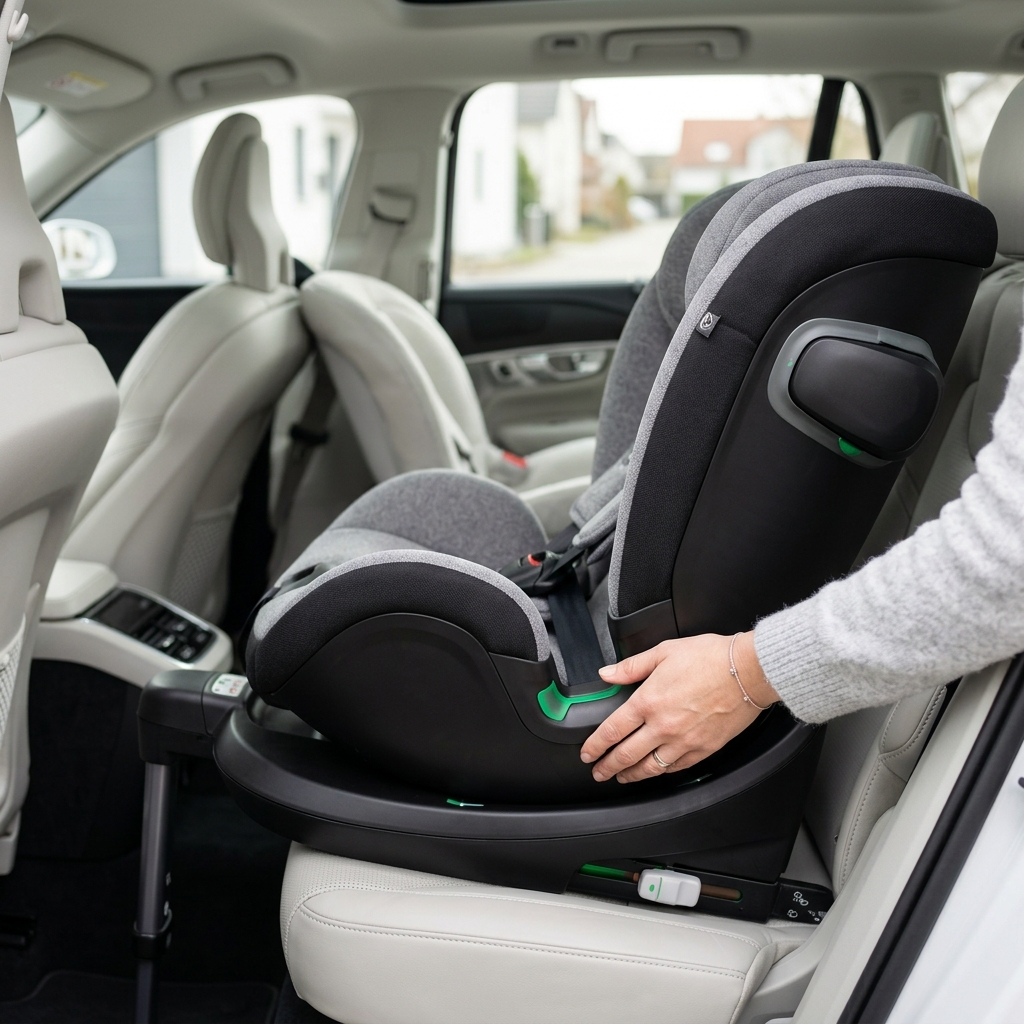
Understanding Isofix Car Seat Regulations in the UK
The UK currently operates under two main car seat regulations: R44/04 and R129 (i-Size). R44/04 is the older standard, based on a child’s weight, while R129 (i-Size) is a newer, more comprehensive standard based on a child’s height. i-Size car seats are becoming increasingly prevalent, and are now the standard for all new car seats sold in the UK.
R44/04: This standard categorises car seats based on weight groups (0, 0+, 1, 2, 3). While still legal to use if they meet the standard, they offer less protection than i-Size seats. Expiry dates for R44/04 seats are generally around 6-8 years from the date of manufacture.
R129 (i-Size): This standard requires rearward-facing travel until at least 15 months of age. i-Size seats are designed to be compatible with ISOFIX anchor points and offer enhanced side impact protection. The lifespan of an i-Size seat is often determined by the shell’s lifespan, which can be up to 10 years, but the insert and harness are still subject to a shorter lifespan (typically 6-8 years).
How Long Do Isofix Car Seats Last? – The Expiry Dates Explained
Determining the expiry date of your Isofix car seat depends on several factors. Generally, car seats have a lifespan of 6-10 years from the date of manufacture, not the date of purchase.
- R44/04 Seats: Typically 6-8 years.
- R129 (i-Size) Seats: The shell itself can last up to 10 years, but the soft goods (inserts, harness) usually have a lifespan of 6-8 years. Some manufacturers allow replacement of the soft goods, extending the overall life.
- Combination Seats (rotating seats): Often have a lifespan of 7 years.
Finding the Manufacturing Date: The manufacturing date is usually found on a label affixed to the car seat. Look for text like “Date of Manufacture,” “Made on,” or a similar phrase followed by a date (day/month/year). It’s often located on the underside of the seat, on the back, or on a sticker near the ISOFIX connectors.
What Causes an Isofix Car Seat to Expire?
Several factors contribute to an Isofix car seat’s expiry:
- Plastic Degradation: The plastic components of a car seat become brittle and weaker over time due to exposure to temperature fluctuations, UV light, and general wear and tear. This reduces the seat’s ability to absorb impact forces.
- Harness Wear: The five-point harness is a critical safety feature. Constant use and friction can cause the webbing to stretch, fray, or weaken, compromising its ability to restrain a child effectively.
- Changes in Safety Standards: Safety regulations are continually updated based on research and accident data. Older car seats may not meet current standards, offering less protection than newer models.
- Accident Damage: Even a minor accident can compromise the structural integrity of a car seat. A car seat involved in an accident *must* be replaced, even if there is no visible damage.
- Foam Compression: The energy-absorbing foam within the car seat compresses over time, reducing its effectiveness in a crash.
Checking Your Isofix Car Seat’s Manufacturing Date & Expiry
Here’s a step-by-step guide to finding the manufacturing date:
- Locate the Label: Check the underside of the seat base, the back of the seat shell, and near the ISOFIX connectors.
- Look for Key Phrases: Search for “Date of Manufacture,” “Made on,” “DoB (Date of Birth),” or similar wording.
- Interpret the Date: The date is typically in a day/month/year format (e.g., 01/01/2020).
- Calculate the Expiry: Add 6-10 years (depending on the standard and seat type) to the manufacturing date to determine the expiry date.
Example: If the manufacturing date is 01/01/2020, and it’s an R44/04 seat, the expiry date would be around 01/01/2026 – 01/01/2028. For an i-Size seat, check the manufacturer’s specific guidance on shell and soft goods lifespan.
What Happens If You Use an Expired Car Seat? – The Risks
Using an expired car seat significantly increases the risk of injury to your child in a crash. The degraded materials may not provide adequate protection, and the harness may fail to restrain your child properly.
- Reduced Impact Absorption: Weakened plastic and compressed foam offer less protection during a collision.
- Harness Failure: A worn or damaged harness may not hold your child securely, increasing the risk of ejection from the seat.
- Legal Implications: Using an expired car seat could result in a fine and points on your license.
- Insurance Complications: Your insurance claim may be denied if your child is injured in an accident while using an expired car seat.
What to Do With Your Expired Isofix Car Seat
Disposing of an expired car seat responsibly is crucial. Here are some options:
- Recycling Programs: Some local councils offer recycling programs for car seats. Check your local council’s website for details.
- Manufacturer Take-Back Schemes: Many car seat manufacturers offer take-back schemes where they will responsibly recycle your old seat.
- Proper Disposal: If recycling isn’t available, you may need to dispose of the car seat at a local waste disposal facility. Cut the straps before disposal to prevent accidental entanglement.
Isofix Car Seat Replacement: What to Consider (2026)
When replacing your Isofix car seat, consider the following:
- Child’s Weight and Height: Choose a seat appropriate for your child’s current size and weight, and consider a seat that grows with them.
- Car Compatibility: Ensure the car seat is compatible with your vehicle’s ISOFIX anchor points.
- Safety Features: Look for seats with advanced safety features like side impact protection and energy-absorbing technology.
- i-Size Compliance: Prioritize i-Size (R129) car seats for the highest levels of safety.
- Upcoming Changes (2026): Regulations in 2026 are expected to further emphasize extended rearward facing and improved side impact protection. Research seats that meet or exceed these anticipated standards.
Here’s a quick comparison of popular Isofix car seats available in the UK (as of late 2026):
| Product Name | Price (GBP) | Standard | Age/Weight Range | Key Features |
|---|---|---|---|---|
| Maxi-Cosi Pearl 360 Isofix Car Seat | 229.0 | R129 (i-Size) | Approx. 6 months – 4 years (86-105cm) | 360° rotation, Recline function, Enhanced side impact protection |
| Cybex Sirona S i-Size Car Seat | 289.95 | R129 (i-Size) | Approx. 6 months – 4 years (61-105cm) | Integrated Linear Side-impact Protection (L.S.P.), Recline function, One-hand recline. |
| Britax Römer King II LS i-Size Car Seat | 249.0 | R129 (i-Size) | Approx. 6 months – 4 years (61-105cm) | L.S.P. System, Recline function, Easy installation. |
| Joie i-Spin 360 Car Seat | 210.0 | R129 (i-Size) | Approx. 6 months – 4 years (61-105cm) | 360° rotation, One-hand recline, i-Size compliant. |
| Nuna Rebl Plus i-Size Car Seat | 349.0 | R129 (i-Size) | Approx. 6 months – 4 years (60-105cm) | Smart i-Size rotation, Recline function, Premium materials. |
Frequently Asked Questions (FAQs)
- Can I use a second-hand Isofix car seat? It’s strongly discouraged. You have no way of knowing the car seat’s history – whether it’s been involved in an accident or how it’s been stored.
- My car seat has a small scratch. Is it still safe? Minor cosmetic damage is usually acceptable, but any damage to the shell or harness requires immediate replacement of the seat.
- What if I’m traveling abroad with my car seat? Ensure your car seat meets the regulations of the countries you’re visiting. Some countries may require specific approvals.
- What if I only use the car seat occasionally? The expiry date still applies, regardless of usage frequency. Materials degrade over time, not with use.
- Can I replace just the harness on my Isofix seat? Some manufacturers offer replacement harnesses, but this depends on the specific model. Check with the manufacturer before attempting a repair.