
Table of Contents
As an Amazon Associate, we earn from qualifying purchases. This means we may receive a small commission at no extra cost to you when you buy through links on this page.
Why Blackout Blinds are Essential for Nurseries
Creating a dark environment in your nursery is more than just a preference; it’s vital for your baby’s healthy development. Darkness triggers the production of melatonin, a hormone crucial for regulating sleep and establishing healthy circadian rhythms. For newborns, this is particularly important as their internal clocks are still developing. Daytime naps are equally important, and a dark room helps ensure they are restful and restorative. Research from the Sleep Council (https://www.sleepcouncil.org.uk/) consistently highlights the link between dark sleep environments and improved sleep quality. But it’s not just about baby! Blackout blinds allow you and your partner to sleep later, especially during lighter summer months, without being disturbed by early morning light.
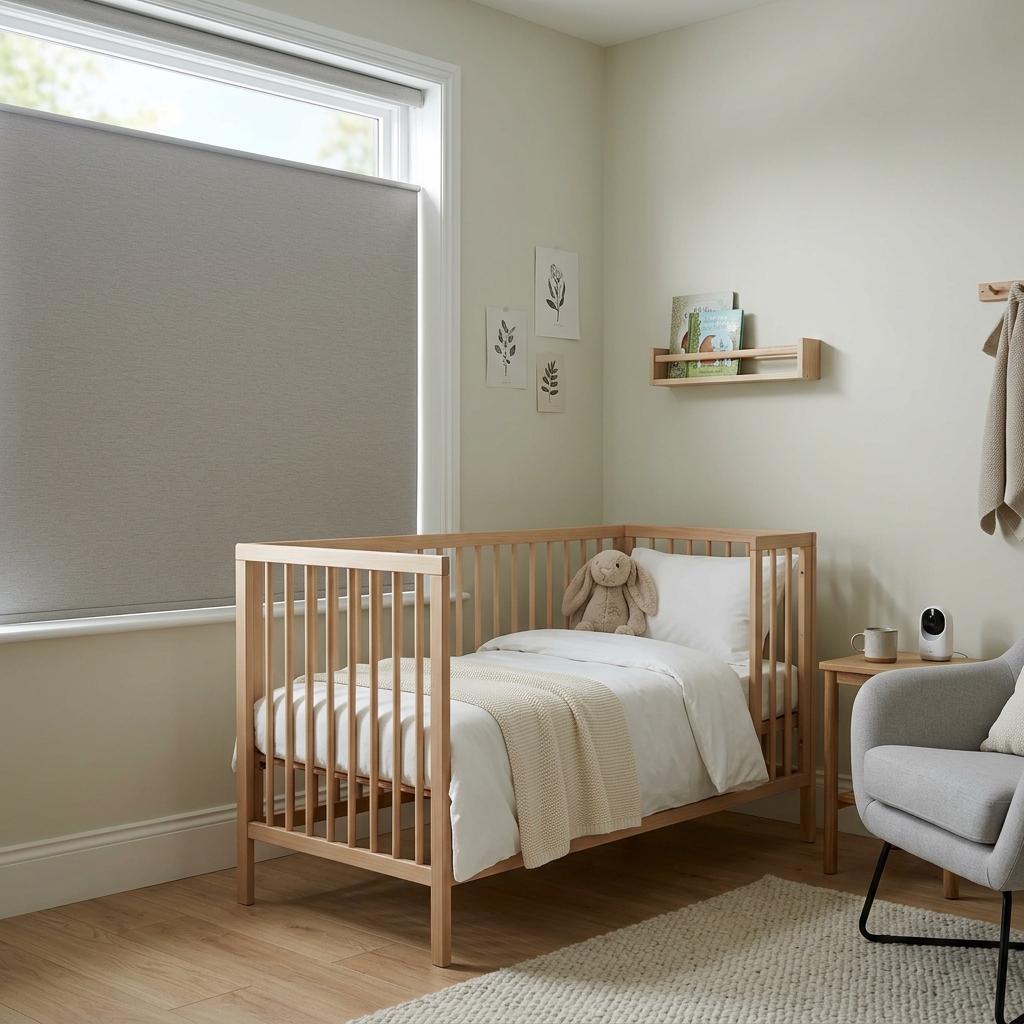
Types of Blackout Blinds for Nurseries (UK Market)
The UK market offers a wide range of blackout blind options. Here’s a breakdown of the most common types:
Roller Blinds
Roller blinds are a popular choice due to their simplicity and affordability. They consist of a fabric that rolls up and down on a tube. Blackout roller blinds often feature a special coating on the reverse side to block light.
- Pros: Cost-effective, easy to operate, wide range of colours and patterns, relatively easy to clean.
- Cons: May not provide 100% blackout at the edges, can be less aesthetically pleasing than other options.
Roman Blinds
Roman blinds offer a more luxurious look and feel. They are made from fabric that folds up neatly when raised. Blackout linings are crucial for effective light blockage.
- Pros: Stylish and elegant, good light blockage (with proper lining), adds a soft texture to the room.
- Cons: More expensive than roller blinds, can be more difficult to clean, cords can present a safety hazard (cordless options are essential).
Pleated Blinds
Pleated blinds are made from a single piece of fabric folded into neat pleats. They are lightweight and can be a good option for smaller windows.
- Pros: Lightweight, good for smaller windows, relatively affordable.
- Cons: May not provide complete blackout, can look less substantial than other types.
Vertical Blinds
Vertical blinds consist of vertical slats that can be rotated to control light and privacy. Blackout vertical blinds use a special fabric to block light effectively.
- Pros: Good for large windows, easy to adjust light levels, relatively durable.
- Cons: Can be noisy in a breeze, may not offer the most stylish look for a nursery.
| Blind Type | Light Blockage | Price (Approx.) | Safety | Style |
|---|---|---|---|---|
| Roller | Good (85-95%) | £20 – £60 | Cordless options available | Simple, Modern |
| Roman | Excellent (95-100%) | £50 – £150 | Cordless options essential | Elegant, Traditional |
| Pleated | Moderate (70-85%) | £30 – £70 | Cordless options available | Practical, Minimalist |
| Vertical | Good (80-90%) | £40 – £90 | Cordless options available | Functional, Contemporary |
Blackout Blind Fabrics: What to Look For
The fabric is the most crucial element in achieving true blackout. Look for fabrics with a high weave density. Multi-layered fabrics, often with a blackout coating applied to the back, are the most effective.
Dim-out vs. True Blackout
It’s important to understand the difference. Dim-out fabrics reduce light, but don’t eliminate it entirely. True blackout fabrics block almost all light, creating a truly dark room. For nurseries, especially for young babies, true blackout is generally recommended.
Durability & Washability
Nurseries can be messy! Choose fabrics that are durable and easy to clean. Check the care instructions before purchasing. Some fabrics may require professional cleaning, while others can be wiped down or machine washed.
Eco-Friendly Options
If sustainability is a priority, look for blackout blinds made from recycled materials or organic cotton. These options are becoming increasingly available in the UK.
Measuring for Nursery Blackout Blinds: A Step-by-Step Guide
Accurate measurements are critical for a perfect fit and optimal blackout coverage.
- Decide on Mounting Type: Inside Mount (fits inside the window frame) or Outside Mount (fits outside the window frame).
- Inside Mount: Measure the width of the window opening at the top, middle, and bottom. Use the smallest measurement. Measure the drop (height) from the top of the window frame to the windowsill at the left, middle, and right. Use the longest measurement.
- Outside Mount: Add at least 10cm to the width and height measurements to ensure complete coverage and prevent light leakage.
- Double-Check: Always double-check your measurements before ordering. Most manufacturers will not accept returns for custom-made blinds due to incorrect measurements.
Nursery Blackout Blind Safety: Cordless Options & Child Safety
Child safety is paramount. Cords from blinds can pose a strangulation hazard. The UK government and organisations like RoSPA (https://www.rospa.com/) strongly recommend using cordless blinds in nurseries. If you must use corded blinds, always use cord tidies to keep cords out of reach. Ensure the cord is securely anchored to the wall.
- Cordless Blinds: The safest option.
- Cord Tidies: Use approved cord tidies to keep cords short and out of reach.
- Regular Checks: Regularly check blinds and cords for any signs of damage or wear.
- Safe Installation: Follow the manufacturer’s installation instructions carefully.
Installation Options: DIY vs. Professional Fitting
You can choose to install your blackout blinds yourself or hire a professional fitter.
DIY Installation
- Pros: Cost-effective, allows you to complete the project at your own pace.
- Cons: Requires some DIY skills, can be time-consuming, potential for errors.
- Tools Required: Drill, screwdriver, measuring tape, pencil, level.
- Estimated Cost: £0 (assuming you have the tools).
Professional Fitting
- Pros: Ensures a perfect fit, saves time and effort, peace of mind.
- Cons: More expensive.
- Estimated Cost: £50 – £150 per blind (depending on size and complexity).
Top Nursery Blackout Blinds UK: 2026 Recommendations
Here are a few recommended options, categorized by budget:
Budget-Friendly (Under £40)
- Webblin Blackout Roller Blind: £29.99 – A reliable and affordable option for basic blackout.
Mid-Range (£40 – £70)
- Blinds 2 Go Blackout Pleated Blind: £39.95 – A good choice for smaller windows, offering decent blackout.
- Curtain Call Blackout Vertical Blind: £54.5 – Durable and effective for larger windows.
Premium (£70+)
- SlumberSlade Thermal Blackout Roman Blind: £69.99 – Stylish and provides excellent light blockage.
- MakeMeBlinds Custom Made Blackout Blind: £75.0 – Offers a fully customized solution to perfectly fit your nursery window.
Maintaining Your Nursery Blackout Blinds
Regular cleaning will help extend the lifespan of your blinds.
- Dusting: Dust regularly with a soft cloth or vacuum cleaner attachment.
- Spot Cleaning: Clean spills immediately with a damp cloth and mild detergent.
- Fabric Fading: Avoid prolonged exposure to direct sunlight, as this can cause fabric fading. Consider adding a UV protection coating.
Frequently Asked Questions (FAQs)
Q: My blackout blinds still let some light in. Why?
A: Complete blackout is rarely achievable. Light leakage often occurs around the edges of the blind. Ensure your blinds are properly fitted and consider adding side channels or blackout curtains for extra coverage.
Q: Are cordless blinds really necessary?
A: Yes, especially in a nursery. Corded blinds pose a serious strangulation hazard to young children. Cordless options are the safest choice.
Q: How do I clean Roman blackout blinds?
A: Check the fabric care label. Many Roman blinds require professional cleaning. Avoid getting the mechanism wet.
Q: What’s the best colour for nursery blackout blinds?
A: Darker colours generally block more light. However, lighter colours can brighten the room when the blinds are open. Choose a colour that complements the nursery décor.
Q: How long do blackout blinds typically last?
A: With proper care, blackout blinds can last for 5-10 years. The lifespan depends on the quality of the fabric and the frequency of use.