
Table of Contents
As an Amazon Associate, we earn from qualifying purchases. This means we may receive a small commission at no extra cost to you when you buy through links on this page.
Why Nursery Temperature Matters: Protecting Your Little One
Creating a comfortable and safe sleep environment for your baby is paramount. A crucial, often overlooked, aspect of this is maintaining the correct nursery room temperature. Babies, especially newborns, struggle to regulate their own body temperature effectively. This means they are more susceptible to overheating or becoming too cold, both of which can have serious health consequences. Overheating has been specifically linked to an increased risk of Sudden Infant Death Syndrome (SIDS), as highlighted in updated guidance from The Lullaby Trust in 2025. Conversely, a room that’s too cold can cause discomfort, disrupting sleep and potentially leading to respiratory issues. Ensuring a consistently comfortable temperature is therefore vital for your baby’s wellbeing, restful sleep, and overall development.
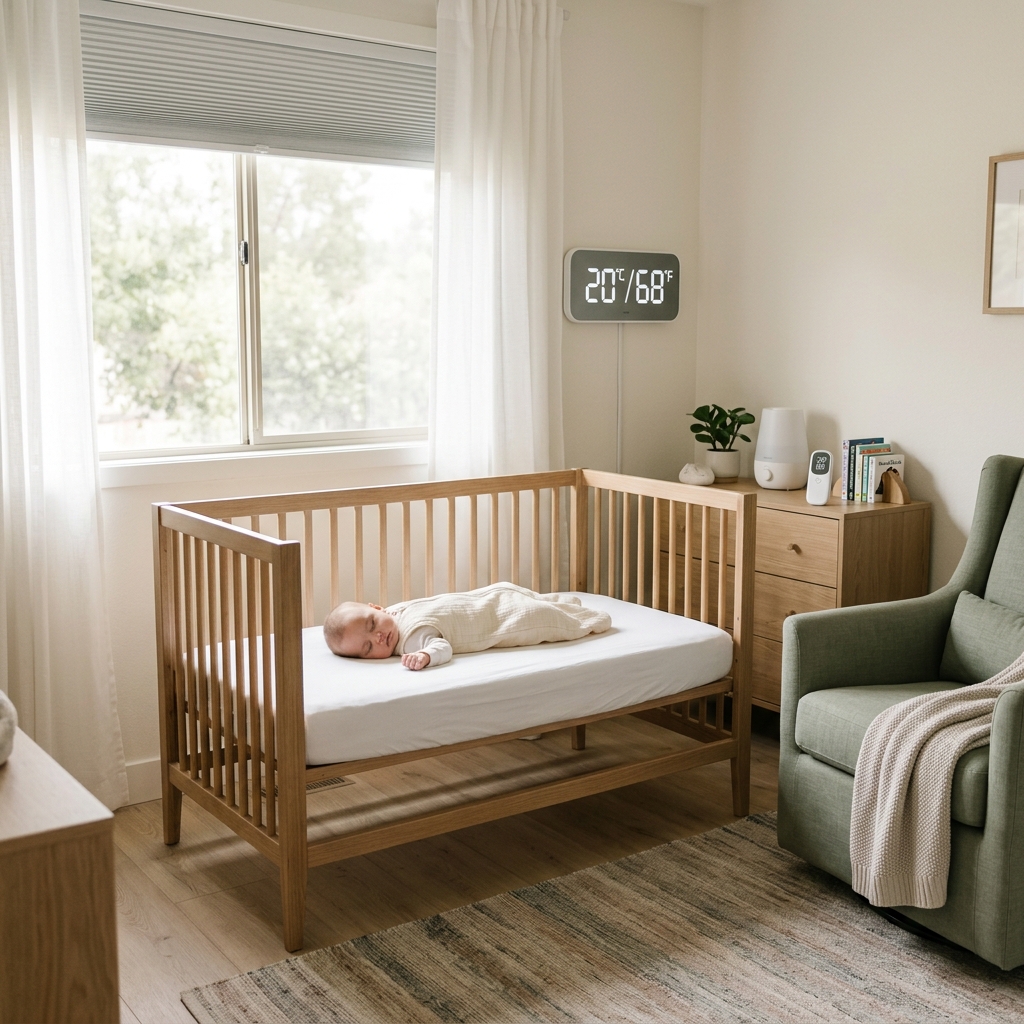
What’s the Ideal Nursery Temperature?
Current guidelines (as of 2026) recommend maintaining a nursery temperature between 16-20°C (60-68°F). This range is considered optimal for several reasons. It mimics the temperature that babies are accustomed to in the womb, promoting a sense of security and calm. This temperature range also minimises the risk of both overheating and hypothermia, supporting healthy breathing and preventing unnecessary stress on your baby’s developing body. A consistent temperature within this range aids in achieving longer, more restorative sleep cycles, crucial for cognitive and physical development.
How to Monitor Nursery Temperature Accurately
Don’t rely on simply ‘feeling’ the temperature. Accurate monitoring is essential. Here are some options:
- Digital Thermometers: These provide a precise reading and are readily available from most pharmacies and supermarkets. (£10-£20)
- Room Thermometers: Analogue room thermometers are a cost-effective option, but may be less accurate than digital ones. (£5-£15)
- Smart Home Devices: Smart thermostats and baby monitors with integrated temperature sensors offer convenience and remote monitoring capabilities. (See section “Using Technology to Regulate Nursery Temperature (2026 Update)”)
Important Placement Tip: Place your thermometer away from direct sunlight, drafts, radiators, and other heat sources. Ideally, position it at baby’s sleeping level – approximately where their chest would be when lying in the cot. Avoid placing it directly on the wall, as this can also affect the reading.
Signs Your Baby is Too Hot
Being able to recognise the signs of overheating is crucial. Look out for:
- Sweating
- Flushed cheeks
- Rapid breathing
- Restlessness – appearing uncomfortable or agitated
- Hot to the touch (especially the back of the neck)
If you suspect your baby is overheating: Immediately remove a layer of clothing, offer a cool (not cold) drink if they are old enough, and ensure the room is adequately ventilated. Don’t overcool rapidly, as this can also be harmful.
Signs Your Baby is Too Cold
While less common than overheating, it’s important to recognise signs of being too cold:
- Cold feet and hands (though this isn’t always a reliable indicator)
- Shivering (though babies rarely shiver effectively)
- Lethargy – appearing unusually sleepy or sluggish
- Pale skin
If you suspect your baby is too cold: Add an extra layer of clothing, ensuring it’s not too tight. A baby-safe sleep sack is a good option. Ensure the room temperature is raised slightly.
Heating and Cooling Your Nursery: Practical Tips
Maintaining the ideal temperature requires a proactive approach. Consider these tips:
- Radiators: Use a radiator valve to control the heat output. Avoid placing furniture directly in front of radiators.
- Central Heating: Consider setting a slightly lower temperature for the nursery than for the rest of the house.
- Fans: Use a fan to circulate air, but never direct it directly at your baby. Oscillating fans are best.
- Air Conditioning: If you have air conditioning, use it sparingly and ensure it doesn’t create a cold draft.
- Windows: Open windows for short periods to ventilate the room, but avoid creating drafts.
Energy Efficiency & Safety: Remember to prioritise energy efficiency and safety when heating or cooling the nursery. Ensure all heating appliances are safely positioned and away from baby’s reach. Consider using thermal curtains to help retain heat during colder months.
Dressing Your Baby for the Nursery Temperature
Clothing plays a vital role in temperature regulation. Here’s a general guide:
- 16-18°C (60-64°F): Vest, sleep suit, and a 2.5 tog sleep sack.
- 18-20°C (64-68°F): Vest, sleep suit, and a 1.0-2.5 tog sleep sack (adjust tog rating based on baby’s individual needs).
- Above 20°C (68°F): Vest and a lightweight sleep sack (0.5-1.0 tog).
Tog Ratings: Tog ratings measure the thermal resistance of sleep sacks. Higher tog ratings provide more warmth. Always choose breathable fabrics like cotton or muslin.
Using Technology to Regulate Nursery Temperature (2026 Update)
Technology offers sophisticated solutions for nursery temperature control. Here are some popular options in the UK market:
Comparison Table: Smart Nursery Temperature Control
| Product | Price (GBP) | Key Features | Pros | Cons |
|---|---|---|---|---|
| Groegg 2 Room Thermometer | £34.99 | Colour-changing glow to indicate temperature, digital display, audible alerts. | Simple to use, visually clear, affordable. | Limited functionality beyond temperature monitoring. |
| Tommee Tippee Gro Sound Sleep Soother | £49.99 | Temperature display, white noise sounds, nightlight. | Multi-functional, soothing sounds can aid sleep. | Temperature display less precise than dedicated thermometers. |
| Dyson Purifier Cool Formaldehyde TP09 | £649.0 | Air purification, cooling fan, formaldehyde detection, smart home integration. | Excellent air quality, precise temperature control, smart features. | Very expensive. |
| Netatmo Smart Thermostat | £179.99 | Remote control, learning algorithms, voice control, integration with smart home systems. | Energy efficient, customizable schedules, integrates with other smart devices. | Requires existing heating system compatibility. |
Troubleshooting Common Nursery Temperature Problems
- Drafts: Seal any gaps around windows and doors. Use draft excluders.
- Uneven Temperature Distribution: Use a fan to circulate air. Ensure furniture isn’t blocking air vents.
- Difficulties Maintaining Consistent Temperature: Consider investing in a smart thermostat. Insulate the nursery effectively.
Nursery Temperature FAQs
Q: What should I do if my baby’s temperature reading fluctuates frequently?
A: Minor fluctuations are normal. However, if the temperature swings dramatically, check the thermometer’s placement and ensure it’s not being affected by external factors. Consider using a second thermometer to verify the reading.
Q: Is it okay to use a space heater in the nursery?
A: Space heaters are generally not recommended due to the risk of burns and fire. If absolutely necessary, use a modern heater with safety features like overheat protection and tip-over shut-off. Keep it well away from the cot and any flammable materials.
Q: What’s a safe way to check if my baby is getting too hot without touching them?
A: Look for the visual cues mentioned earlier – flushed cheeks, rapid breathing, restlessness. A room thermometer positioned near the baby’s sleeping area is the best indicator.
Q: My baby kicks off their blankets. Is a sleep sack enough?
A: Yes, a sleep sack is a much safer alternative to loose blankets. Choose the appropriate tog rating based on the room temperature.
Q: Can I use a humidifier to help regulate the temperature?
A: While humidifiers don’t directly lower temperature, they can make a room *feel* cooler by increasing moisture in the air. However, they require regular cleaning to prevent mould growth, so ensure you follow the manufacturer’s instructions.