
Table of Contents
As an Amazon Associate, we earn from qualifying purchases. This means we may receive a small commission at no extra cost to you when you buy through links on this page.
Introduction: Winter Pushchair Challenges in the UK
British winters can be notoriously unpredictable. One minute it’s a crisp, clear day, the next you’re battling biting winds, rain, and even a dusting of snow. Keeping your little one cosy and comfortable during pushchair outings in these conditions presents a unique set of challenges. The fluctuating temperatures demand a flexible approach, and it’s crucial to balance warmth with avoiding overheating – a real concern for babies. This guide provides everything you need to know about keeping your baby safe and snug during winter walks across the UK.
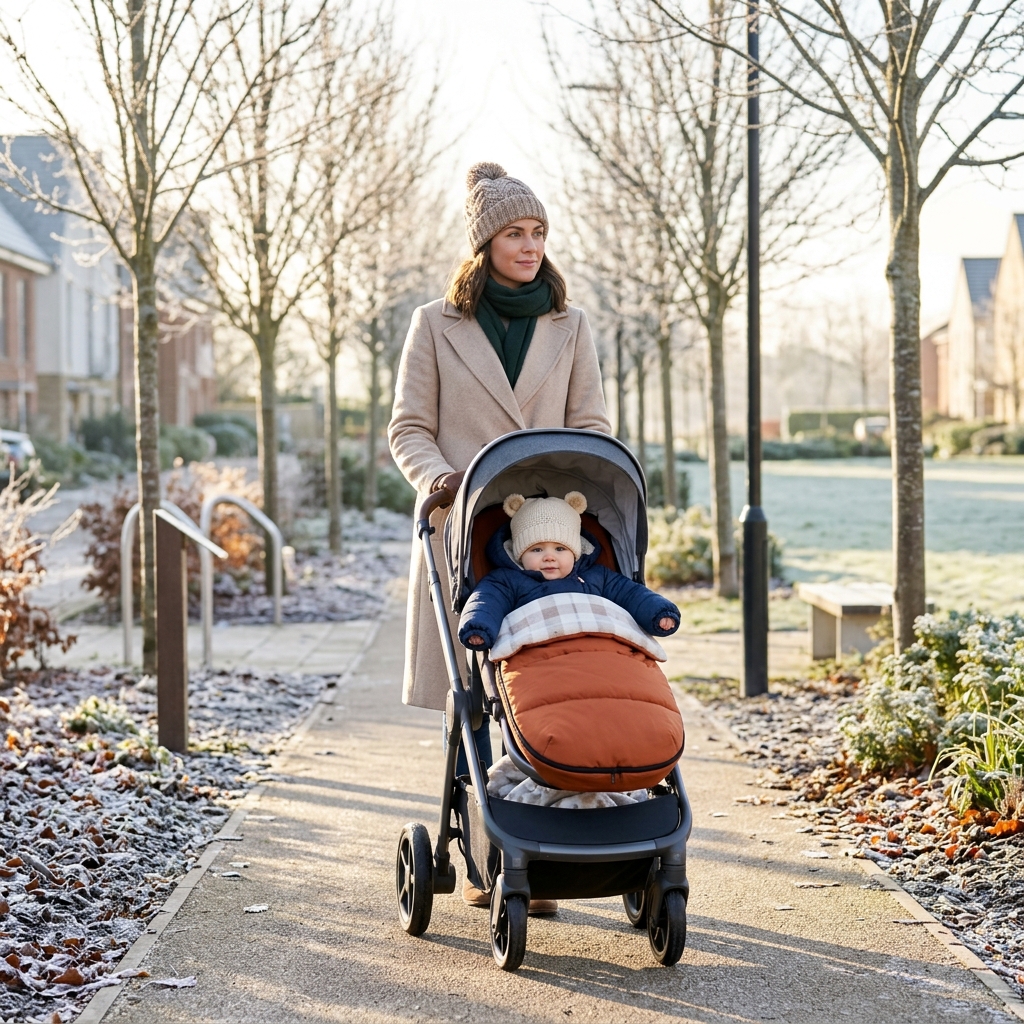
Understanding Baby’s Temperature Regulation
Babies, especially newborns, regulate their body temperature differently than adults. They have a larger surface area to body mass ratio, meaning they lose heat more quickly. Their circulatory systems are still developing, and they haven’t yet fully mastered shivering – the body’s natural warming mechanism. This makes them particularly vulnerable to the cold.
Signs your baby is too cold:
- Cold hands and feet (though these can be naturally cooler)
- Shivering (a later sign)
- Lethargy or unusual sleepiness
- Pale or bluish skin around the mouth
Signs your baby is too warm:
- Sweaty or clammy skin
- Flushed cheeks
- Rapid breathing
- Restlessness
Regularly check your baby’s temperature by feeling the back of their neck or tummy – it should feel comfortably warm, not hot or cold.
The Layering System: Your Winter Pushchair Strategy
The key to keeping your baby warm is a well-planned layering system. This allows you to adapt to changing conditions easily. Think of it in three layers:
Base Layer
This layer sits directly against your baby’s skin. It should be breathable and moisture-wicking to prevent chills. Merino wool or a synthetic fabric like polypropylene are excellent choices. Avoid cotton as it holds moisture. A bodysuit or sleepsuit makes a perfect base layer.
Middle Layer
This layer provides insulation. Fleece, wool, or a soft knitted jumper are ideal. The thickness of this layer will depend on the temperature. For milder winter days, a lighter fleece might suffice, while colder days will require a thicker wool jumper.
Outer Layer
This layer protects against wind and rain. A waterproof and windproof jacket and trousers are essential. Look for fabrics with a good waterproof rating (measured in mm) and windproof membrane.
Essential Pushchair Accessories for Winter
Beyond clothing, several accessories can significantly enhance your baby’s warmth and comfort in a pushchair.
Footmuffs
Footmuffs are a must-have for winter pushchair outings. They provide full leg and body coverage, keeping your baby cosy from shoulders to toes. We’ll discuss choosing the right one in more detail later.
Raincovers
Raincovers aren’t just for rain! They also provide a valuable windproof barrier, trapping heat and keeping your baby sheltered. Look for raincovers with ventilation options to prevent condensation build-up.
Pushchair Handlebar Muffs
Don’t forget yourself! Handlebar muffs keep your hands warm and dry, making pushing the pushchair much more enjoyable.
Cosy Tails
These fleece-lined covers attach to the pushchair and wrap around your baby’s legs, offering extra warmth and protection. They are a good option for milder winter days.
Seat Liners
Seat liners add an extra layer of comfort and warmth to the pushchair seat. They can also help protect the pushchair from spills and messes.
Choosing the Right Footmuff: A Buyer’s Guide
Footmuffs come in two main types: universal and pushchair-specific.
Universal Footmuffs are designed to fit most pushchairs. They typically attach with straps or Velcro. Pushchair-Specific Footmuffs are made to fit a particular pushchair model, offering a more secure and tailored fit.
Here’s a comparison of some popular options:
| Product Name | Price (GBP) | Type | TOG Rating (Approx.) | Waterproof/Windproof | Pros | Cons |
|---|---|---|---|---|---|---|
| JJ Cole BundleMe Deluxe Footmuff | £89.99 | Universal | 2.5 | Water-resistant | Very warm, stylish designs, easy to use. | Can be bulky, water resistance not fully waterproof. |
| Cosytoes Universal Footmuff | £59.99 | Universal | 2.0 | Waterproof | Affordable, fully waterproof, compatible with 5-point harness. | Can be less padded than some premium options. |
Key Features to Consider:
- TOG Rating: A higher TOG rating indicates greater warmth.
- Waterproof/Windproof Rating: Important for protecting against the elements.
- Lining Material: Fleece or sherpa linings are particularly cosy.
- Compatibility with 5-point Harness: Essential for safety.
Raincovers: Staying Dry and Warm
A good raincover is indispensable for winter pushchair use. It shields your baby from rain, snow, and wind, creating a microclimate of warmth.
| Product Name | Price (GBP) | Features | Pros | Cons |
|---|---|---|---|---|
| Britax Raincover (Universal) | £24.99 | Ventilation holes, clear visibility | Affordable, easy to use, compatible with many pushchairs. | Can feel flimsy in strong winds. |
| Mountain Buggy Breeze Through Raincover | £39.99 | Excellent ventilation, panoramic view | Superior ventilation, high-quality materials, durable. | More expensive than universal options. |
Key Features to Consider:
- Ventilation: Prevents condensation build-up.
- Visibility: A clear window allows you to keep an eye on your baby.
- Ease of Use: Look for a raincover that’s easy to attach and remove.
Protecting Little Hands and Feet
Hands and feet are particularly susceptible to the cold. Mittens are generally warmer than gloves for babies, as they keep fingers together. Ensure socks are warm and breathable, and consider booties to provide extra insulation. Avoid tight coverings that restrict circulation.
Aden + Anais Muslin Swaddle Blankets (3-Pack) – £34.99 are a versatile option – they can be used as an extra layer over feet or hands in a pinch.
Pushchair Considerations for Winter Use
Some pushchairs are better suited to winter conditions than others. Consider these features:
- Robust Suspension: Provides a smoother ride on uneven terrain.
- Large Wheels: Navigate snow and ice more easily.
- Adjustable Handlebar Height: Allows you to adjust the handlebar to a comfortable height, even when wearing a bulky winter coat.
Safety First: Avoiding Overheating
Overheating is a serious risk for babies. Always check your baby’s temperature regularly and adjust layers accordingly. Ensure adequate ventilation, even when using a footmuff and raincover. Never use heaters or warmers in direct contact with your baby’s skin.
Winter Pushchair Checklist: Before You Go
- Appropriate layers of clothing (base, middle, outer)
- Footmuff
- Raincover
- Warm mittens and socks/booties
- Fully charged mobile phone
- Emergency blanket
- Snacks and drinks (for you!)
FAQ
Q: How often should I check my baby’s temperature during a winter walk?
A: Check your baby’s temperature every 10-15 minutes, especially during longer walks. Feel the back of their neck or tummy – it should feel comfortably warm, not hot or cold.
Q: Can I use a regular blanket instead of a footmuff?
A: While a blanket can provide some warmth, a footmuff is generally safer and more effective. Footmuffs are designed to stay securely in place and prevent the baby from slipping under the blanket. Ensure a blanket doesn’t cover the baby’s face.
Q: What should I do if my baby starts shivering?
A: Immediately add an extra layer of clothing or move to a warmer environment. If the shivering doesn’t stop, seek medical advice.
Q: Is it safe to use a heat pad inside the pushchair?
A: Absolutely not. Heat pads pose a significant burn risk and should never be used in direct contact with a baby.
Q: How do I clean a footmuff?
A: Always check the care label on the footmuff. Many footmuffs are machine washable, but some may require hand washing or dry cleaning.